34 HEZEKIAH — “He Held Fast to Jehovah”
“He Held Fast to Jehovah”
About this lesson
— create an account for conclusion points, article profile, and critical analysis.
Watch for
Sign in to see expected meeting answers, paragraph analysis, and the lesson conclusion.
34 HEZEKIAH
HEZEKIAH was one of the few truly great kings of Judah, but he came from one of the worst. His father, Ahaz, was a wicked king who promoted pagan worship. Ahaz even sacrificed at least one of his own sons to vicious false gods. (2 Ki. 16:2-4;2 Chron. 28:1, 3) It could be, then, that Hezekiah had a nightmarish childhood. In any case, as an adult, he refused to follow his father’s bad example. When Ahaz died, Hezekiah was 25 years old, and the young king began his reign with bold reforms.
Hezekiah reopened and repaired Jehovah’s temple in Jerusalem, removed all the idols in it, and strengthened the priesthood. He soon declared a great festival, even sending messengers north into the ten-tribe kingdom of Israel to invite God’s wayward people there to come. Some scoffed at the messengers, but others came. In both kingdoms, Hezekiah’s example inspired people to tear down high places of false worship and to destroy idols. God’s people had even made an idol of the copper serpent that Jehovah had commanded Moses to make centuries earlier. Hezekiah crushed the serpent so that no one could worship it.
For years, Hezekiah also watched a gathering storm. Jehovah had long warned the kingdom of Israel to the north that destruction was coming. Early in Hezekiah’s reign, the aggressive nation of Assyria descended on Israel like a storm, sending most of its people into exile. Would Judah be next? Judah had been just as unfaithful as Israel, if not more so. Jehovah had warned the nation through his prophets, and his word always comes true. And now, as Assyria kept up its conquests, Judah was surrounded by enemies.
Before long, the Assyrian armies advanced on Judah, led by the aggressive King Sennacherib. One by one, the cities of Hezekiah’s realm fell to the powerful invaders. It was likely during this same tense period that Hezekiah faced yet another threat—an illness, and a deadly one at that. He had not yet fathered a son, so the Davidic line of kings was in danger. In faith, he pleaded with Jehovah for relief. Jehovah listened. Lovingly, he granted the king another 15 years of life! Still, the Assyrian threat loomed.
As a practical measure, Hezekiah sent Sennacherib a large sum of money to persuade him not to come against Jehovah’s holy city, Jerusalem. The Assyrian king took the money but kept on planning his conquest of the city he coveted. Meanwhile, Hezekiah kept on strengthening Jerusalem, adding a new wall and building an aqueduct to bring water into the city in case it was besieged. And he encouraged his people, reassuring them that Jehovah was far stronger than any human army.
Hezekiah faced a mighty foe who terrified the people of Jerusalem with threats, ridicule, and intimidation
Sennacherib only got more aggressive. He sent to Jerusalem a high official, the Rabshakeh, to taunt and discourage the people. The emissary bitterly ridiculed their king and their God, Jehovah. Hezekiah held firm and encouraged his people. Next, Sennacherib sent threatening letters to Hezekiah, eager to break his courage. Hezekiah took those letters to Jehovah’s temple and spread them out, in effect laying the whole problem at the feet of the almighty God. In response, Jehovah sent a reassuring message to Hezekiah by means of Isaiah the prophet. God’s message included this reassurance: Sennacherib would never enter Jerusalem. His men would never even shoot an arrow there.
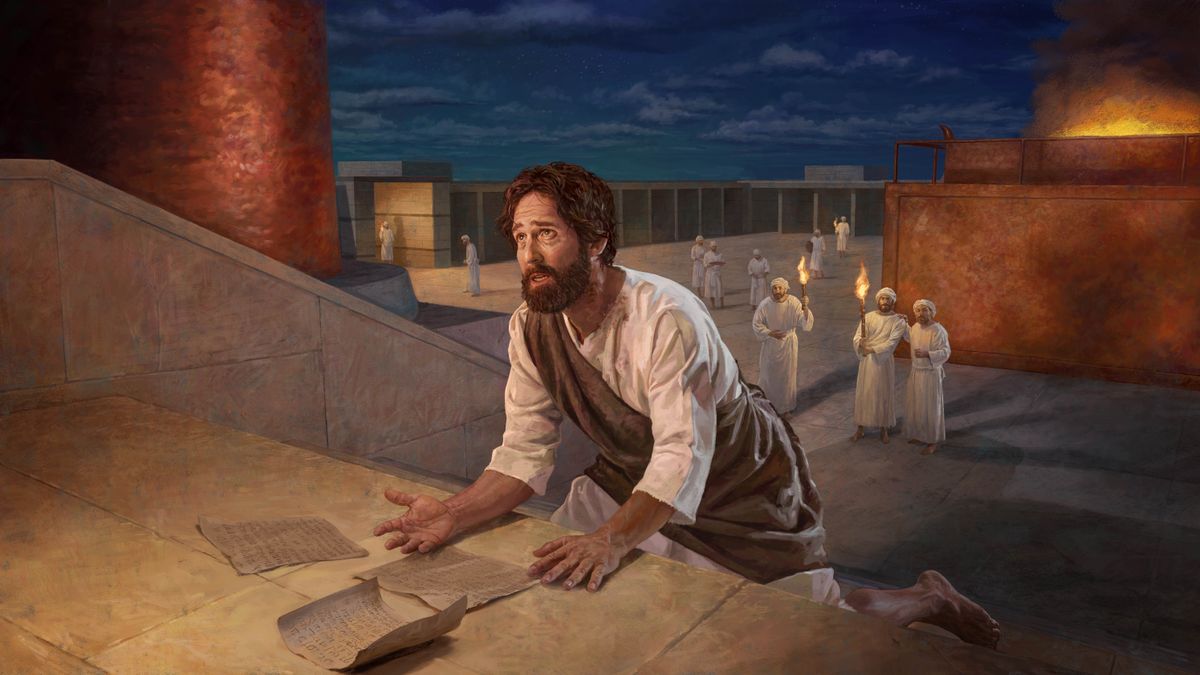
That very night, Jehovah sent an angel into the Assyrian camp. In a short time, that one spirit killed 185,000 of Sennacherib’s soldiers. Picture Sennacherib waking up in the morning to find all those corpses. He fled to his homeland, disgraced. Sometime later, while he was in the temple of his god Nisroch, his own sons murdered him.
Hezekiah’s triumph was great! With the threat gone and his illness cured, he fathered at least one son. Sadly, there was a time when Hezekiah became haughty. However, Jehovah corrected him, and he responded humbly. So Hezekiah lived and died as one of Israel’s greatest kings—with a sterling record of courage under pressure.
Read the Bible account:
For discussion:
In what ways did Hezekiah show courage?
Dig Deeper
What have archaeologists discovered that supports what the Bible says about Hezekiah? (w11 5/1 15 ¶1-3) A
![AClay seal from the eighth century B.C.E., with the inscription: “Belonging to Hezekiah [son of] Ahaz, King of Judah”](/media/1102025934/839)
How was Isaiah’s prophecy regarding “a flying fiery snake” fulfilled by Hezekiah? (Isa. 14:28, 29; ip-1 190-191 ¶4-6)
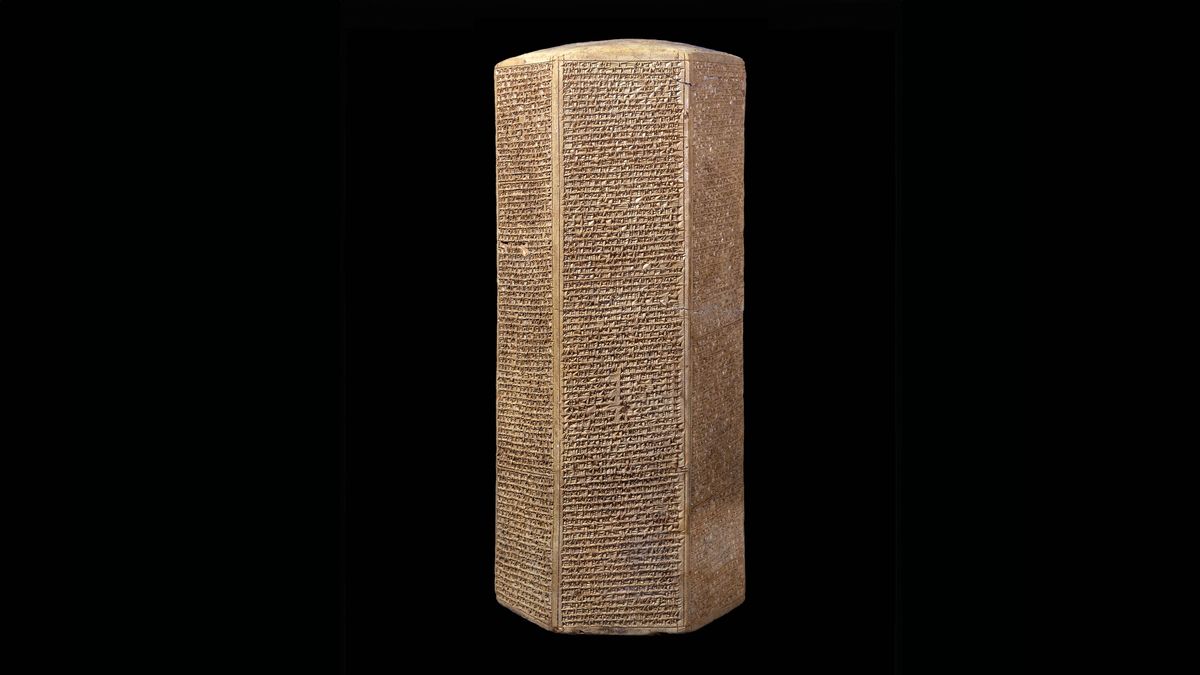
What is noteworthy about what Sennacherib claims and does not claim in an account discovered by archaeologists at Nineveh? (g 12/10 27 ¶3-5) B
In 2003, a team of scientists investigated whether the passage known as Hezekiah’s Tunnel was really built during Hezekiah’s reign. What conclusion did they reach? (w09 5/1 27 ¶3-5)
Reflect on the Lessons
How can the example of Hezekiah encourage a Christian whose father or mother doesn’t worship Jehovah? C

When Jerusalem was threatened, what was Hezekiah’s primary concern? (2 Ki. 19:15-19) How can we imitate him today?
In what ways might you imitate the courage of Hezekiah in your life?
Meditate on the Bigger Picture
What does this account teach me about Jehovah?
How does the account tie in with Jehovah’s purposes?
What would I like to ask Hezekiah in the resurrection?
Learn More
-
See the events of 2 Kings 19:14-36 unfold in this thrilling dramatization.
“Please Save Us” (5:38) -
How was the prophecy recorded at Micah 5:5 fulfilled in the days of Hezekiah, and how is it being fulfilled today?
“Seven Shepherds, Eight Dukes—What They Mean for Us Today” (w13 11/15 18-20 ¶9-18)


Critical analysis — conclusion
A holistic read of the whole lesson. Sign in to read.
Scholarship & interpretation
The good
The bad
The ugly
for the full conclusion.