The Watchtower — Study Edition · May, 2026
Study Edition
pp. 1–32

Study Edition
MAY 2026
STUDY ARTICLES FOR: JULY 6–AUGUST 9, 2026
© 2026 Watch Tower Bible and Tract Society of Pennsylvania
This publication is not for sale. It is provided as part of a worldwide Bible educational work supported by voluntary donations. To make a donation, please visit donate.jw.org.
Unless otherwise indicated, Scripture quotations are from the modern-language New World Translation of the Holy Scriptures.
Table of Contents
p. 32
Table of Contents
IN THIS ISSUE
Study article for July 6-12, 2026
2 Bible Principles—Why Are They Important?
Study article for July 13-19, 2026
8 Your Conscience—Use Bible Principles to Train It
Study article for July 20-26, 2026
14 Make Wise Decisions Regarding Additional Education
Study article for July 27, 2026–August 2, 2026
20 Stay Spiritually Strong While Getting Additional Education
Study article for August 3-9, 2026
Bible Principles—Why Are They Important?
pp. 2–7
JULY 6-12, 2026
SONG 98 The Scriptures—Inspired of God
Bible Principles—Why Are They Important?
“Present your bodies as . . . a sacred service with your power of reason.”—ROM. 12:1.
FOCUS
To explain what principles are and how we can identify them when we read the Bible.
1-2. (a) Why can the Bible be called an ancient book? (b) Why is the Bible still relevant today?
THE Bible is an ancient book. Its writing was started some 3,500 years ago, and it was completed nearly 2,000 years ago. And yet “the word of God” found within its pages is alive and powerful today. (Heb. 4:12; 2 Tim. 3:16, 17) Millions of people testify that the Bible has helped them to cope with life in this modern world.
2 But how could such an old book still be relevant today? There are two basic reasons. First, the Bible’s message comes from the “living God,” the all-wise Creator. (1 Tim. 4:10; Rom. 16:26, 27) Second, the Bible is written in a way that reveals timeless principles. These principles remain beneficial no matter what era a person lives in or what challenges a person faces.
3. What questions will be answered in this article?
3 What are Bible principles? Why are they so important for us today? How can we identify principles when we read the Bible? This article will answer these questions. We will also see how the teachings of Jesus highlight the value of principles.
WHAT ARE BIBLE PRINCIPLES?
4. What are Bible principles?
4 Bible principles are basic truths on which God’s laws are based. At times, a principle may be clearly stated within the law. (Matt. 22:37) Principles are, however, superior to specific laws. Specific laws may be limited in application. They may be given for a particular time or situation. But Bible principles reflect Jehovah’s thinking in a broader sense. Principles could be described as the reason behind the law. There is a valid reason behind every one of Jehovah’s laws. But the principles on which they are based can be applied in a number of different circumstances and are timeless. (Ps. 119:111) Laws may need to change, but principles do not expire or become outdated.—Isa. 40:8.
5. How can we illustrate the difference between laws and principles? (See also pictures.)
5 To help us better understand the difference between laws and principles, consider this illustration. A mother may say to a small child, ‘Don’t touch the stove.’ That is a command or a law. But the principle, or thinking, behind that law is: Don’t touch something that is hot; otherwise, you will get hurt. That principle is not just limited to a stove. It could be applied to a clothing iron, a heater, or any other hot item that could cause injury. That principle does not just apply in the family’s home but applies elsewhere too. Of course, as the child grows older, he will probably use the stove. However, he will still need to be careful not to touch it in a way that would harm him. So the law may change, but the basic principle behind it remains.

A law may change, but the basic principle behind it remains (See paragraph 5)
WHY ARE BIBLE PRINCIPLES IMPORTANT?
6. (a) What does Jehovah provide for us in his Word? (b) How does Jehovah dignify us?
6 Out of love for us, Jehovah gives us specific direction in the form of laws so that we can avoid danger. (Jas. 2:11) Additionally, he helps us to understand the principles, or the thinking, behind those laws. By means of his Word, he provides us with his guidance in many areas of life that may not be governed by specific laws. Bible principles help us to make good decisions in life and to do what is right. By providing these principles, Jehovah dignifies us and allows us the freedom to make decisions that prove our love for him and his standards.—Gal. 5:13.
7. How can we illustrate the value of Bible principles? (See also picture.)
7 To illustrate how Bible principles can help us, think of the road signs that drivers see along highways in some countries. Many of these signs inform us of laws that carry penalties for those who disregard them. These signs may specify the maximum speed limit or indicate when a driver must bring his vehicle to a stop. However, many other signs alert drivers to possible dangers. For example, these signs may warn that the road might be slippery or that animals might be crossing the road. An experienced driver uses good judgment and drives cautiously when he sees signs that alert him to dangers. For example, if it is raining or snowing, the driver will adjust his driving in these dangerous conditions. Similarly, while Christians strictly avoid any conduct that is specifically condemned in God’s Word, they also avoid any thoughts or actions that could lead them to break God’s laws. This calls for good judgment on their part.

Many road signs represent warnings that alert drivers to possible dangers. Bible principles can help us in a similar way (See paragraph 7)
8. As mentioned at Romans 12:1, 2, what can our search for Bible principles train us to do?
8 However, there are other important benefits that come from searching for Bible principles and living by them. For example, we are trained to understand Jehovah’s thinking on matters. When reading accounts in the Scriptures, we learn to look for practical lessons. We ask ourselves why Jehovah included these lessons in his written Word and how we can benefit from them. In this way, we learn how to use our “power of reason” to serve Jehovah. We prove to ourselves “the good and acceptable and perfect will of God.”—Read Romans 12:1, 2.a
9. What additional benefit do we gain from living by Bible principles? (Hebrews 5:13, 14)
9 Learning to live by Bible principles helps us to become mature Christians. When we live by Bible principles, our relationship with Jehovah improves. (Read Hebrews 5:13, 14.) Young children may need an extensive list of laws, or rules, so that they will know how to act in various situations. They may obey these rules simply out of fear of punishment. But Jehovah treats us, not as young children, but as mature adults. He trusts us to make decisions that are in harmony with his will, and when we do so, this brings great joy to his heart.—Ps. 147:11; Prov. 23:15, 26; 27:11.
HOW CAN WE IDENTIFY BIBLE PRINCIPLES?
10. How can we identify Bible principles?
10 When we search the Bible for lessons, we find principles that help us to understand how Jehovah thinks and feels about matters. We can also identify principles when we look for the reasons behind certain laws. The more we understand the reasons, the more we understand Jehovah. But in order to understand God’s thinking, we must pray to him for help and we must develop our own thinking ability. (Prov. 2:10-12) We can ask ourselves such questions as: ‘Why did God give this law? If Jehovah does not approve of this conduct, how would he feel about similar conduct? What lesson do I learn from this Bible account, and how can I apply it in my life?’ Once we identify the reasons and the lessons behind the laws and the accounts in the Bible, we will be able to make good decisions in life—decisions that are in harmony with Jehovah’s will.
11. In what way did Jesus show us how to identify Bible principles in his Sermon on the Mount? (See also picture.)
11 In his Sermon on the Mount, Jesus showed us how we can identify Bible principles. Let us examine three examples. In each case, Jesus first stated the law. Then he revealed the thinking, or the principle, behind that law. As we meditate on what Jesus revealed, we will see how these principles can be applied in our modern world. At the same time, we will discern the practical benefits of these life lessons.
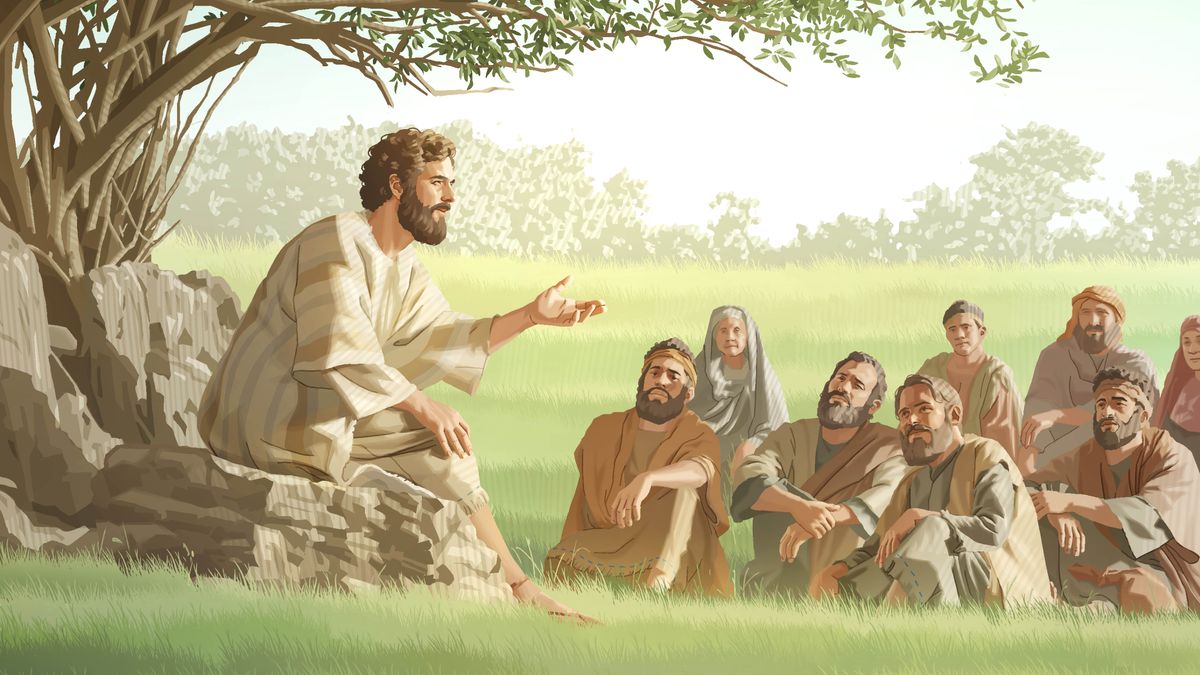
In his Sermon on the Mount, Jesus showed us how to identify the Bible principles behind God’s laws (See paragraph 11)
12. What is one principle behind the law stated at Matthew 5:21, 22? (See also picture.)
12 Read Matthew 5:21, 22. “You must not murder.” What is one principle behind this law? Jehovah does not want us to hate others—in action, word, or even thought. Jesus indicated that even though a person may not commit an act of murder, he could still violate the reason for that law if he hates his brother. If someone “continues wrathful with his brother” or verbally abuses him, the individual who is wrathful would still be “accountable.” In fact, these are the very attitudes and actions that lead to murder.—1 John 3:15.
13. How can we apply the principle found at Matthew 5:21, 22 in our life? (See also picture.)
13 How can the principle found at Matthew 5:21, 22 be applied today? We should avoid becoming resentful or holding a grudge. (Lev. 19:18; Job 36:13) Why? Because these feelings can stir up hatred in our heart, which may lead to hurtful speech or actions. (Prov. 10:12) This includes gossip and slander that can damage or ruin the reputation of others. (Prov. 20:19; 25:23) So even before there were such things as social media, blogs, the Internet, or messaging apps, Jesus provided a principle that would alert mature Christians to the possible dangers when using these modern tools. In all situations, though, we should avoid hateful speech that could lead to what is often called character assassination.

(See paragraphs 12-13)
14. What is the principle behind the law stated at Matthew 5:27, 28? (See also picture.)
14 Read Matthew 5:27, 28. “You must not commit adultery.” What is the principle behind this law? Jehovah hates not only immorality but also thoughts that can lead to immoral conduct. Jesus explained that if a married man continues to look at a woman (other than his wife) in such a way as to have a passion for her, he has sinned. So immoral thoughts should be avoided at all costs, even if this requires intense effort on our part. (Matt. 5:29, 30) This principle also applies to single Christians.
15. How can the principle found at Matthew 5:27, 28 be applied today? (See also picture.)
15 How can the principle found at Matthew 5:27, 28 be applied today? We should avoid dwelling on immoral desires. (2 Sam. 11:2-4; Job 31:1-3) Obviously, then, a mature Christian avoids all forms of pornography. He does not reason that he is only looking at immorality, so he is not doing anything wrong. He does not try to excuse such activity as simply looking at “soft porn,” which some consider to be less offensive than more explicit forms of pornography. In Jesus’ day, there were no electronic devices, movies, or photographs. Even so, Jesus gave us a principle that teaches us how Jehovah feels about the material that might be published on such modern devices. This helps us understand that Jehovah would be greatly displeased by such modern practices as sexting or engaging in virtual activities that mimic sexual immorality. Heeding this principle helps a married person to avoid dealing treacherously with his or her marriage mate. (Mal. 2:15) It also helps all Christians—married or single—to avoid anything that could lead to sexual immorality.—Prov. 5:3-14.

(See paragraphs 14-15)
16. What is the principle behind the law stated at Matthew 5:43, 44? (See also picture.)
16 Read Matthew 5:43, 44. “You must love your neighbor.” What is the principle behind this law? Jehovah wants us to view all as our neighbor and show them love. Sadly, the Jews in Jesus’ day had misapplied this instruction to mean that they could hate their enemies. But Jesus knew that this was not the intent of this law. He knew that his loving heavenly Father expects us to view everyone as our neighbor, regardless of race or nationality.—Matt. 5:45-48.
17. What is the benefit of applying the principle found at Matthew 5:43, 44 in our life? (See also picture.)
17 How can we apply the principle found at Matthew 5:43, 44 today? Love of neighbor will move us to refuse to get involved in this world’s wars and conflicts. (Isa. 2:4; Mic. 4:3) It will help us to deal kindly with those who are from a different racial, national, or religious background. (Acts 10:34, 35) It will also help us to forgive others who have hurt us or have hurt those whom we love.—Matt. 18:21, 22; Mark 11:25; Luke 17:3, 4.

(See paragraphs 16-17)
BE DETERMINED TO LIVE BY BIBLE PRINCIPLES
18. (a) What should we be determined to do? (b) What will we discuss in the next article?
18 How grateful we are that Jehovah is willing to treat us as adults and not as small children! He wants us to apply Bible principles that will help us with the decisions we regularly make. (1 Cor. 14:20) As we make those decisions, let us be determined to “keep perceiving what the will of Jehovah is.” (Eph. 5:17) Our love for Jehovah, not fear of punishment, will help us make decisions that are in harmony with his will. But there is another gift that will help us in this endeavor. It is our conscience. That is what we will discuss in the next article.
SONG 95 The Light Gets Brighter
a Christians are often called on to weigh Bible principles carefully. We need to understand how Bible principles relate to one another and to decisions that we may need to make. We can use our God-given power of reason, or thinking abilities, to make balanced decisions that will have Jehovah’s approval and blessing. In the first century, this way of worship was a change for many Jews who had become Christians. They had previously lived their life following the many rules dictated by tradition.
Your Conscience—Use Bible Principles to Train It
pp. 8–13
JULY 13-19, 2026
SONG 127 The Sort of Person I Should Be
Your Conscience—Use Bible Principles to Train It
“Each one will carry his own load.”—GAL. 6:5.
FOCUS
To show how Bible principles can help us to train our conscience to be a good guide.
1-2. (a) What gift were Adam and Eve given? (b) How should they have shown their appreciation for that gift?
ANIMALS act according to instinct. Many machines can be programmed to operate a certain way. But humans are different. We are created with a special gift, one that true Christians treasure. That gift is free will—that is, the ability to make our own decisions and choices in life. The Bible tells us that the first man, Adam, was made in God’s image, or likeness. (Gen. 1:26, 27) As intelligent creatures, both Adam and his wife, Eve, were given the opportunity to make their own decisions.
2 Jehovah did not give Adam and Eve a long list of laws. He simply told them to care for the earth, to populate it with their children, and to respect his right to set reasonable limits on what they were allowed to do. (Gen. 1:28; 2:16, 17) How should Adam and Eve have shown appreciation to the One who gave them the gift of free will? In light of all that Jehovah had given them, they should have been moved to obey these basic commands because of their love for him and their desire to make him happy.—Prov. 23:15.
3. How did Adam and Eve use their gift of free will?
3 As the Bible record reveals, Adam and Eve did not use their free will wisely. Instead, they decided to disobey Jehovah. Their decision was not guided by love and appreciation for Jehovah but, rather, by selfishness. (Gen. 3:1-7) The outcome of that decision still plagues us today.—Rom. 5:12.
4. (a) According to Galatians 6:5, what must we all do? (b) What other gift will we discuss in this article?
4 Today our lives are extremely complicated. Each day, we need to make numerous decisions. (Read Galatians 6:5.) Some are relatively simple, but others are more complex. How can we make decisions that will please Jehovah? We must first acknowledge that we need Jehovah’s help. (Prov. 16:3; Jer. 10:23) Even the perfect man Jesus saw the need for God’s help. (Heb. 5:7) As imperfect humans, we are in much greater need of guidance than Jesus was. Let us now discuss another God-given gift that will help us to make right decisions—our conscience.
WHAT IS THE CONSCIENCE?
5. (a) What is the conscience? (b) How does the conscience come to our aid? (Romans 2:14, 15)
5 Our conscience is our inner sense of right and wrong. Even a person who knows nothing about God’s laws has a conscience. (2 Cor. 4:2) Our conscience is like a judge inside of us who can either accuse us or excuse us for our thoughts and actions. (Read Romans 2:14, 15.) Our conscience can warn us against doing what we know is wrong. (1 Sam. 26:8-11) Or it can push us to do what we know is right. Having the gift of free will alone does not ensure that every decision we make is acceptable to Jehovah. Our conscience should help us discern the difference between a good decision and a bad one.
6. What problem do we have with our conscience?
6 But there is a problem with our conscience. Just as we are imperfect, our conscience is also imperfect. It can be negatively affected by our upbringing, our culture, and our sinful desires. The Bible says that a conscience can become “weak,” “defiled,” “seared as with a branding iron,” or even “wicked.” (1 Cor. 8:12; Titus 1:15; 1 Tim. 4:2; Heb. 10:22) Such a conscience no longer acts as a good guide. It is like an inaccurate scale that needs to be recalibrated. Our conscience, then, must be properly maintained in order to keep it in good condition. (1 Pet. 3:16) How can we do that?
HOW TO TRAIN OUR CONSCIENCE
7-8. (a) What will help us to train our conscience? (b) How do Bible principles help to guide us? Illustrate. (See also picture.)
7 How can we train our conscience? We must regularly read the Bible and learn what is right and what is wrong from Jehovah’s viewpoint. Studying God’s laws will help us to understand his thinking. But, as mentioned in the preceding article, specific laws may be limited in application. That is why we must also look for principles, since they give us a much broader understanding of Jehovah’s thinking and feelings.—Isa. 55:9.
8 Our journey in life could be likened to a walk through a wilderness. Imagine a wilderness without clearly defined roads, paths, or road signs. The position of the sun and the stars may indicate the general direction we should take in order to reach our destination. But a map that highlights certain landmarks along the way would be even more helpful. Such a map would reassure us that we are walking in the right direction and would help us recognize when we make any deviation from that direction. Our destination in life is to please Jehovah. The Bible is like a map that gives us specific direction. Bible principles are like the landmarks along the way. Walking in harmony with those principles will ensure that we reach our destination.

Bible principles are like the landmarks along the way that reassure us that we are walking in the right direction (See paragraph 8)
9. What other help is identified at Romans 9:1 that will assist us in training our conscience?
9 To train our conscience correctly, we need the help of God’s holy spirit. (Read Romans 9:1.) Holy spirit will help us to understand God’s thinking on matters. It can also motivate and energize us to do things in accord with Jehovah’s will. (Phil. 2:13) But how can we get the help of Jehovah’s holy spirit?
10. How can we get the help of the holy spirit? (Luke 11:10, 13)
10 Pray for holy spirit. (Read Luke 11:10, 13.) We can be confident that Jehovah is openhanded when it comes to giving us his holy spirit. (John 3:34) He gives it generously to those who act in harmony with its leadings. (Prov. 1:23; Jas. 1:5) But what else will help us to train our conscience?
11. (a) What should be our main goal in life? (b) Why do we need to make sure that our conscience is trained and working properly?
11 Always seek Jehovah’s approval. (Prov. 8:34, 35) That should be our main goal in life. If we keep that goal in our mind in every situation we face in life, this may help to train our conscience. A well-trained conscience is the combination of a mind that is attuned to how Jehovah thinks and a heart that cares about how he feels. When we consider how complicated life is today, we realize how important a well-trained conscience is. We often face situations that are not specifically mentioned in the Bible. These situations may involve our entertainment, our work, our education, or our relationships with others. So how can we be sure that Jehovah approves of the decisions we make on these matters?—2 Cor. 1:12.
12. What will help us to know if our conscience is leading us in the right direction? (Ephesians 5:10)
12 Meditate on what you read in God’s Word. (Ps. 49:3) When you read the Bible, look for principles that will help you to understand Jehovah’s thinking. (Read Ephesians 5:10.) As we navigate through the difficult problems we face in life, we need to look for principles in the Bible that will aid us in knowing whether our conscience is helping us to make the right decisions. (Prov. 2:4-9, 11-13) These principles can help us to readjust and correct our conscience as needed to ensure that we stay on course.—Heb. 5:14.
13. What should we avoid doing? Give an example.
13 Do not make a decision and then search for principles to support it. We do not want to imitate the Israelites who remained in the land of Judah after the destruction of Jerusalem in 607 B.C.E. They told Jeremiah: “May Jehovah your God tell us the way we should walk and what we should do.” (Jer. 42:3-6) But they had already decided what course of action they were going to take. When Jehovah’s direction did not please them, they stuck to their original decision. This led to disaster. (Jer. 42:19-22; 43:1, 2, 4) So before we make a decision, we need to search for Bible principles that reveal Jehovah’s thinking and then act in harmony with it.
14. Why do we need to apply Bible principles when making decisions?
14 Make decisions based on Bible principles. (Matt. 7:24-29; Jas. 1:23-25) When we make decisions based on Bible principles, we work in harmony with the holy spirit. As a result, Jehovah continues to grant us his spirit. (Acts 5:32) However, if we ignore the leadings of Jehovah’s spirit, we could find ourselves “grieving,” or working against, the holy spirit. (Eph. 4:30; Isa. 63:10; Acts 7:51) Jehovah could even withhold his spirit from us. (Ps. 51:11; 1 Thess. 5:19) That would be disastrous because we need the power and strength that comes from the holy spirit.—Eph. 3:16.
HOW TO FIND APPLICABLE BIBLE PRINCIPLES
15-16. (a) How can we find applicable Bible principles? (b) What Bible principles can help a Bible student to gain the strength to quit smoking?
15 Make use of study tools. Before we can apply Bible principles, we need to be able to identify them in the Scriptures. For example, what if your Bible student is reluctant to stop smoking? He may reason: ‘Smoking is not mentioned in the Bible. So how do we know that it is wrong?’ How can you help him find the applicable Bible principles and reason on them? One valuable tool is the Research Guide for Jehovah’s Witnesses. You could direct your student to the heading “Tobacco and Smoking.” Under that heading, he would see the reference to the article “What Is God’s View of Smoking?” (See The Watchtower of June 1, 2014.) As he reads that article, what scriptures and principles would he find?
16 Consider five of the principles mentioned in that article. (1) We should not become a slave to something that leads to death. (Rom. 6:16) (2) We should avoid anything that would harm our body. (2 Cor. 7:1) (3) Jehovah wants us to serve him whole-souled. (Matt. 22:37) (4) We should not harm others by our actions. (Matt. 22:39; 1 Cor. 10:24) (5) Jehovah can give us the strength to do what is right. (Phil. 4:13) So even though smoking is not specifically mentioned in the Bible, the principles found therein can help your student discern Jehovah’s thinking.
17. How could a Witness couple planning a wedding find relevant Bible principles to help them?
17 How could a Witness couple planning a wedding find relevant Bible principles that would help them make good decisions? Again, the Research Guide can help. Under the heading “Weddings and Receptions,” there is a list of articles that include basic Bible principles. Consider six principles that a couple could consider. (1) All the arrangements should honor Jehovah. (1 Cor. 10:31, 32) (2) Our clothing should be appropriate, modest, and not extreme. (1 Tim. 2:9; 1 Pet. 3:3, 4) (3) We should avoid showy displays that imitate Satan’s world. (John 17:14; Jas. 1:27; 1 John 2:15, 16) (4) The arrangements should be orderly. (1 Cor. 14:40) (5) Receptions should not be wild parties marked by drunkenness. (Gal. 5:21) (6) Someone should have the responsibility to oversee the event.—John 2:8, 9.
18-19. (a) What other tool can help us? (b) What principles can you find using this tool that will help you with decisions concerning celebrations? (See the box “Can You Discern the Principles?”)
18 Another tool that many have found beneficial is Scriptures for Christian Living. This publication lists scriptures under a variety of practical topics. Once you have selected the topic, you will see a list of questions along with scriptures that can help you to discern Bible principles. For example, a Christian may wonder whether he should attend a certain celebration. If he turns to the heading “Celebrations,” he will find the subheading “Celebrations that Christians avoid.”
19 Consider some of the material highlighted under that section: “Why is it wrong to share in celebrations that are contaminated by false religion? (1Co 10:21; 2Co 6:14-18; Eph 5:10, 11).” Examples are then given of such celebrations. Under the subheading “Nationalistic celebrations,” Scriptural principles are listed that apply when considering whether a Christian should celebrate events of a nation’s political history, commemorate wars of a nation, or participate in ceremonies that give worshipful honor to prominent men. How thankful we are that Jehovah’s organization gives us such tools to help us train our conscience!
PROVE THAT YOU HAVE A WELL-TRAINED CONSCIENCE
20. How can we show that we have trained our conscience properly?
20 We treasure the gift of free will. But we also realize that we must train our conscience so that we can use our free will responsibly. A well-trained conscience will help us to make decisions that bring honor to Jehovah and are in harmony with his will. To do this, we need the help of Jehovah’s holy spirit. So we must continue to ask for holy spirit and then work in harmony with its leadings. Bible principles will also help to guide our conscience. May we use these gifts properly and then see the power of God’s Word in our life.—2 Tim. 3:16, 17; Heb. 4:12.
SONG 135 Jehovah’s Warm Appeal: “Be Wise, My Son”
Make Wise Decisions Regarding Additional Education
pp. 14–19
JULY 20-26, 2026
SONG 133 Worship Jehovah During Youth
Make Wise Decisions Regarding Additional Education
“The shrewd one ponders each step.”—PROV. 14:15.
FOCUS
Factors and Bible principles to consider when deciding whether to obtain additional education.
1-2. (a) What decisions do young people face? (b) What is meant by the term “additional education”? (See “Expression Explained.”)
“WHAT type of work would you like to do when you grow up?” If you are young, you have likely been asked this question many times. The best career that you could choose is a career in full-time service. However, you will also need to support yourself financially. (2 Thess. 3:10) No doubt, you have thought about what secular work you could do in the future.
2 To find employment, some young people—usually under parental guidance—choose to get additional education after completing the required schooling where they live.a Maybe you have wondered if you should get additional education. If so, what type? This article will discuss Bible principles that can help you think wisely about your education. Wise thinking leads to wise decisions. Although this article is primarily addressed to young people, it can help any Christian who is considering additional education. The principles can also help parents guide their children.
SHOULD YOU OBTAIN ADDITIONAL EDUCATION?
3. Why might some Christians consider obtaining additional education?
3 In some places, a person can earn an adequate living without further education. In other places, additional education may help someone find employment that pays better or has better hours. For a Christian, this could allow himb to spend more time in the preaching work or in other theocratic activities. Yet, additional education requires sacrifices and can present a Christian with certain challenges.
4. Who should decide if a Christian will obtain additional education? (See also footnote.)
4 The Bible says that each person must “carry his own load of responsibility.” (Gal. 6:5, see study note.) Thus, each adult Christian must make his or her own decision about whether to obtain additional education.c Parents are also responsible for decisions regarding their young child’s education. (Eph. 6:1) And their guidance can prepare their child to make wise decisions about education once he is an adult.—Prov. 22:6.
5. When should a person begin thinking about additional education, and why? (See also picture.)
5 Young people often need to make a decision about whether they will pursue additional education before they finish their required schooling. Of course, it is wise for a young person to discuss this topic with his parents well before he has to decide. This will give them time to work together, researching different options. They may be able to choose subjects at school that will prepare him for his future education or employment. Do they have to make a decision before the young person finishes his required schooling? Not necessarily. (Prov. 21:5) Some young ones have chosen to finish school, find work, and start pioneering while they determine whether to obtain additional education. Even later in life, a person may consider such a decision.

Christian parents help their child to make wise decisions about additional education (See paragraph 5)
6. What can help someone to make a wise decision regarding additional education?
6 What can help you to make a wise decision regarding additional education? Be sure to pray about the matter. (Jas. 1:5) Furthermore, consider taking the following steps. First, honestly analyze your motives. (Ps. 26:2) Second, carefully analyze the education that you are considering. (Prov. 14:15) Let us discuss these steps one at a time.
ANALYZE YOUR MOTIVES
7. What care should Christians take when considering additional education?
7 If you are thinking of obtaining further education, a key question to ask yourself is, ‘Why do I want to obtain this form of education?’ Many people pursue education so that they can get a job that they will enjoy or one that pays better. Are these motives wrong? Not necessarily. (1 Tim. 5:8) However, the Bible warns us of the dangers of materialism and of seeking security in this system of things. (Prov. 23:4, 5; 1 Tim. 6:8-10; 1 John 2:17) If your motive is to obtain wealth or prestige, not only might you be left feeling empty but you could also drift away from Jehovah.
8-9. (a) How should Christians view education? (Matthew 6:33) (b) What do you learn from the comments made by Josefina, Morine, and Iris?
8 How then should you view education? Nothing should be more important to us than serving Jehovah. (Matt. 22:37, 38; Phil. 3:8) So view education as a means to help you support yourself while you focus your life on serving Jehovah wholeheartedly.—Read Matthew 6:33.
9 Note what helped some Christians to keep a proper view of additional education. Josefina, from Chile, says: “Secular studies were a means to help me serve Jehovah as fully as possible. My education program had to revolve around my spiritual goals, not the other way around.” A sister named Morine chose a one-year course to become a hair stylist. Why? She says: “My goal was to serve where the need was greater. So I looked for a course that would help me to reach that goal. After finishing the course, I used what I had learned to work as a hair stylist and save money for the move. And once I moved to where the need was greater, my education helped me to find work.” Iris, who completed a longer course in the dental field, says: “Additional education may have some advantages, but it will never give you true success and satisfaction. The formula is simple: If Jehovah is the center of your life, satisfaction and success are guaranteed.” Yes, when our friendship with Jehovah is the most important thing in our life, we will make decisions that result in lasting happiness.
ANALYZE THE EDUCATION
10. How can the principle found at Deuteronomy 32:29 be applied when deciding on additional education?
10 You may have in mind a specific course or training program. But it is also useful to consider other possibilities—either in the same field or in other fields. (Compare Proverbs 18:17.) Today, there are education options that did not exist in the past, such as online courses. And do not forget to consider whether you could support yourself without further education. For example, Johanna, from Finland, did not get any additional education. She says: “After I finished school, I started working part-time and pioneering. I’ve had a variety of jobs, and I’ve seen how Jehovah always keeps his promise to provide what we need.” Remember that all decisions regarding additional education—whether to obtain it and what type to obtain—involve advantages and disadvantages. So ask yourself: ‘Are the advantages worth the disadvantages?’ (Read Deuteronomy 32:29; 1 Cor. 10:23) Let us consider some factors that will help you answer that question.
11. Why is it important to consider the schedule of the education or training? (See also pictures.)
11 The schedule. Consider how many hours you will spend each week attending classes, receiving training, and doing homework. Will you still have time for your spiritual routine and family obligations? (Phil. 1:10) Could your secular studies leave you feeling too tired mentally for meeting preparation or personal study? This was the case for Jeroz, from India. He says: “I struggled to focus on spiritual activities. At times, I missed meetings. Looking back, I realize that the course was not worth the time and energy.” Then again, some courses are not so time-consuming; some are part-time, others require little homework. For example, Rabeca, from Mozambique, is happy with her choice of education. She says: “The course was only two hours a day. It allowed me to continue regular pioneering.”

If you are considering obtaining additional education, make sure that you will have time for all your important responsibilities (See paragraph 11)
12. How can a person make the best use of his time with respect to education? (Ecclesiastes 12:1)
12 The length. Consider how many months or years it will take to complete the education program. Would acquiring that education be the best use of your time? (Eph. 5:15-17) If you are young, will the education program allow you to give Jehovah your best during your youth, perhaps in the full-time ministry? (Read Ecclesiastes 12:1.) Are there shorter education options in the same field? For example, vocational training and trade schools may give you practical skills in less time and at less cost than universities. Mario, from Chile, says: “I chose a two-year technical course that was cheaper than a university course. I had classes only four days a week, which permitted me to pioneer while taking the course.”
13. How could a person be affected by where he lives while obtaining additional education?
13 The location. You may find an education program that is close to home. But what if you find a program in another city? Or what if the education program requires you to live on campus? Be aware that moving away from your family poses a serious spiritual danger, especially if you will room with people who do not share your faith. (Prov. 22:3; 1 Cor. 15:33) Matias, from Mozambique, completed an inexpensive one-year course. Yet, he regrets his decision. Why? He says: “I had to spend the entire time at a boarding school. I was tempted daily to do wrong things. I recommend taking a course that will not separate you from your family.” A sister from Russia says: “I avoided dangers and temptations by living at home with my parents instead of on campus or in a dormitory.” You may even be able to find an online course.
14. How can the principle found at Luke 14:28 help you when considering additional education?
14 The financial cost. Some courses are inexpensive or may be funded by the government. In such cases, getting additional education may be an affordable way to gain knowledge and skills that will help you to obtain employment. But in other cases, additional education is expensive. There may also be indirect costs, such as private schooling or tutoring to help you qualify for enrollment. Some courses leave students with many years of debt. Adilson, from Mozambique, regrets his choice in education. He says: “My family sacrificed food and other basic needs to pay for my four-year course.” As you analyze a course or training program, ask yourself: ‘How much will it cost? Can my family or I afford it? Is there a less expensive option?’ (Read Luke 14:28.) ‘If I get into debt, how long will it take to pay it off? Will my future employment pay enough to sustain me and pay off the loan?’—Prov. 22:7.
15. Why should you consider the work prospects before deciding on a particular type of education?
15 The work prospects. Consider the employment market where you live or where you want to live. Will the education actually help you to find a job? Some courses provide little practical training. Instead, they are mostly theoretical or they focus on intellectual, academic, or philosophical subjects. (Col. 2:8) A sister from India says: “My course did not help me to develop the practical skills that employers require. As a result, I was not able to find work in the field I had studied.” Other education may be in a field with few job opportunities. Sublime, from the Central African Republic, completed a course on repairing air conditioners. However, he says: “Where I live, most people repair things themselves, so it can be difficult to find work.”
16. Why is it worthwhile to consider the type of work that the education may lead to?
16 Contemplate also the type of work you are likely to find. Will you enjoy it? (Eccl. 3:12, 13) What will the work environment be like? Is it an industry known for being unsafe, competitive, or stressful? How much money does that type of work typically pay? Will it be enough to support yourself? Will you need ongoing education to keep the job? Most important, will it allow you to put Kingdom interests first? (Eccl. 12:13) Of course, when work is scarce, we cannot afford to be too choosy. But the choice you make regarding education can affect your employment opportunities in the future. Tabitha, from India, chose a six-month sewing course. She says: “I reasoned that working as a tailor would help me to pioneer. It is a job that would always be in demand, give me a flexible schedule, and not require a large investment.” The course helped Tabitha find work to support her pioneering.
17. (a) How can a Christian find the information he needs to make a wise decision regarding education? (b) What Bible principles shed light on this decision? (See the box “Bible Principles to Consider.”)
17 We have discussed various factors to consider about additional education. How can you find the information you need to make a wise decision? Research potential courses by visiting the institution or its website. Check job listings to learn how many jobs are available in that field. You could also consult with those who have completed similar training or who work in that field. (Prov. 13:10) Ask them, “What are the pros and cons of that education or employment?” Talk to others who are happily serving Jehovah. (Prov. 15:22) What education and employment do they suggest? They may even mention a field of employment that you have not considered.
18. What should we remember?
18 As we have seen, additional education has advantages and disadvantages. So prayerfully consider your options. Remember, further education may provide a measure of material stability, but the only way to be truly happy is to have a close friendship with Jehovah. (Ps. 16:9, 11) Jehovah will always care for his people, regardless of their secular education. (Heb. 13:5) Now, what if you have decided to get additional education? What can help you to remain close to Jehovah during your studies? This will be discussed in the next article.
SONG 45 The Meditation of My Heart
a EXPRESSION EXPLAINED: In this article and in the next, “additional education” refers to any secular education or training beyond the basic education provided by the government, including universities, apprenticeships, trade schools, technical schools, vocational training, short courses, and continuing education.
b This information also applies to sisters.
c In the past, our publications have discouraged Christians from obtaining certain types of additional education. For example, the article “Parents—What Future Do You Want for Your Children?” published in the October 1, 2005, issue of The Watchtower commented on the dangers associated with higher education. While these dangers still exist, deciding whether to obtain additional education is a personal matter. Each Christian—and in the case of young children, each family head—should prayerfully consider Bible principles and the unique factors involved with a certain educational program before making a decision. No Christian—including elders—should judge a fellow Christian’s personal decision on this matter.—Jas. 4:12.
Stay Spiritually Strong While Getting Additional Education
pp. 20–25
JULY 27–AUGUST 2, 2026
SONG 56 Make the Truth Your Own
Stay Spiritually Strong While Getting Additional Education
“To the extent we have made progress, let us go on walking orderly in this same course.”—PHIL. 3:16.
FOCUS
Four Bible principles that will help you stay spiritually strong if you decide to get additional education.
1-2. (a) If you choose to get additional education, what do you need to keep doing? (b) What does it mean to “go on walking orderly in this same course”? (Philippians 3:16)
SOME of Jehovah’s servants have decided to get additional education that goes beyond the basic schooling that is mandated by the state. They may feel that such education could help them to find work that will support them in their service to Jehovah. If you have decided to get additional education, how can you make sure that you will remain close to Jehovah? (Jas. 4:8a) No doubt you faced tests of faith during your previous years in school. Now you will need to “go on walking orderly in this same course”—that is, to continue serving Jehovah faithfully, just as you have already.—Read Philippians 3:16.
2 The Greek verb used in the phrase rendered “walking orderly in this same course” was often used in a military sense to describe the unified marching of soldiers. If you decide to get additional education, you will need to keep “marching forward” in Jehovah’s service, neither standing still nor retreating. This article will discuss four Bible principles that will help you. These principles are not new to you. You applied them in the past, and you will need to continue applying them while receiving additional education and well after you complete your schooling.
MAINTAIN A HEALTHY SPIRITUAL ROUTINE
3. As you are getting additional education, what challenge might you face with regard to your daily routine?
3 The challenge. Additional education might place new demands on you that will affect your daily routine. Because you naturally want to do well in your schooling, you could begin to treat your service to Jehovah as of lesser importance. You could even start to neglect Christian meetings, participation in the ministry, personal Bible study, and prayer.—Rev. 2:4.
4. What can help you to have “plenty to do in the work of the Lord”? (1 Corinthians 15:58)
4 Read 1 Corinthians 15:58. Just as a bicycle stays upright when it is in motion, you will stay upright spiritually if you are in motion, having “plenty to do in the work of the Lord,” in Jehovah’s service. This is not simply a matter of spending some time in theocratic activities. It is a matter of your priorities. View yourself as a servant of Jehovah first and as a school student second. (Matt. 22:37) A young sister named Samantha says, “I promised myself that if my education were ever to interfere with my service to Jehovah, I would quit school.”
5. What can you do to stay active in Jehovah’s service?
5 What you can do before you begin your additional education. Have your priorities clearly in focus. Ask yourself, ‘What plan do I have in place to stay regular in my meeting attendance, ministry, and personal study?’ (Josh. 1:8; Matt. 28:19, 20; Heb. 10:25) Also, think back: How did you keep your priorities in focus during your previous years in school? If you feel that you could have handled things better, what adjustments can you make now? Be determined to stay active in Jehovah’s service as you get additional education. Give adequate attention to your education—but not at the expense of your worship.a—Matt. 6:24.
6. What can you consider while making a self-examination? (See also picture.)
6 As you get your additional education, regularly make a self-examination, perhaps every month or so. Ask yourself, ‘Are my priorities still in focus?’ Be alert to warning signs—for example, a habit of skipping meetings or arriving late, of thinking about your school assignments while the meeting is in progress, or of attending meetings only virtually. Note, too, whether your habit of prayer and Bible reading begins to slack off or whether your ministry becomes superficial—a mere chore that you want to finish as quickly as possible. If you see such traits developing, act quickly. Do not let your education keep you from giving priority to Jehovah’s service.

Do not let your education keep you from giving priority to Jehovah’s service (See paragraph 6)
“GUARD YOUR THINKING ABILITIES”
7. As you are getting additional education, what challenges might you face with regard to your thinking?
7 The challenge. Depending on the courses you take, your additional education might expose you to the world’s “philosophy and empty deception,” including atheism and evolution. (Col. 2:8) It could also promote a spirit of self-reliance. One young brother recalls: “We weren’t just taught a skill; we were taught a way of thinking, one that often wasn’t in harmony with Jehovah’s thinking. For example, we were taught that our success in life depended on ourselves. This kind of thinking left Jehovah out of the equation. It made it more difficult for me to rely on him.”
8. Why is it important to “guard your thinking abilities”? (Proverbs 5:1, 2)
8 Read Proverbs 5:1, 2. The Bible warns you to “guard your thinking abilities.” To guard something implies that it is under threat of attack. That is certainly true with regard to your thinking abilities. (1 Pet. 5:8) The world’s spirit can undermine your faith with regard to morals, the origin of life, or even the existence of God. People may present their view as “higher” thinking, but it is actually lower thinking. In fact, it is “foolishness with God.”—1 Cor. 3:18-20.
9. What can you do to guard your thinking abilities?
9 What you can do before you begin your additional education. To guard your thinking abilities, make sure your Bible-based convictions are strong before you begin your additional education. Ask yourself such questions as: ‘Why do I believe in God? How do I know that the Bible is his Word? What convinces me that the Bible’s moral standards are superior to those of the world?’ Also, think back: No doubt you were exposed to the world’s thinking during your previous years in school. Was your faith weakened by the confidence that some had in the evolution theory? Were you easily tempted by the unclean lifestyle of your fellow students? If you feel that you could have done better in the past, how can you strengthen your convictions now? Be determined to guard your thinking abilities as you get additional education.—2 Tim. 2:16-18.b
10. How can you continue to protect your thinking abilities?
10 As you get additional education, keep making a regular self-examination. Ask yourself: ‘Am I being influenced by the ungodly lifestyles of those around me? Can I see through the world’s empty philosophies? Am I fully convinced that only God’s Kingdom can solve mankind’s problems?’ To guard your thinking abilities, continue to be a good student of God’s Word. Bible study and meditation will help you to strengthen your conviction that you have the truth.—1 Tim. 4:15.
MANAGE YOUR TIME WISELY
11. As you are getting additional education, what challenge might you face with regard to your use of time?
11 The challenge. Additional education may place heavy demands on your time, especially when you are studying for exams or when you have a tight deadline to complete a project. If you do not manage your time wisely, you could suffer from undue stress and even set yourself up for burnout. That is why it is vital for you to take care of your physical and emotional health.
12. What activities will you need to include as you make “the best use of your time”? (Ephesians 5:15, 16)
12 Read Ephesians 5:15, 16. It can be difficult to make “the best use of your time.” You need balance. For example, even more than giving attention to your classes, you need to have time for wholesome association with fellow believers and family members. (Ps. 133:1; Prov. 18:1) Your spiritual needs are the top priority. (Matt. 6:33) You might also have family responsibilities and a job to care for. In addition, you need to take care of your health by getting adequate rest and moderate exercise. (Eccl. 4:6; 1 Tim. 4:8) All of this requires good time management.
13. What can you do in order to make the best use of your time?
13 What you can do before you begin your additional education. The Bible says that planning leads to success. (Prov. 21:5) With that in mind, have a realistic schedule in place before you begin your additional education. To help you do that, think back: How well did you manage your time during your previous years in school? If you feel that you could have done better in the past, what adjustments can you make now? Be determined to control your time rather than allow time to control you.c
14. What questions might help you to examine yourself?
14 As you get additional education, regularly make a self-examination. Ask yourself: ‘Is my schedule allowing me to get sufficient rest and exercise? Do I still have some time to associate with fellow believers? Can I complete my homework on time? If not, is it because I have too much to do or is it because I procrastinate? Would others, including family members, agree with my assessment?’ Whether you need to adjust your schedule or simply develop better self-discipline, act quickly. You might even talk to others who have good time-management skills.—Prov. 11:14.
KEEP “WALKING WITH THE WISE”
15. As you are getting additional education, what challenge might you face?
15 The challenge. As you get additional education, your fellow students might try to include you in their social life. You might be tempted to join them. After all, you have a lot in common with them, especially if much of your time is spent with them in class. You might even feel that you have more in common with your classmates than you do with some of your fellow believers. However, you need to be cautious. Although you share a classroom with your fellow students, you do not share their values. And the more time you spend with them, the more their thinking can affect you. (1 Cor. 15:33) Michael, who completed a four-year electrical apprenticeship, found that to be true. He says, “I spent more than 40 hours a week with coworkers whose view of the opposite sex, choice of music, and use of vulgar language started to affect my thinking.”
16. What does “walking with the wise” mean? (Proverbs 13:20)
16 Read Proverbs 13:20. The Bible warns us about the dangers of harmful association. On the other hand, “the one walking with the wise will become wise.” The lesson is clear: We are influenced by those we choose to spend time with, either for good or for bad. Maintain friendships with those who have your best interests at heart—those who, like you, wholeheartedly serve Jehovah.—Ps. 101:6, 7; 119:63.
17. What can you do to avoid harmful association?
17 What you can do before you begin your additional education. Decide which limits to set with regard to your association. A Witness named Trenton says: “I’m cordial with my fellow students, but I don’t spend time with them after school. I view them as my classmates, not as my close friends.” What limits will you set? To help answer that question, think back: What limits did you set during your previous years in school? If you feel that you could have done better in the past, what adjustments can you make now? Be determined to keep “walking with the wise” and to keep avoiding company with those who do not love Jehovah.d
18. What self-examination would be beneficial? (See also picture.)
18 At regular intervals, make a self-examination. Ask yourself: ‘Am I getting too close to my classmates? Are their habits, their speech, and their attitudes beginning to affect my speech and thinking? Would Jehovah agree with my personal assessment?’ (Ps. 1:1) If you detect negative changes in yourself, act quickly. Make sure that your best friendships are among those who love Jehovah the way you do. Also, don’t hesitate to witness to your classmates. You are in a unique position to help them learn about the truth.

Do not hesitate to witness to your classmates (See paragraph 18)e
BE PREPARED
19. How can you prepare yourself to overcome spiritual challenges as you get additional education? Illustrate.
19 A wise hiker prepares himself before he sets foot on the trail. Although he cannot predict every challenge that he will face, he is in shape, he is properly dressed, and he has a goal—he knows where he is headed. You can take a similar approach as you get additional education. Keep strong in the faith, wear “the complete suit of armor from God,” and have a goal—not to achieve what the world considers “success,” but to bring glory to Jehovah in everything you do.—Eph. 6:11-13; 1 Cor. 9:26, 27; 10:31.
20. How can you “keep testing whether you are in the faith”?
20 The Bible urges us: “Keep testing whether you are in the faith; keep proving what you yourselves are.” (2 Cor. 13:5) You can do that as you get additional education. Regularly examine yourself in the areas discussed in this article. Are you maintaining a healthy spiritual routine? Are you guarding your thinking from the so-called wisdom of this world? Are you managing your time wisely? Are you cultivating friendships among fellow Christians while avoiding harmful association? Those are questions that you need to ask yourself whether you are at school, in the workforce, or anywhere else. Be determined to stay strong in the faith in whatever circumstance you face. You can be certain that Jehovah will bless your efforts to do so.—Prov. 3:5, 6.
SONG 87 Come! Be Refreshed
a For suggestions on how you can stay active in Jehovah’s service, see the article on jw.org entitled “Young People Ask . . . What Will I Need to Do After Baptism?—Part 1: Keep Up Your Activity.”
b For suggestions on how you can guard your thinking, see the article “Do Not Be Fooled by ‘the Wisdom of This World’” in the May 2019 issue of The Watchtower.
c For suggestions on how you can organize your daily activities, see the article on jw.org entitled “Young People Ask . . . How Can I Manage My Time?”
d For suggestions on how you can make wise, careful choices regarding your association, see lesson 48, “Choose Your Friends Wisely,” in the Enjoy Life Forever! book.
e PICTURE DESCRIPTION: While taking a course in hairdressing, a sister witnesses tactfully to a classmate.
Respect the Decisions of Others
pp. 26–31
AUGUST 3-9, 2026
SONG 113 Our Possession of Peace
Respect the Decisions of Others
“Do not pass judgment on differing opinions.”—ROM. 14:1.
FOCUS
How to show respect for fellow believers when they make decisions that we do not agree with.
1-2. Why do our personal decisions sometimes differ from those of other Christians?
HAVE you ever felt unfairly judged because of a decision you made? Have you ever judged a fellow Christian on the basis of a decision hea made? No doubt most of us could answer yes to both questions.
2 We should not be surprised that at times our decisions differ from those of other faithful Christians. Why? Because we are unique. Each of us has his or her own viewpoint. Our thinking is influenced by our culture, family background, and personal experiences. But we should not allow our differing opinions to threaten the peace and unity of the congregation.—Eph. 4:3.
3. What might cause us to judge a fellow Christian for a decision he has made?
3 When a fellow Christian makes a decision that we disagree with, we might feel the need to convince him to change his mind or we might voice our concerns to others. Likely, we have good motives. We love our brothers and sisters, and we want what is best for them. (Prov. 17:17) So we do not want to see them make a decision that they will later regret or that could damage them spiritually.
4-5. What should we do if a fellow Christian decides to do something that differs from what we would have done?
4 Should we discuss our concerns with our brother if we disagree with his decision? That depends on a number of factors. For example, if we learn that he is thinking about doing something that violates a Bible command, then out of love for him, we should try to help him to correct his thinking. (Prov. 27:5, 6) Yet, what should we do if a brother decides to do something that does not break one of God’s laws but simply differs from what we would have done? We find the answer in our theme scripture. We “do not pass judgment on differing opinions.”—Rom. 14:1.
5 Still, we may find it hard to respect his decision. In this article, we will discuss why we should respect the decisions of others and how we can do so. But first, let us consider some situations involving personal decisions that could lead us to pass judgment on our brothers and sisters.
WHAT PERSONAL DECISIONS COULD CAUSE US TO JUDGE OTHERS?
6-7. Describe scenarios in which we might judge others for their decisions.
6 As mentioned earlier, we might have strong opinions about certain topics because of our background or experiences. We might assume that others share our viewpoint. Yet, that may not be the case. Consider a few scenarios. Scenario 1: Before learning the truth, a brother grew up with a father who abused alcohol. At a gathering, the brother sees other Christians drinking alcohol. He is disappointed and tells them that what they are doing is wrong. Scenario 2: A sister has successfully battled a serious disease. Later, she learns that another sister has been diagnosed with the same illness. The first sister wants to help, so she pressures her friend to follow the same medical treatment she did—whether by means of a certain diet or through the use of conventional medicine or natural remedies. Scenario 3: A brother used to be a member of a false religion. He hates his former life course. When he learns that a fellow Christian attended a funeral in a church, he is offended.b
7 Consider a few additional scenarios. Scenario 4: A brother grew up during a time when most people felt that it was inappropriate for men to grow beards or for women to wear dress slacks to formal events. While the brother is aware of the recent adjustment in our view of this subject, he insistently tells others that Christian men should not wear beards and that Christian women should wear dresses while engaged in theocratic activities. Scenario 5: An elder knew a brother who pursued additional education and later left the truth. Now a young brother in the elder’s congregation has decided to seek additional education. The elder is concerned and tries to convince the young brother and his parents to change their mind.
8. (a) What could cause a parent to become judgmental of other parents? (b) How might our having a critical attitude toward others affect the congregation?
8 Consider a situation that could affect parents. Scenario 6: As a parent, you work hard to raise your children “in the discipline and admonition of Jehovah.” (Eph. 6:4) But other Christian parents seem to be more permissive than you are. For example, they allow their children to have a later curfew, to play nonviolent video games, or to have a cell phone at an early age. As a result, your child feels that you are being overly strict. “Why can’t you be more like my friend’s parents?” he asks. Such a situation could cause you to become critical of the other parents. The truth is that any Christian’s personal decision that differs from ours could cause disagreements. For example, we might question how he spends his money, how often he goes on vacation, or what entertainment he chooses. But we must not allow our feelings to become more important to us than the unity of the congregation.
9. What should we remember? (See also picture.)
9 While the decisions of one Christian may differ from those of another, this does not necessarily mean that one is right and the other is wrong. (Rom. 14:5) Just because Christians are instructed “to think in agreement” when it comes to Jehovah’s standards, this does not mean that we have to think alike in all personal matters. (2 Cor. 13:11) We could compare our personal decisions to the choices we make when we travel to a certain location. Often, there are several different routes that lead to the same destination. We choose the one that suits our preferences and limitations. In a similar way, Christians may make different choices in personal matters, but our destination is the same: We seek to please Jehovah. So we do not judge others for the personal decisions they make.—Matt. 7:1; 1 Thess. 4:11.

Travelers may choose from several routes to reach a destination; likewise, Christians may make different decisions in personal matters when serving Jehovah (See paragraph 9)
WHY RESPECT THE PERSONAL DECISIONS OF OTHERS?
10. According to James 4:12, what do we not have the authority to do, and why?
10 The Bible provides several reasons why we should respect the personal decisions of others. Consider a few of them. We do not have the authority to judge others in personal matters. (Read James 4:12.) Jehovah is the righteous Lawgiver and Judge. Only he has the right to set standards and rules for life. So our brothers and sisters are accountable to Jehovah, not to us. (Rom. 14:10) We do not have the right to judge or criticize the decisions of others based on our own standards or opinions.c
11. How can we contribute to the unity of the congregation? (See also picture.)
11 Jehovah requires unity among his worshippers, not uniformity. In fact, our God loves variety! We see evidence of this in creation. For example, no two snowflakes are the same. And just think about humans. Of the over eight billion people on earth, no two people are exactly alike in appearance or personality. Jehovah created us to be different. He does not want us to be clones of one another. But he does want us to be united. So rather than let our differences divide us, we promote peace. We place greater value on the unity of the congregation than on our opinions and preferences.—Rom. 14:19.

Jehovah created us to be different from one another, but he wants us to be united (See paragraph 11)
HOW TO RESPECT THE VIEWPOINTS OF OTHERS
12-13. What should we keep in mind if we feel that someone has taken “a false step”? (Galatians 6:1; see also the box “When You Disagree.”)
12 When others make decisions in personal matters. Ask yourself, ‘Is the person taking “a false step” or simply a different step?’ If he is taking a false step, one that violates a Bible command, ask yourself, ‘Do I have the Scriptural qualifications needed to readjust him, or is someone else in a better position to do so?’ If you are qualified to help, try to reason with him in a spirit of mildness. (Read Galatians 6:1.) However, you may often find that his choice is simply a different step—one that does not align with your viewpoint. If that is the case, do not question him or speak negatively about his decision. Respect his right to decide for himself, and do not judge him.—Rom. 14:2-4.
13 Think of this comparison: If you went to a restaurant with a friend, would you insist that he order the same food that you ordered? No. You would respect his right to select his own meal. After all, what he chooses to eat has little impact on you. And if the roles were reversed, you likely would not want your friend to order your meal based on his preferences. Similarly, we can show respect for others by allowing them to make personal decisions without trying to impose our opinions on them.
14. How can you promote unity when making personal decisions? (1 Corinthians 8:12, 13)
14 When you make decisions in personal matters. You can promote unity by doing your best to avoid offending others. (Read 1 Corinthians 8:12, 13.) At times, you may know that a decision you are about to make is “lawful,” that is, acceptable. But if it will offend your brother, will it be “advantageous”?d (1 Cor. 10:23, 24) In such cases, rather than insist on your rights, consider putting your preferences aside. (Rom. 15:1) But didn’t we just establish that others should respect our decisions in personal matters? Yes. They should respect our choices just as we should respect theirs. But we should also keep in mind the Bible’s counsel found at Romans 12:18, which says: “As far as it depends on you, be peaceable with all men.” Therefore, we do all that we reasonably can to maintain peace with others and avoid needlessly offending them.
15. How can elders contribute to the unity of the congregation? (1 Corinthians 4:6)
15 Elders show respect for the decisions of others. Elders contribute to the unity of the congregation by not making rules on personal matters and by not going “beyond the things that are written” in the Bible. (Read 1 Corinthians 4:6.) And by extension, they do not go beyond the Bible-based counsel that is written in our publications. Additionally, when a fellow Christian asks for help, elders are careful not to rely solely on their own experience when giving advice. Instead, they base their counsel on God’s Word.—Isa. 48:17, 18.
16. How can an elder show respect for the decisions made by the body of elders?
16 An elder also shows respect for the collective decisions made by the body of elders. Once the body of elders has prayed for holy spirit, reviewed and applied Scriptural direction, and come to a decision, each elder should support that decision even when his personal opinion is not adopted by the majority. (Eph. 5:17) In addition, elders are careful not to read more into theocratic direction than is really there. For example, an elder would not take a sentence in one of our publications out of context in an effort to support his own personal viewpoint.
17. How do we benefit when we respect the decisions of others?
17 As we have learned, we are unique. Each of us has his own opinions and preferences. But such variety is a good thing! Our different backgrounds and personalities make the congregation an inviting place to be. So rather than let our differences divide us, we promote peace. We are careful not to offend others. We respect the decisions of others in personal matters. When we do so, our effort will be rewarded. We will enjoy a happy, united congregation.—Ps. 133:1; Matt. 5:9.
SONG 89 Listen, Obey, and Be Blessed
a This information also applies to sisters.
b A number of factors should have a bearing on a Christian’s decision regarding whether to attend a funeral or a wedding in a church. See the article “Questions From Readers” in the May 15, 2002, issue of The Watchtower.
c At times, elders need to judge those who violate Bible commands. However, elders keep in mind that they are judging for Jehovah based on his righteous standards, not their own.—Compare 2 Chronicles 19:6.
d For examples, see the Enjoy Life Forever! book, lesson 35 point 5.
Manaen—Put Spiritual Pursuits First
p. 32
BIBLE CHARACTER
Manaen—Put Spiritual Pursuits First
Manaen was among those who took the lead in the first-century Antioch congregation. He “was educated with Herod the district ruler.” (Acts 13:1) So Manaen had a significant education and may have enjoyed a privileged upbringing.
Despite his background, Manaen chose to become a Christian and support the congregation. He did not use his education or his connection to the ruling class to advance himself. Instead, he served his brothers.
Manaen’s example shows that serving Jehovah is more important than pursuing a worldly status. Like Manaen, we should prioritize spiritual activities over worldly pursuits. (Matt. 6:33) Additionally, even though we value education, we “make sure of the more important things” and ensure that secular pursuits do not interfere with our worship of Jehovah.—Phil. 1:9, 10.