The Watchtower — Study Edition · June, 2026
Study Edition
pp. 1–32

Study Edition
JUNE 2026
STUDY ARTICLES FOR: AUGUST 10–SEPTEMBER 6, 2026
© 2026 Watch Tower Bible and Tract Society of Pennsylvania
This publication is not for sale. It is provided as part of a worldwide Bible educational work supported by voluntary donations. To make a donation, please visit donate.jw.org.
Unless otherwise indicated, Scripture quotations are from the modern-language New World Translation of the Holy Scriptures.
Table of Contents
p. 32
Table of Contents
IN THIS ISSUE
Study article for August 10-16, 2026
2 How to Remain Loyal When We Face Tests of Faith
Study article for August 17-23, 2026
8 How to Maintain Christian Friendships
Study article for August 24-30, 2026
14 Benefit From the Field Service Group Arrangement
Study article for August 31, 2026–September 6, 2026
20 Pay Attention to How You Listen
How to Remain Loyal When We Face Tests of Faith
pp. 2–7
AUGUST 10-16, 2026
SONG 122 Be Steadfast, Immovable!
How to Remain Loyal When We Face Tests of Faith
“Lord, whom shall we go away to? You have sayings of everlasting life.”—JOHN 6:68.
FOCUS
We can remain loyal to Jehovah no matter what tests of faith we may face.
1-2. What happened as Jesus was teaching in Capernaum?
“THIS speech is shocking; who can listen to it?” (John 6:60) That is the way that many of Jesus’ disciples reacted to statements Jesus made while he was teaching in Capernaum. Jesus had said: “Unless you eat the flesh of the Son of man and drink his blood, you have no life in yourselves.” And he continued: “Whoever feeds on my flesh and drinks my blood has everlasting life, and I will resurrect him on the last day.”—John 6:53, 54.
2 Those who were deeply offended by Jesus’ words stopped following him. Did they not have any faith in him at all? Actually, before this incident some—including Jesus’ disciples—were so impressed by what Jesus did that they said: “This really is the Prophet who was to come into the world.” (John 6:14) So it is evident that those disciples had a degree of faith in Jesus. But when their faith was tested, they did not remain loyal to him.
3. How did the apostles react to Jesus’ words, and why? (See also picture.)
3 The apostles reacted differently to Jesus’ words. When Jesus asked them if they wanted to leave him as well, Peter answered: “Lord, whom shall we go away to? You have sayings of everlasting life. We have believed and have come to know that you are the Holy One of God.” (John 6:68, 69) Notice that Peter did not say that he and the other apostles fully understood the meaning of what Jesus said when he told them that they needed to eat his flesh and drink his blood. Regardless of what they understood at that moment, they chose to remain loyal to Jesus. Why? Because their faith was based on an undeniable truth—Jesus was “the Christ of God.”—Luke 9:20, 35.
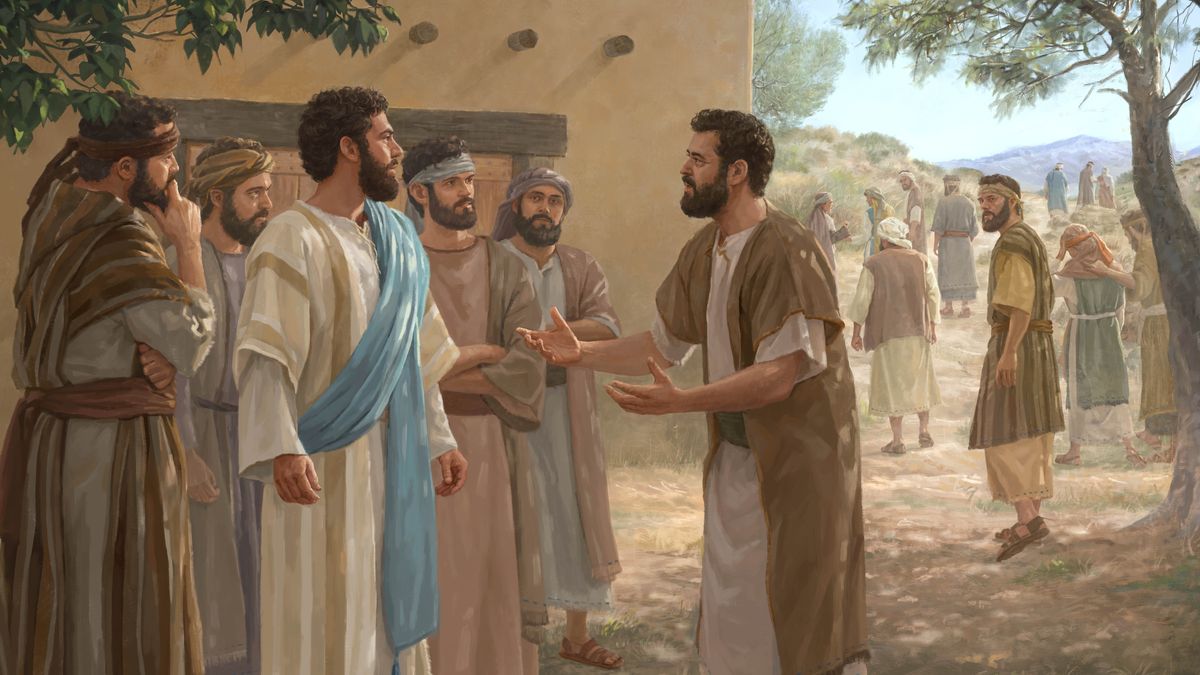
Though many disciples left Jesus, Peter and the other apostles stayed with him (See paragraph 3)
4. What tests might we face?
4 Our loyalty to Jehovah can be tested in a number of ways. For example, how do we react when we learn of an adjustment in the understanding of a Bible verse or of a change in the way that the disciple-making work is organized? Or how do we react when we find it hard to understand why Jehovah allows us to suffer some kind of tragedy? Our faith can also be tested if a close Christian friend hurts us or if someone we respect treats us in a way that seems unfair.
5. Illustrate why our faith needs to be built on a strong foundation. (Colossians 1:23)
5 To illustrate the importance of having a strong foundation for our faith, think of a building constructed in an area prone to earthquakes. Such a building needs a strong foundation in order to survive. Similarly, in order for us to survive tests of faith like those mentioned in the preceding paragraph, our faith needs a solid foundation. If we keep strengthening the foundation of our faith, we will continue to be steadfast, loyal servants of Jehovah in the face of trials.—1 Cor. 15:58; read Colossians 1:23.
6. What helped the apostles to remain loyal to Jesus?
6 What helped the apostles to remain loyal to Jesus when many others abandoned him? The apostles were convinced that Jehovah is worthy of worship because he is the Maker of all things; that Jesus is God’s Son, who has “sayings of everlasting life”; and that Jesus has Jehovah’s full support. Now rather than consider many specific ways our faith can be tested, let us focus on three truths that can help us stay firmly grounded regardless of what tests we may face. They are: (1) Jehovah is the Creator of all things. (2) Jehovah inspired the Bible. (3) Jehovah is backing his people today. If we are thoroughly convinced of these three truths, we will remain loyal when we undergo tests of faith.
JEHOVAH IS THE CREATOR
7. Of what does Revelation 4:11 remind us, but what might happen when we face tests of faith?
7 Read Revelation 4:11. This text reminds us that Jehovah created all things. This fact alone makes him worthy of our worship. And when we meditate on his awe-inspiring power, we become convinced that he can deliver us from all our trials. However, Satan has filled this world with propaganda designed to make man doubt the existence of God. Scientists may even claim that life came about on its own. If we are not absolutely convinced that Jehovah is the Creator and that he loves us, we may begin to doubt that he is and that he will come to our aid when we are confronted with tests of faith.—Heb. 11:6.
8-9. What should you do if you start to doubt that Jehovah is the Creator? (See also picture.)
8 If you start to doubt that Jehovah is the Creator, take immediate action. Thoroughly research our publications for information regarding the overwhelming proof that Jehovah created all things. You can find an abundance of faith-strengthening material on this subject in the brochures Was Life Created? and The Origin of Life—Five Questions Worth Asking. Additional corroborating evidence is discussed in the series “Was It Designed?” found on jw.org. Jessica, a young sister in the United States, says: “After reading the Origin of Life brochure, I felt confident that the facts point to an intelligent Designer. I already knew this, but after reviewing the reasoning in that brochure, I proved it to myself beyond any reasonable doubt.” Also, many have benefited from reviewing the book Is There a Creator Who Cares About You? You may have already read this material. But why not read it again?
9 For your next personal study project, you might consider facts that prove God’s existence. Your research not only will help you to strengthen your faith in Jehovah’s existence but will shed light on his personality. (Rom. 1:20) In addition, you will be able to use what you learn to help others who may have doubts about God’s existence. The main point: Jehovah has given us an abundance of evidence that he is our Creator.

Nebula: IAC/RGO/David Malin Images; fish and car: Mercedes-Benz USA; plane: Kristen Bartlett/University of Florida
You may already have read the brochure Was Life Created? Why not read it again? (See paragraph 8)
JEHOVAH INSPIRED THE BIBLE
10. How do we view the Bible? (2 Timothy 3:16, 17)
10 Read 2 Timothy 3:16, 17. The Bible is a message from Jehovah to mankind. It answers life’s important questions and tells us what Jehovah’s will is and what he wants us to do. We believe that Jehovah is the Author of the Bible, which makes the Bible the most important book in our life. We want to be sure that we understand his Word and do our very best to apply it.
11. What convinces you that the Bible is inspired of God?
11 Why are we convinced that Jehovah inspired the Bible? For a number of reasons. God’s Word is historically accurate. (Luke 3:1, 2) It is also accurate when it discusses the natural world. (Job 26:7) The Bible is the most widely distributed book of all time, despite Satan’s countless efforts to have it eliminated. The Bible was written by some 40 different men over a period of about 1,600 years; yet, their message is harmonious. It contains timeless advice that has helped millions in their everyday life. (Prov. 13:20; 15:21; Matt. 7:12) And numerous Bible prophecies have been fulfilled, further proof of the Bible’s reliability. (Josh. 23:14) Yes, the Bible is most certainly inspired of God!
12. What should we do if we begin to have doubts that the Bible is inspired of God?
12 What should we do if we begin to have doubts that the Bible is inspired of God? We should make it a matter of prayer and take action in harmony with our prayers. Note what a young brother named Jordan, who was raised as a Witness, says: “I don’t automatically believe everything that I’m told. I need to think things through for myself. In all honesty, I still have occasional doubts. But when I do, I try my best to do research in our publications in order to get answers to my questions and resolve my doubts.” As we continue to strengthen our conviction that Jehovah inspired the Bible, we will strengthen the foundation of our faith.—1 Cor. 3:12, 13.
JEHOVAH IS BACKING HIS PEOPLE TODAY
13. What should we do if we start to have doubts about who God’s people are today?
13 If we ever begin to harbor doubts that Jehovah’s Witnesses are the people God is backing today, we should not let such doubts fester. Instead, we can resolve our doubts by asking ourselves such questions as: ‘Who are truly doing their best to conform their lives to the Bible’s standards? Who view the Bible as an authority on all matters?’ (2 Tim. 4:3, 4) ‘Who are doing Jehovah’s will today?’—Matt. 7:20, 21.
14. How are Jehovah’s Witnesses being used to fulfill Matthew 24:14?
14 In connection with doing God’s will today, we can ask ourselves, ‘Who is doing the preaching work that Jesus foretold would take place during the last days?’ (Matt. 24:14) The answer is crystal clear. God is using his people—Jehovah’s Witnesses—to do the preaching work. We alone are preaching the good news of God’s Kingdom in over 240 lands. We have been accomplishing this work for more than 100 years under Kingdom rulership. Yes, we have remained focused on our all-important preaching and teaching work.—Matt. 28:19, 20.
15. How do Jehovah’s Witnesses contribute to sanctifying God’s name today? (Matthew 6:9; Isaiah 43:10)
15 Read Matthew 6:9 and Isaiah 43:10. We are identified by God’s personal name, Jehovah, and we are proud to be called Jehovah’s Witnesses. At a time when most of the world is ignorant of this name, we have restored it to its rightful place in the Bible. It is found more than 7,000 times in the main text of The New World Translation of the Holy Scriptures.
16. Why can we say that Jehovah’s Witnesses are obeying the commandment found at John 13:34, 35? (See also picture.)
16 Read John 13:34, 35. Our brotherhood is a modern-day miracle of love and unity, which stands out in a hostile and divided world. We come from all parts of the world, with different backgrounds and upbringings; yet, we do our best to have peace and love among ourselves. When traveling, have you ever visited a different congregation? The next time you do, reflect on the love and unity among our brothers and sisters. It will underscore that Jehovah is indeed using his Witnesses to accomplish his will today. Keeping this in mind can help us to remain loyal to Jehovah during any tests of faith.

Our brotherhood is a modern-day miracle of love and unity (See paragraph 16)a
NEVER LEAVE JEHOVAH
17-18. What challenging situations might we have to face, but what can we confidently say?
17 We live in critical times that are hard to deal with, so these last days will be difficult for all of us. (2 Tim. 3:1, 13) We may face other challenging situations. God’s organization might make decisions that we do not fully understand. Or we might feel misunderstood or hurt by a brother or a sister. We might not immediately see a solution to our problem, or we might not get an answer to whatever it is that has affected us.
18 Despite the emotional turmoil these situations may cause, we can always be loyal to Jehovah if we are convinced that he is the Creator, that the Bible is his Word, and that Jehovah’s Witnesses are his people. As Peter said to Jesus, we too can say to Jehovah: “Whom shall we go away to? You have sayings of everlasting life.”
SONG 123 Loyally Submitting to Theocratic Order
a PICTURE DESCRIPTION: A mother and daughter who are traveling by bus are delighted to see fellow Witnesses engaging in the ministry.
How to Maintain Christian Friendships
pp. 8–13
AUGUST 17-23, 2026
SONG 90 Encourage One Another
How to Maintain Christian Friendships
“Clothe yourselves with the tender affections of compassion, kindness, humility, mildness, and patience.”—COL. 3:12.
FOCUS
How to deal with challenges that could threaten our friendships with fellow Christians.
1. Where can we find true friends?
“LIFE can be hard if we walk it alone, living in these last days. Jehovah knows that we need friends to help us along the way.” Do you relate to those opening lyrics from the original song “True Friends”? What a blessing to find true friends among Jehovah’s people! (Ps. 119:63) We are part of a family of worshippers bound together by love.
2. What sort of friendships do we seek to develop with fellow Christians?
2 The friendships we seek to cultivate with our brothers and sisters are not casual or superficial. Rather, they are meaningful and deep. We are part of a family of worshippers who love Jehovah and Jesus, and this love unites us. (John 13:35) But such Christian friendships do not just happen. They require effort. And like any friendship between imperfect people, these friendships can have their challenges.
3. Why can it be a challenge to maintain friendships?
3 Realistically, we may feel closer to some than to others. Why? We may share similar interests, or we may have compatible personalities. But we may find that maintaining Christian friendships with other brothers and sisters can be a challenge. At times, we may disagree with one another, and this can strain our bond of affection. Perhaps because of personality differences, we may feel that we have too little in common even to get along. And sometimes our relationships can come under pressure when our fellow believers are seriously ill or are suffering emotionally. In this article, we will consider how Jesus’ example can help us to maintain friendships when we face challenges. However, let us first see how godly qualities can help us maintain our Christian friendships.
GODLY QUALITIES HELP US MAINTAIN OUR FRIENDSHIPS
4. How can we strengthen our friendships?
4 To strengthen Christian friendships, we should look for the good in others. Spending time with our brothers and sisters can remind us of their fine qualities. The apostle Paul had a desire to be with his brothers and sisters. He wrote to the Thessalonians: “We made every effort to see you in person.” (1 Thess. 2:17) Many find that there is nothing quite like having face-to-face conversations to make their friendships stronger. We have many opportunities to do that as we share in the ministry and attend meetings, assemblies, and conventions together. But we may find that simply associating with one another does not prevent problems that could threaten our friendships.
5. What can help us to preserve a friendship that is threatened? Illustrate. (Colossians 3:12)
5 Godly qualities can help us to preserve a friendship that is threatened. (Read Colossians 3:12.) When we cultivate humility, patience, kindness, and compassion, we can overcome the challenges to maintaining friendships. To illustrate, just as oil will keep a car’s engine running smoothly, godly qualities will reduce any friction in our relationships. Let us now consider three challenges to our relationships with fellow believers. As we do, we will discuss how our imitating Jesus’ humility, patience, kindness, and compassion will enable us to continue to be true friends to others.
WHEN YOU DISAGREE
6. How can disagreements threaten friendships?
6 Why is it a challenge? When disagreements arise, each person may be convinced that his viewpoint is correct. Imagine two brothers who disagree about the best way to organize an activity for their field service group. Each is certain that his way is best. Can you see the potential for their difference of opinion to escalate and threaten their relationship? They might allow pride to affect them. If the matter is not discussed and settled, they could start to feel resentful. As time passes, they could risk drifting further apart and eventually risk no longer being friends—all because of a minor matter.
7. How did Jesus teach his disciples that humility was essential to overcoming disagreements?
7 Learn from Jesus’ humility. He taught his disciples what was essential to overcoming disagreements—humility. The disciples had for some time been arguing about who was the greatest among them. To counter their deeply ingrained attitude, Jesus explained to them that they needed to consider others as superior. (Matt. 20:25-28) Yes, he was teaching them how to be humble. Even on the night before his death, Jesus “set the pattern” for them by humbly doing the job of a servant—washing their feet. (John 13:3-5, 12-16) In doing that, he showed them how they could preserve their friendship. If they viewed others as being superior, they would be more likely to yield when they disagreed. They would find it easier to remain close friends even when there was a difference of opinion.
8. How can humility help you to maintain Christian friendships when disagreements occur? (Colossians 3:13) (See also pictures.)
8 How can you maintain your friendships? Humility can help you to overlook minor disagreements and to forgive others freely. (Read Colossians 3:13.) With humility, you are more likely to preserve good relations by choosing not to react negatively. (Ps. 4:4) Even if unkind words have been said, remember that we all say things that we later regret. (Eccl. 7:21, 22) Ask yourself, ‘Is my insistence on being in the right worth more than our friendship?’ You could simply choose to yield to the other person’s opinion. Allow yourself to move on by neither dwelling on whatever you disagreed about nor bringing it up again.
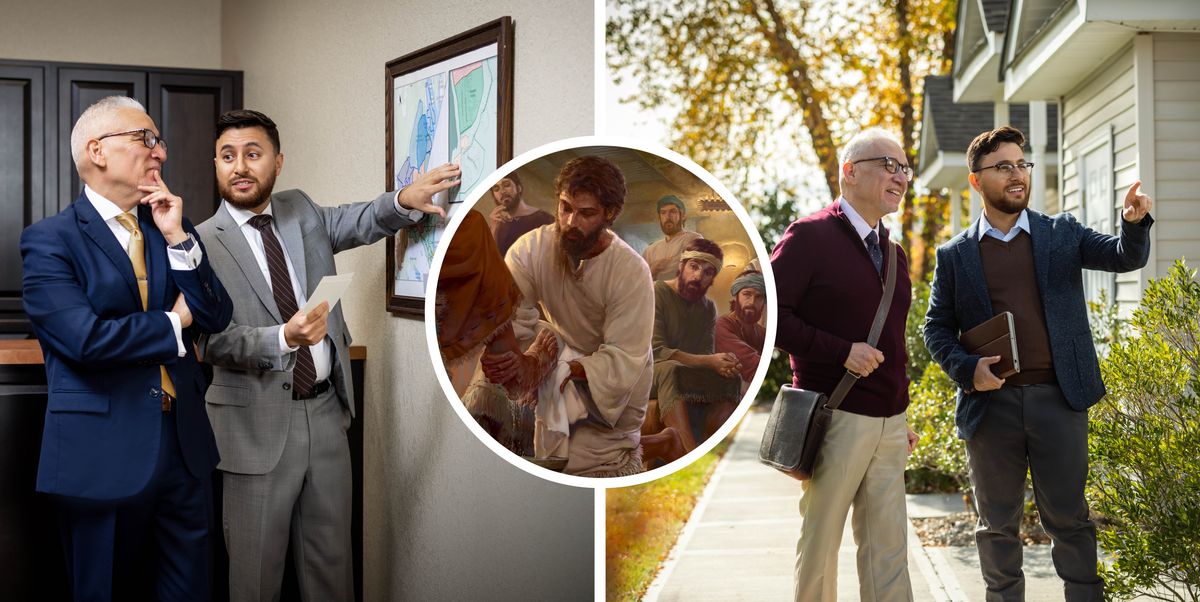
Humility can help you to overlook minor disagreements and to forgive others freely (See paragraph 8)a
9. How will humility help you if a disagreement persists? (Proverbs 17:9)
9 Humility can also help you when a disagreement persists. Do not argue to justify your viewpoint. (Read Proverbs 17:9; 1 Cor. 6:7) You do well to set the goal of keeping your friend. Many have succeeded by kindly approaching the other person to settle the problem. (Ps. 34:14) You could say: ‘We’ve been friends for some time. Can we talk about what happened?’ Be prepared to admit your part in the disagreement, acknowledging any hurt feelings and then apologizing. And if your brother or sister also apologizes, accept it in a humble manner. (Luke 17:3, 4) Remember, your goal is, not to establish who was right and who was wrong, but to get past the disagreement and maintain the friendship.—Prov. 18:24.
WHEN PERSONALITIES DIFFER
10. What can make it difficult to remain friends?
10 Why is it a challenge? We might find it hard to maintain close friendships with brothers and sisters whose personalities differ from ours. Some may have traits that we find irritating. Others may lack certain social skills because of having been mistreated in the past or because of coming from cultures that either tend to be more reserved or tend to be more exuberant. Or we may just be opposites socially—we may be outgoing while they may be shy or vice versa.
11. How was Jesus able to maintain his friendships with those whose personalities differed from his?
11 Learn from Jesus’ patience. He maintained friendships with those whose personalities differed from his. For example, the apostles James and John showed an ambitious spirit when they asked for prominent positions in the Kingdom. (Mark 10:35-37) In contrast, Jesus had humbly left behind his elevated heavenly position and privileges to come to earth. (Phil. 2:5-8) Think of how different their attitudes were. Still, Jesus was patient with James and John and with others.
12. What helped Jesus to be patient with his friends?
12 Jesus was realistic in what he expected of his friends. He knew that James and John’s ambitious request reflected the competitive spirit of many of the disciples. (Mark 9:34) Jesus had grown up in the same religious environment that they had. It placed a high value on prominence and position, so he could understand their thinking. Nevertheless, he was patient with them, giving them time to work on rooting out the pride and the ambition that they had developed over the years.—Mark 10:42-45.
13. How will patience help us to keep our friends? (Ephesians 4:2)
13 How can you maintain your friendships? Continue to cultivate patience by doing your best to tolerate traits in others that irritate you. (Prov. 14:29) All of us have our own characteristics, many of which are not flaws but simply features of who we are. So we certainly appreciate it when others put up with us. (Read Ephesians 4:2.) It is also important for us to be realistic by making allowances for others. On the one hand, consider the effort it takes for someone who is quiet and shy to associate with and converse with others. On the other hand, try not to lose patience with someone who is outgoing and expressive. We cannot expect to be best friends with everyone, but we need to keep in mind that even Christians with very different personalities can work well together.
14. On what will our patience help us to focus?
14 Patience will help us to focus on the good qualities of our brothers and sisters. When we do this, we are less likely to see our different personalities as a barrier to friendship. For example, James and John selfishly desired prominence; yet, their attitude showed that the Kingdom was real to them. Jesus noticed and appreciated their faith. When we look for the good in our friends, we are imitating Jesus as well as his Father, Jehovah.
15. Where can we turn for help to maintain our friendships with those whose personalities differ from ours?
15 Most important of all, we can pray for Jehovah’s help to maintain our friendships with those whose personalities differ from ours. Try anticipating potentially difficult situations, and pray in advance to remain calm. Remember that Jehovah, as our Creator, understands that we are all unique individuals. So when you pray, be confident that Jehovah knows what you need in order to continue enduring. And when you feel that your patience is being tested, ask Jehovah for holy spirit to help you control how you react.—Luke 11:13; Gal. 5:22, 23.
WHEN OUR BROTHERS AND SISTERS ARE SUFFERING
16. What challenges may we face when our brothers and sisters are suffering in some way?
16 Why is it a challenge? When our brothers and sisters are suffering physically or experiencing emotional distress, they may respond in ways that we find difficult to deal with. For example, they may be withdrawn, irritable, or even unpredictable. Perhaps they will say or do things that hurt us. (Job 6:2, 3) Because we may not be aware of the challenges that our fellow believers are facing, we may expect too much of them.
17. What do you learn from the way Jesus treated the blind man Bartimaeus?
17 Learn from Jesus’ kindness and compassion. He was kind and compassionate toward those in distress, even those he had not met before. For instance, consider how he treated the blind man Bartimaeus. When Bartimaeus heard that Jesus was passing by, he created a disturbance, shouting out to attract Jesus’ attention. Some in the crowd told Bartimaeus to keep quiet. But he desperately wanted to be healed by Jesus, so he kept shouting even more. Did some in the crowd find this behavior difficult to deal with? Perhaps. However, Jesus was “moved with pity,” an expression describing his intense compassion. (Matt. 20:34; Mark 10:46-52) He spoke to Bartimaeus kindly, acknowledging his faith. And Jesus miraculously restored his sight.
18. How should you treat your friends who are suffering? (1 Thessalonians 5:14)
18 How can you maintain your friendships? Be kind and compassionate. These tender qualities will help you to “speak consolingly” to your brothers and sisters who are suffering physically or emotionally. (Read 1 Thessalonians 5:14.) Remember that a true friend is ready to help, especially during “times of distress.” (Prov. 17:17) Such a friend not only sympathizes with those who are suffering but also does all he can to provide emotional support, words of encouragement, and practical help.
19. How can we demonstrate kindness and compassion? (See also pictures.)
19 What are some practical ways to show kindness and compassion? Of course, you cannot heal a fellow believer’s pain. But you can empathize with his circumstances to the best of your ability. (Matt. 7:12; 1 Pet. 3:8) Listen as he expresses what he is going through. If appropriate, try to find words that will comfort him. (Prov. 12:25) Beware of drawing wrong conclusions. (Prov. 18:13) Strive to be patient with him and realistic about what you expect of him.—Eph. 4:32.

True friends provide comfort through compassion and kindness (See paragraph 19)
20. What kind of friend do you want to be?
20 We all value the friendships we enjoy with our Christian brothers and sisters. But we do well to remember that because we are imperfect, we sometimes behave in a way that we do not want. Many of us have been shaped by bad experiences in life. As a result, we especially appreciate those who maintain Christian friendships by being humble, patient, kind, and compassionate. May we try our best to be that sort of friend.
SONG 124 Ever Loyal
a PICTURE DESCRIPTION: An older brother and a younger brother differ in opinion about a territory matter. They later unitedly share in the ministry.
Benefit From the Field Service Group Arrangement
pp. 14–19
AUGUST 24-30, 2026
SONG 65 Move Ahead!
Benefit From the Field Service Group Arrangement
“I will praise Jehovah with all my heart in the assembled group of upright ones.”—PS. 111:1.
FOCUS
How we benefit from the field service group arrangement.
1-2. How do many feel about the field service group arrangement?
DO YOU remember the day you were approved to be a publisher of the good news? On that happy day, you identified yourself with a vast group of worshippers who are praising Jehovah’s name. (Ps. 148:1, 2, 12, 13) However, on that day, you may also have become part of a smaller group, one that may have included only a handful of fellow worshippers—a field service group. Field service groups play a key role in helping us to fulfill our commission to preach the good news of the Kingdom “in all the inhabited earth.”—Matt. 24:14.
2 How do you feel about the field service group arrangement? A sister named Wendya says: “So much of my ministry has been shaped by this arrangement. I have learned new preaching and teaching skills from others, have been helped to set and reach spiritual goals, and have made lifelong friends—all as a result of this loving arrangement.” A brother named Rich adds: “I view serving as a group overseer as an outstanding privilege. While some publishers get to assist a person to progress to baptism, a group overseer has unique opportunities to help that person to make spiritual progress for years to come.” A sister named Dinah says: “The field service group arrangement is wonderful! I view my group as my family.”
3. What will we discuss in this article?
3 In this article, we will first discuss the role of the group overseer and his assistant and see how they care for those assigned to their group. Then, we will consider how we personally can contribute to the success of our field service group. Finally, we will see how we can benefit from this loving arrangement.
THE GROUP OVERSEER AND HIS ASSISTANT
4. (a) What is a field service group overseer’s main responsibility? (b) How does a group overseer care for those in his group? (See the box “Tips for the Group Overseer.”)
4 A field service group overseer is an elderb who has been assigned by the body of elders to assist a group of publishers to make spiritual advancement. How does he do this? First, he takes an active interest in each person assigned to his group. (Prov. 27:23) Being an alert, caring shepherd, he keeps in contact with them. Doing so helps him to provide spiritual encouragement, emotional support, and practical help. (Prov. 12:25; Isa. 32:2; Jas. 2:15-17) Second, he helps each publisher to have a full share in the ministry. He takes a zealous lead in the ministry, especially on weekends. He also works regularly with each publisher to provide personal encouragement and training. If on the rare occasion he cannot be in service, he makes sure that the group is cared for by his assistant or another qualified publisher. Third, he helps baptized brothers to qualify for congregation responsibilities. (1 Tim. 3:1) He provides sincere commendation, Scriptural counsel, and regular training to help brothers qualify as ministerial servants and as elders. In view of the importance of the group overseer’s role, the body of elders selects those elders who are most qualified to fulfill this assignment.
5. What challenges do some group overseers face?
5 A group overseer may face challenges as he cares for those in his group. Consider Jörg, a group overseer from Germany who, like many elders, must care for more than one assignment in the congregation. He says: “Balancing several responsibilities is not easy. As a result, I find it challenging to meet my goal of contacting everyone in my group.” Abel, a 70-year-old elder from Uganda says: “We have very few elders and ministerial servants in our congregation. Thus, the field service groups are rather large. As a result, I find it hard to shepherd each publisher as often as I would like to.” And Obed, an elder from Suriname, admits: “I love to train others. But training requires time and energy, and the results are not always seen immediately. Because of this, training is often the first thing to get neglected.” What can help elders who face these and similar challenges?
6. How does keeping field service groups small help group overseers to care for those in their group?
6 When possible, field service groups should be kept relatively small so that group overseers can become well-acquainted with all in the group and help them remain spiritually strong. What if there are few elders in the congregation? Rather than make groups so large that a group overseer can no longer fulfill all the aspects of his role, the body of elders may temporarily assign a ministerial servant to care for a group. When groups are relatively small, group overseers are better able to care for the most important aspect of their assignment—their brothers and sisters.
7. In congregations with few elders, what can group overseers do to ensure that all in the group are well cared for? (1 Peter 5:2) (See also picture.)
7 If you serve as a group overseer in a congregation with few elders, focus on training your assistant to help you care for God’s flock. (Read 1 Peter 5:2.) Delegate tasks to your assistant. For example, periodically assign him to take the lead in the field ministry. Prayerfully discuss with him the activity of publishers in the group. Regularly bring your assistant on shepherding visits and provide him with guidance before and after each visit. In time, your assistant may qualify to serve as a group overseer. (2 Tim. 2:2) You can also ask other mature Christians to help with training. Pioneers and other experienced publishers can work with new and less experienced ones. And spiritually mature publishers can assist those who need help with starting conversations in the ministry, making return visits, or conducting Bible studies. Now let us consider three ways we personally can contribute to the success of our field service group.

An elder may train a ministerial servant in the service group, such as asking him to conduct a meeting for service (See paragraph 7)
CONTRIBUTE TO THE SUCCESS OF YOUR FIELD SERVICE GROUP
8. How can we contribute to the success of our group? (Romans 1:12)
8 Be present. You contribute to “an interchange of encouragement” when you engage in the ministry with others. (Read Romans 1:12.) Witnessing together may also provide those in the group with a measure of safety as well as greater confidence. If secular work often prevents you from supporting your group’s preaching arrangements, could you ask your employer to adjust your work schedule? You might be surprised at the response. (Neh. 2:4-6) If poor health or advancing age makes it difficult for you to meet with the group in person, why not speak with your group overseer? He may be able to make arrangements for you to tie in to the group by means of videoconference and to engage in letter writing or phone witnessing. Are you young and in good health but still find it hard to get out in service regularly? If so, why not plan to work in person with someone in your group each week? You may need to reassess your priorities or adjust the way you manage your time. (Rom. 12:11; Col. 4:5) Every effort is worth it. Pray to Jehovah. He can give you “both the desire and the power to act.”—Phil. 2:13.
9. How might we contribute to a warm, loving atmosphere in our field service group? (Romans 12:13)
9 Be hospitable. We contribute to a warm, loving atmosphere within our field service group by following “the course of hospitality.” (Read Romans 12:13.) Might we be able to make our home available as a meeting location for a field service group? In some congregations, groups take turns providing hospitality for the visiting speaker. On their assigned week, some in the group may gather for a meal and for encouragement regardless of whether the speaker can attend. A special pioneer named Sarah says: “I get nervous when it comes to showing hospitality, so I keep it very simple. I try to focus on getting to know others instead of worrying about whether the food will turn out just right.” When we work to create a loving, familylike spirit of hospitality in our field service group, we draw closer to Jehovah and to one another.—Neh. 8:10; Acts 20:35.
10. What might we do if we want to improve in some aspect of the ministry? (Proverbs 1:5; 27:17) (See also picture.)
10 Take the initiative. The more skillful we are in preaching and teaching, the more likely we are to enjoy going in service with our group. Is there an aspect of your ministry that you would like to improve? Why not take the initiative to ask someone—perhaps a pioneer or an experienced publisher in your group—for help? (Read Proverbs 1:5; 27:17.) Let your group overseer know about your goal. He may be able to help you reach it. You might also ask others for help. A sister named Heather did that. Although shy, she says: “I asked a pioneer for help in making return visits. She was loving and kind, and she made regular arrangements to work with me. She even helped me start a Bible study with one of my return visits. I am so glad that I asked for help because I now enjoy being out in the ministry again.” Clearly, we can contribute to the success of our field service group in many ways.

The small size of a field service group allows us to get to know others and to share in the ministry with them (See paragraph 10)
HOW YOU CAN BENEFIT FROM YOUR FIELD SERVICE GROUP
11-12. What spiritual benefits can you receive from the field service group arrangement? Relate an experience.
11 Spiritual benefits. Each of us can benefit spiritually from the field service group arrangement. For example, those whom Jehovah is especially fond of—widows, orphans, and the elderly—receive timely and encouraging shepherding. (1 Thess. 2:8; Jas. 1:27) We also receive much-needed training in various aspects of the Kingdom preaching and teaching work. Exemplary baptized brothers receive help to qualify for additional congregation responsibilities.—1 Tim. 3:10.
12 Consider how Wendy, mentioned earlier, benefited from the field service group arrangement. “Because my father was opposed to the truth,” she says, “it was often not possible for my mother to go in service on the weekends with her field service group. However, I was allowed to go, and I did. One older pioneer sister took me under her wing and helped me to develop skills that have benefited me both in the ministry and in the congregation. I recall several times when my group overseer gave me loving Scriptural advice that has helped me to this day.”
13. What are some emotional benefits that we can receive when we support our field service group? (See also picture.)
13 Emotional benefits. We form close bonds with those in our group as we work “side by side” with them in the ministry. (Phil. 1:27) The small size of the field service group may also make it easier for those who are shy or who feel anxious in large crowds to develop close friendships. (2 Cor. 6:13) We can count on these friends for support during difficult times, such as when we are ill, feeling depressed, or grieving the death of a loved one. (1 Thess. 5:14) No doubt we will need good friends to a greater extent in the future. (Matt. 24:21) Our problems may not go away, but they can be more manageable when we know we can count on brothers and sisters who love and support us.—Prov. 17:17.

Two sisters in a field service group go out in the ministry together (See paragraph 13)
14. How do we benefit from our field service group during times of disaster or emergency?
14 Practical benefits. We receive timely help from our field service group during disease outbreaks, natural disasters, medical emergencies, persecution, and financial crises. For example, in each congregation, the Congregation Service Committee, along with group overseers, develops a plan to help those with special needs. Group overseers take the lead in locating each family in their field service group and assessing the immediate needs, including medical care, food, water, shelter, and clothing so that relief aid can be provided. What practical help and loving care we receive from our field service group!
15. What unites all of us in Jehovah’s organization?
15 As mentioned, Jehovah’s organization is very large. The heavenly part alone is made up of hundreds of millions—perhaps billions—of faithful spirit creatures. The earthly part is over nine million strong and growing each day. (Zech. 8:23; Rev. 5:11) All of Jehovah’s worshippers are united in their efforts to declare the good news of God’s Kingdom! (Rev. 14:6, 7) May we benefit fully from the field service group arrangement—an arrangement that helps us to praise Jehovah with all our heart.—Ps. 111:1.
SONG 61 Forward, You Witnesses!
a Some names have been changed.
b If needed, a capable ministerial servant can serve until an elder can take over. A ministerial servant working in this capacity is called a group servant, since he does not function as an overseer in the congregation. Rather, he is serving under the direction of the elders in caring for his responsibility.
Pay Attention to How You Listen
pp. 20–25
AUGUST 31–SEPTEMBER 6, 2026
SONG 89 Listen, Obey, and Be Blessed
Pay Attention to How You Listen
“Pay attention to how you listen.”—LUKE 8:18.
FOCUS
Why we need to keep listening attentively during meetings and other spiritual programs and how we can do so.
1-2. (a) How does Jehovah care for the spiritual needs of his people today? (Psalm 23:1, 2, 5) (b) What will we consider regarding Christian meetings?
TODAY, Jehovah is providing us with an abundance of spiritual food. We can certainly agree with David, who sang: “Jehovah is my Shepherd. I will lack nothing.”—Read Psalm 23:1, 2, 5.
2 One way in which Jehovah provides spiritual food today is through our congregation meetings. At these meetings, we often review information that is familiar to us. Even if we “are well-established in the truth,” we need these reminders. (2 Pet. 1:12) However, when spiritual programs include material that has been covered many times, do you find it hard to pay attention? This article can help you. We will consider why we need to listen carefully at meetings. We will also see how those who teach in the congregation can help others to listen. And we will discuss some suggestions that can help us become better listeners. But first, let us examine who is speaking to us.
REMEMBER THAT JEHOVAH IS SPEAKING TO US
3. How does Jehovah speak to us, and how do his servants make good use of his Word?
3 Jehovah speaks to us by means of his Word, the Bible. (2 Tim. 3:16, 17) Jesus understood this. He used God’s Word so skillfully that his listeners were moved to ask: “How does this man have such a knowledge of the Scriptures when he has not studied at the schools?” (John 7:15) Honesthearted people were thrilled when they heard Jesus explain God’s Word. First-century Christians, such as the apostle Paul and Apollos, also made liberal use of the Scriptures when they reasoned with others. (Acts 17:2, 3; 18:24, 28) We, as Jehovah’s Witnesses, know that the Bible is the basis for our articles, broadcasts, talk outlines, and videos. Many visitors are impressed by the way Jehovah’s people make use of the Bible at their meetings. Those who have parts at such meetings make God’s Word the centerpiece of their teaching—not only by reading from it but also by showing the audience how to apply what it says.—Luke 24:32.
4. What idea do the words “hear” and “listen” convey?
4 The words “hear” and “listen” are often used in the Bible to convey the idea of obeying someone. Therefore, when Jehovah speaks to us by means of his Word at our meetings and we come to understand what his will is, it is easier to obey him. We can trust that Jehovah is pleased when we listen to him and act accordingly.—Prov. 27:11.
WHY SHOULD WE LISTEN CAREFULLY AT MEETINGS?
5. What does our love for Jehovah move us to do? (John 4:23, 24; 1 John 5:3)
5 We listen at meetings because we love Jehovah. (Matt. 22:37) The more we learn about Jehovah, the more our love for him grows. That love stirs in us the desire to listen to him, to obey him, and to worship him in the way he has set out in his Word.—Read John 4:23, 24; 1 John 5:3.
6. At our meetings, what do we learn about helping others?
6 We listen at meetings because we love people. (Matt. 22:39) At our meetings, Jehovah teaches us how to help fellow believers and those who do not know him yet. For example, the brochure Love People—Make Disciples has helped us to develop qualities that will benefit us in the ministry. Do you find it hard to engage people in friendly conversation? If so, pay special attention to the way your brothers and sisters demonstrate that skill in the midweek meeting student parts.
7. Why is it vital that we keep listening to Jehovah?
7 We listen at meetings because we love life. Obeying God’s Word means life for us, as it did for true worshippers in the past. (Deut. 32:44-47) By listening at our meetings, we receive the encouragement we need to keep on waiting with endurance for the new world to come. (Rom. 8:25) Listening to Jehovah now is vital because we are in the last days and must stay spiritually alert.—Matt. 24:42-44; Rev. 1:3.
HOW TO HELP OTHERS TO LISTEN AT MEETINGS
8. Why should brothers who teach from the platform continue to improve in their speaking ability?
8 Brothers who teach from the platform, especially those who give public talks, should continue to improve in their speaking ability. A well-prepared, Bible-based presentation has tremendous potential to draw people to the truth and to help fellow believers stay in the truth. Accordingly, those who have parts at the meeting should not underestimate the good they can do. If you have that privilege, consider how you might apply the following points in your talks. Although these points are directed especially to those who deliver public talks, they can be applied in principle to any speaking assignment we might receive.—2 Tim. 4:2; Titus 1:9.
9. Why is it important for a talk to be easy to follow?
9 Prepare a clear structure. As a speaker, you want your material to be easy to follow. The audience may become distracted if the material is too complicated. What can you do to give a well-structured talk? Here are some steps: (1) Try to make it clear at the outset what your main points will be. (2) Cover these points one at a time, pausing between main points and clearly stating the next main point before moving on. (3) Briefly review the points in your conclusion.
10. Why is it important to get excited about the material?
10 Get excited about the material. You will speak with enthusiasm if you develop points you love. (Prov. 2:4, 5; Acts 4:20) Meditating on the scriptures and the assigned material will help you find these points. A brother from the United States who is in his 70’s recalls a talk he heard when he was in his teens: “I still remember how the speaker encouraged us to meditate deeply when reading God’s Word. He spoke with conviction and explained clearly how to do it. That talk marked a turning point in my life; it affected my Bible reading as well as my relationship with Jehovah.”
11. Why is it helpful to give practical, specific suggestions in talks? (1 Timothy 4:13-16)
11 Think about what your audience needs, and offer practical suggestions. Rather than present general information, use the Scriptures to give specific encouragement and suggestions. For example, the apostle Paul gave Timothy a number of specific suggestions to help him stay spiritually strong in his assignment in Ephesus. (Read 1 Timothy 4:13-16.) Think about what your listeners need, and help them to see practical ways that they can apply the information in their life.
12. Why is it best to speak naturally when giving a talk?
12 Practice your talk out loud so that you can speak in a conversational manner. When you speak naturally instead of writing out your talk word for word and reading it, those in the audience will find it easier to listen and absorb the information. The brochure Apply Yourself to Reading and Teaching says: “Speak in a natural, sincere way that conveys how you feel about the topic and your listeners.” As you speak from the heart, your audience will find your delivery more lively, interesting, and motivating.
13. Why should teachers in the congregation ask experienced speakers for counsel? (See also picture.)
13 Ask an experienced speaker for counsel. How might you do this? You may want to share your notes with an experienced speaker beforehand and thereafter include his suggestions in your talk. Additionally, ask him to listen to your delivery with a view to giving you suggestions on how you might improve as a teacher. (Prov. 1:5) We all have “blind spots,” and we may not be able to discern if we are making our points in a clear and helpful way. We want to improve as speakers and teachers so that we can help our listeners benefit from the spiritual gems found in God’s Word.a

Ask an experienced speaker to help you improve as a teacher (See paragraph 13)
HOW TO BECOME A BETTER LISTENER
14. Why should we cultivate the attitude of the writer of Psalm 119? (Psalm 119:24, 111, 167)
14 We will become better listeners by deepening our appreciation for Jehovah’s reminders. We need God’s reminders in order to cope with challenges that are common during these “critical times hard to deal with.” (2 Tim. 3:1) If at times we feel that we have heard the same information many times before, we do well to meditate on the attitude the writer of Psalm 119 had toward God’s reminders.—Read Psalm 119:24, 111, 167.
15. How can we maintain our appreciation for the spiritual food we receive at meetings?
15 We need to maintain a positive view of the spiritual food we receive, just as the Israelites should have maintained a positive view of Jehovah’s provision of the manna when they were in the wilderness. (Ex. 16:15, 31) No doubt the Israelites at first appreciated the manna. It came from Jehovah, it tasted good, and it sustained their life. In time, however, some grew tired of eating manna every day. (Num. 21:5) The lesson? We must never view the spiritual food we receive as commonplace or needlessly repetitive. But instead, we need to recognize that Jehovah is the Source. We must remember that it is thoughtfully prepared by Jehovah’s organization. We should also reflect on the reality that the wisdom we gain from it can preserve our life.—Prov. 3:13, 16-18; John 17:3.
16. What has helped some longtime servants of Jehovah to keep listening attentively at meetings? (See also the box “Tips for Listening Well.”)
16 We can become better listeners by applying practical suggestions. Notice what has helped some longtime servants of Jehovah to keep listening attentively at meetings. Ashley, who has been serving Jehovah for over 30 years, says: “Preparation is key to paying attention. If I am not prepared, I find it hard to answer and my mind wanders.” József, who has served Jehovah for 52 years, says: “I enjoy listening to familiar topics because viewing the material from different perspectives deepens my understanding.” And he adds: “If a brother is not an outstanding speaker, I focus on the message he conveys from God’s Word instead of his speaking style.”
17. What can you do to listen attentively at meetings? (See also picture.)
17 Is it possible that applying one or more of the following suggestions might help you listen attentively? (1) If you eat before the meeting, be sure to have a light meal so that you can remain alert. (2) Arrive early and find your seat before the program starts. (3) Set electronic devices on silent mode and do not allow them to distract you during the meeting. (4) Anticipate what will be covered. (5) Stay focused on the speaker. (6) Take brief notes, or make simple drawings of key points. (7) Try to think about the key scriptures and the logical order in which they are presented. (8) Ask yourself, ‘How can I use this to help someone in the congregation or in the territory?’ (9) At assemblies and conventions, preview the day’s theme, the subjects to be presented, and the key scriptures for each talk. (10) Prepare your heart by sitting quietly and paying attention to the music and video presentations that are played at the start of the program.

Keep listening to God’s reminders, not allowing electronic devices to distract you (See paragraph 17)
KEEP LISTENING TO JEHOVAH
18. Why should we keep listening at meetings?
18 We should keep listening at meetings because by doing so, we allow Jehovah to lead us in “the paths of righteousness.” (Ps. 23:3; 31:3) We need the corrective counsel we receive so that we will not drift off course like a boat driven off course by the wind. Therefore, “pay attention to how you listen” and apply the guidance you receive at congregation meetings. (Luke 8:18) Those who listen to Jehovah will be happy now and have everlasting life in the future.—Ps. 119:2, 14.
SONG 87 Come! Be Refreshed
a For additional suggestions on how to improve as speakers and as teachers, see the brochure Apply Yourself to Reading and Teaching and the book Benefit From Theocratic Ministry School Education.
Serving Jehovah for Some 70 Years in Cuba
pp. 26–30

LIFE STORY
Serving Jehovah for Some 70 Years in Cuba
I WAS born in 1947 on the beautiful Caribbean island of Cuba. It is located at the intersection of the warm waters of the northern Caribbean Sea and the Atlantic Ocean. After I was born, my parents had my two younger sisters. The five of us lived in the village of Esmeralda.
I recall that life in our little village was peaceful. We lived close to some of our relatives, including aunts, uncles, and grandparents. We had enough to eat and lived a happy life.
When I was about five years old, my parents began to study the Bible with Walton Jones. He was a zealous evangelizer who would walk about ten hours just to reach our village. Each time he came, many in my family would gather at my grandparents’ house for hours to discuss the Bible with him. My parents, along with my uncle Pedro and aunt Ela, loved what they were learning and soon got baptized as Jehovah’s Witnesses. Ela is almost 100 years old and continues to serve as a pioneer in Cuba.
At that time, Jehovah’s Witnesses could worship freely in Cuba. We were well-known for preaching from house to house, carrying briefcases and handbags full of valuable Bible literature. And we did a lot of walking! I have fond memories of serving Jehovah during those “favorable times” of my early life. But there were “difficult times” ahead.—2 Tim. 4:2.
DIFFICULT TIMES ARRIVE
When I was about five years old, my father and my uncle traveled to another part of the island to attend an assembly. Sadly, during that trip, they both contracted typhoid fever from contaminated water. I can recall that after they returned, my uncle lost his hair but survived. However, my father passed away. He was just 32 years old.
After my father died, my mother decided to have our family move in with her brother who lived in the village of Lombillo. That meant leaving our relatives, including our grandparents, whom we dearly loved. But we continued worshipping Jehovah as a family.
On August 26, 1957, I got baptized in a reservoir near Lombillo. I was ten years old. Little did I know that in less than two years, life would change dramatically for Jehovah’s Witnesses in Cuba. In 1959 the government was overthrown and a communist regime took over.
We now found ourselves under a government that placed much importance on military service. That affected Jehovah’s people, who in all lands maintain their neutrality in political and military issues. As a result, we progressively lost the considerable freedom of worship that we had long enjoyed. The government eventually banned our Christian activities, and hundreds of faithful brothers were sent to prison. Some were frequently beaten and deprived of food. At times, the food served contained blood, which the Bible forbids us to eat.
Despite the challenges, we continued to meet together to worship Jehovah. (Heb. 10:25) We even held assemblies on farms or in other locations throughout the country. I remember one time when a brother allowed us to use his large sheep barn as a venue for the assembly. We weren’t able to clean the barn beforehand or even take the sheep out of it. Nevertheless, we held the assembly and had literal and figurative sheep come together!—Mic. 2:12.
We appreciated the hard work of the brothers who helped us obtain spiritual food in those days. For example, assembly programs were prerecorded on cassette tapes and then circulated throughout the country. At times, just two brothers would be assigned to prepare, deliver, and record all the talks on a program. Because the brothers would record the tapes in clandestine locations, we would at times hear roosters and other interesting noises in the background. If the assembly location had no electricity, a brother would pedal a stationary bicycle fitted with a dynamo to generate the needed electricity. That way we could power the cassette player and hear the program. We may not have had ideal circumstances or the amount of printed publications that fellow believers had in other lands, but we never lacked spiritual food. And we certainly enjoyed serving Jehovah together.—Neh. 8:10.
BEING PIONEERS AND PARENTS
Once I turned 18, I began serving as a regular pioneer in the town of Florida. About a year later, I was appointed as a special pioneer in the city of Camagüey, the provincial capital. That is where I met Emilia, a beautiful Witness sister from Santiago de Cuba. We began dating, and within a year, we got married.

(Left) Kingdom Ministry School for elders—Camagüey, Cuba, 1966
(Right) On our wedding day, 1967
I began working full-time in one of the many government-owned sugar mills. Emilia and I were no longer able to serve as pioneers; still, we wanted to devote as much time as we could to spiritual activities. I arranged to work the 3:00 a.m. to 11:00 a.m. shift at the mill. I didn’t love waking up so early, but the schedule allowed me to stay active in the ministry and to attend all the meetings with Emilia.
In 1969 our first son, Gustavo, was born. I had been asked to resume the full-time service in the circuit work. At the time, serving as a circuit overseer while taking care of a family was common in Cuba. That began one of the happiest but busiest chapters in our life. Emilia and I felt privileged to be offered the opportunity to serve our brothers and sisters in this way. During that time in the circuit work, our son Obed was born, then Abner, and after some years our daughter, Mahely.
When I look back on the years we spent in the circuit work, it makes me happy to see how Jehovah blessed his people in Cuba. And he certainly blessed our efforts as parents to instill love for him in the hearts of our children. Let me explain what life was like for Emilia and me in those days when we were doing circuit work.
THE CIRCUIT WORK UNDER BAN
In the 60’s and the 70’s, we really began to feel the effects of the ban on our work. Kingdom Halls were closed. Our missionaries were expelled from the country. Many young brothers were arrested and sent to prison. And the branch office in Havana was shut down.

Circuit work, 1990’s
Because of the ban, we could visit congregations only on weekends. So each congregation got a two-weekend visit. We traveled light and often used a bicycle, since that was the most discreet way to get around. Of course, our visits were not publicly announced. We had to make it seem as if we were visiting relatives. That was rather easy to do. In fact, we felt so much like family that we had to be careful not to lose sight of the fact that we were visiting with a spiritual objective. (Mark 10:29, 30) Still, we needed to be discreet. We were often followed and interrogated by the police. Our hosts even risked being arrested if we were discovered.—Rom. 16:4.
During this period, we met many brothers and sisters who showed remarkable generosity despite having little materially. The mosquitoes in some areas seemed to outnumber the people, but friends would kindly provide us with their only mosquito net so that we could sleep more comfortably at night. Others were willing to host us even though they had very little food to share. In fact, we would at times bring our own food to share with the hosts.
We could not bring all our children with us when we visited congregations. So we would travel with just one child while my mother and my sister cared for the others at home. Actually, traveling with a baby served as a protection. On occasion, we were searched by the police, but we had hidden materials in the dirty-diaper bag—a spot that the police would not search.
I admire Emilia so much for all that she did to care for the children while supporting me during our years in full-time service. As for me, I was able to balance my secular job at the mill with my responsibilities as a circuit overseer. How? Sometimes, I worked a double shift once or twice a week so that I could have the weekend off. Later, though, my work assignment changed. I became a team lead and was scheduled to work seven days a week. I could not refuse this schedule. But I discovered that as long as I gave my team enough work to stay busy on the weekend, they would cover for me while I visited congregations. As far as I know, my bosses never noticed that I did not show up to work on weekends!
REMAINING JOYFUL DURING TIMES OF CHANGE

First open convention after the ban, 1994
One day in 1994, the brothers taking the lead in Cuba summoned all traveling overseers—80 of us—to a special meeting in Havana. What a joy it was for us finally to meet one another after all those years! At that meeting, we first discussed some organizational adjustments. Then came a shocking announcement. The brothers told us that they were planning to disclose our names to the authorities! Why do that?
They explained that they had been meeting with government officials with the goal of improving the relationship between the government and Jehovah’s Witnesses. The authorities had requested a list of all the names of the circuit overseers. We all agreed to submit our names. From then on, the discussions with government authorities yielded good results.
Eventually, we were able to meet and preach openly, although legalizing our status as a religion was not yet on the table. We later found out that the authorities already knew the names of some of the traveling overseers but wanted us to confirm what they had.
In September 1994, we were given permission to reestablish a branch office. As it turned out, we were able to use the very building that had been shut down 20 years earlier.
Then in 1996, Emilia and I got a phone call inviting us to serve at Bethel. After getting over the initial shock, I reminded the brothers that I still had two children at home, who were my priority. The brothers kindly considered my situation and later confirmed that they still wanted us to serve at Bethel. We accepted and started making plans to move as a family to Havana.

(Left) Emilia in the Sewing Department at the Cuba branch, early 2000’s
(Right) Assembly Hall dedication, 2012
Frankly, at first, I did not find Bethel service enjoyable. I had spent so many years in the traveling work that my mind and heart were in the field. I struggled to sit behind a desk. But my fellow Bethelites and especially my wife, Emilia, helped me to adjust my viewpoint. In time, I regained my joy, and now I happily serve at Bethel.

(Left) Bible School for Christian Couples graduation, 2013
(Right) Branch Committee in Cuba, 2013

At a circuit assembly with our daughter and her husband
Emilia and I are no longer young. We are overjoyed, though, to think of all the brothers and sisters whom we have been privileged to know and to serve with over the years. We are especially happy to see our children, as well as our grandchildren, serving Jehovah. We feel similar to the aged apostle John, who said: “No greater joy do I have than this: that I should hear that my children go on walking in the truth.”—3 John 4.
Now after serving at Bethel for almost 30 years, Emilia and I do our best to carry out our assignments despite daily battles brought on by cancer and old age. During our years in Jehovah’s service, we have had some challenges, but we rejoice that we have been able to serve “the happy God” for some 70 years here on the island of Cuba!—1 Tim. 1:11; Ps. 97:1.
QUESTIONS FROM READERS
p. 31
QUESTIONS FROM READERS
As noted at Galatians 4:24, what two covenants did the apostle Paul refer to?
After referring to Abraham’s relationship with Sarah and with Hagar, the apostle Paul stated: “These things may be taken as a symbolic drama; for these women mean two covenants.” (Gal. 4:22-24) Previously, it was understood that the two covenants were the Law covenant and the new covenant. However, upon further examination, we believe that an adjustment is called for. It seems that Paul was referring, not to the new covenant, but to the Abrahamic covenant. Consider a few details.a
Paul connected the servant woman Hagar with Mount Sinai. (Gal. 4:25) Hagar meant the Law covenant that was given at Mount Sinai in 1513 B.C.E. (Ex. 19:5, 6) No imperfect human could keep that Law perfectly, so it reminded the Jews that they were slaves to sin. This covenant could help the nation of Israel identify the Messiah, the only human who would be able to keep the Law perfectly. When the Messiah sacrificed his perfect life, he made it possible for imperfect humans to be freed from sin and death. (Gal. 3:19, 24, 25) Once Jesus fulfilled God’s purpose, the Law was no longer needed.—Rom. 10:4.
Paul contrasted Hagar with Sarah, “the free woman” who gave birth “through a promise.” (Gal. 4:23) That promise was the Abrahamic covenant. (Gal. 3:29; 4:28, 30) It is summarized at Genesis 22:18: “By means of your [Abraham’s] offspring all nations of the earth will obtain a blessing for themselves because you have listened to my voice.”
That covenant made with Abraham added to the promise Jehovah made in Eden. (Gen. 3:15) It revealed that the foretold “offspring” would be a descendant of Abraham. Paul explained that this “offspring” refers primarily to Jesus Christ. But those who “belong to Christ,” the 144,000 heirs who will rule with Jesus in his Kingdom, are included in this figurative offspring. (Gal. 3:16, 29; Rev. 14:1-3) The fulfillment of God’s promise to Abraham will bring many blessings to those who accept and obey Jesus.
Why did Paul use this “symbolic drama”? He showed that if the Jewish people of his day insisted on keeping the Law, they, like Hagar, would remain in slavery. However, if they accepted the primary “offspring” of Abraham, Jesus Christ, they, like Sarah, would be free. They would gain true freedom from sin and death. (John 8:32-34) If they did not accept Jesus, they would miss the main purpose of the Law covenant, namely, to lead them to the Christ.
Many of the Galatians to whom Paul was writing were non-Jewish and were never under the Law. Some Judaizers were insisting that Gentile Christians obey the Law, including its requirement of circumcision. Paul reasoned that it would be foolish for these to embrace the “slavery” of the Law for they had already experienced the “freedom” belonging to the Christ.—Gal. 5:1, 10-14.
a This corrects what was published in The Watchtower, March 15, 2006, pp. 10-12.
Fishing Nets in Bible Times
p. 32
BIBLE FACT
Fishing Nets in Bible Times
Bible readers may remember that some of Jesus’ followers were fishermen. (Mark 1:16-20) They would use nets when fishing on the Sea of Galilee.
Fishing nets were made by knotting twine or linen thread to create a mesh. The size of the mesh depended on the catch of fish wanted. Small nets often had lead or stone weights to make them sink, while large dragnets had weights at the bottom and wooden or cork floats at the top.
Fishing nets were expensive. They could be damaged by rocks on the seabed or torn by the weight of a very large catch of fish. (Luke 5:6) The Bible speaks of James and John “mending their nets”—likely using a needle and linen thread. (Matt. 4:21) Fishermen would probably do these repairs after each use. Luke also describes fishermen “washing off their nets” to remove silt or debris. (Luke 5:2) Afterward, the fishermen would hang up their nets to dry—likely to prevent them from rotting.—Ezek. 47:10.
Jesus invited men who were accustomed to using nets to become “fishers of men.”