The Watchtower — Study Edition · January, 2026
Study Edition
pp. 1–32

Study Edition
JANUARY 2026
STUDY ARTICLES FOR: MARCH 2–APRIL 5, 2026
© 2025 Watch Tower Bible and Tract Society of Pennsylvania
OUR YEARTEXT FOR 2026:
“Happy are those conscious of their spiritual need.”—MATT. 5:3.
This publication is not for sale. It is provided as part of a worldwide Bible educational work supported by voluntary donations. To make a donation, please visit donate.jw.org.
Unless otherwise indicated, Scripture quotations are from the modern-language New World Translation of the Holy Scriptures.
Table of Contents
p. 32
Table of Contents
IN THIS ISSUE
Study article for March 2-8, 2026
2 Continue to Satisfy Your “Spiritual Need”
Study article for March 9-15, 2026
8 You Can Successfully Fight Negative Feelings
Study article for March 16-22, 2026
Study article for March 23-29, 2026
20 How Will You Respond to the Ransom?
Study article for March 30, 2026–April 5, 2026
Continue to Satisfy Your “Spiritual Need”
pp. 2–7
MARCH 2-8, 2026
SONG 97 Life Depends on God’s Word
Continue to Satisfy Your “Spiritual Need”
OUR YEARTEXT FOR 2026: “Happy are those conscious of their spiritual need.”—MATT. 5:3.
FOCUS
How we can continue to benefit from the spiritual food, clothing, and shelter that Jehovah provides.
1. Jehovah has created us with what basic needs? (Matthew 5:3)
JEHOVAH has created humans with certain basic needs. For example, to sustain our life, we need food, clothing, and shelter. If we lack any one of these necessities, even for a brief time, life becomes a trial. In addition to creating us with a need for those material things, Jehovah has also created us with a spiritual need. (Read Matthew 5:3.) If we want to be truly happy, we have to be aware of that need and then continue to satisfy it.
2. How would you illustrate what it means to be “conscious” of your “spiritual need”?
2 What does it mean to be “conscious” of our “spiritual need”? The original-language expression conveys the idea of being a beggar for the spirit. That phrase creates a powerful mental picture. Imagine a scraggly figure clothed in rags, crouching on the corner of a city street. He is weak from a lack of food, shunned because of his appearance, and exposed to the searing heat of day and to the bitter cold of night. The beggar is keenly aware that he will need help if he is to improve his situation in life. Similarly, someone who is conscious of his spiritual need—a beggar for the spirit—will need help to improve his situation. So he is eager to take advantage of the abundant spiritual provisions that Jehovah supplies to those who love Him.
3. What will we discuss in this article?
3 In this article, we will first consider what we can learn from a Phoenician woman who begged Jesus to help her. This account highlights three qualities that must be developed by those who are conscious of their spiritual need. Then we will discuss the examples set by the apostles Peter and Paul as well as King David, who were all spiritual men.
AN EXAMPLE OF HUMILITY, PERSISTENCE, AND FAITH
4. What did a Phoenician woman want from Jesus?
4 On one occasion, a Phoenician woman approached Jesus. Her daughter was “cruelly demon possessed.” (Matt. 15:21-28) The woman fell to her knees and begged Jesus for help. This Phoenician woman displayed noteworthy qualities when she approached Jesus. Consider some of these.
5. What qualities did the woman show, and how did Jesus respond? (See also picture.)
5 The Phoenician woman showed real humility. Why can we say that? Because she did not take offense when Jesus used an illustration that seemed to liken her to a little dog, perhaps the kind of animal kept as a family pet in a Gentile’s home. How would you have reacted to Jesus’ words and actions? Would you have felt insulted and given up on seeking his help? That is not how the Phoenician woman behaved. She showed not only humility but also persistence. This is evident by the way she continued to beg Jesus for help. What moved her to do so? Her faith in Jesus. In fact, this woman’s faith moved Jesus so deeply that he did something remarkable. Despite having just said that he was sent to help only “the lost sheep of the house of Israel,” Jesus removed the unclean spirit from this Gentile woman’s daughter.
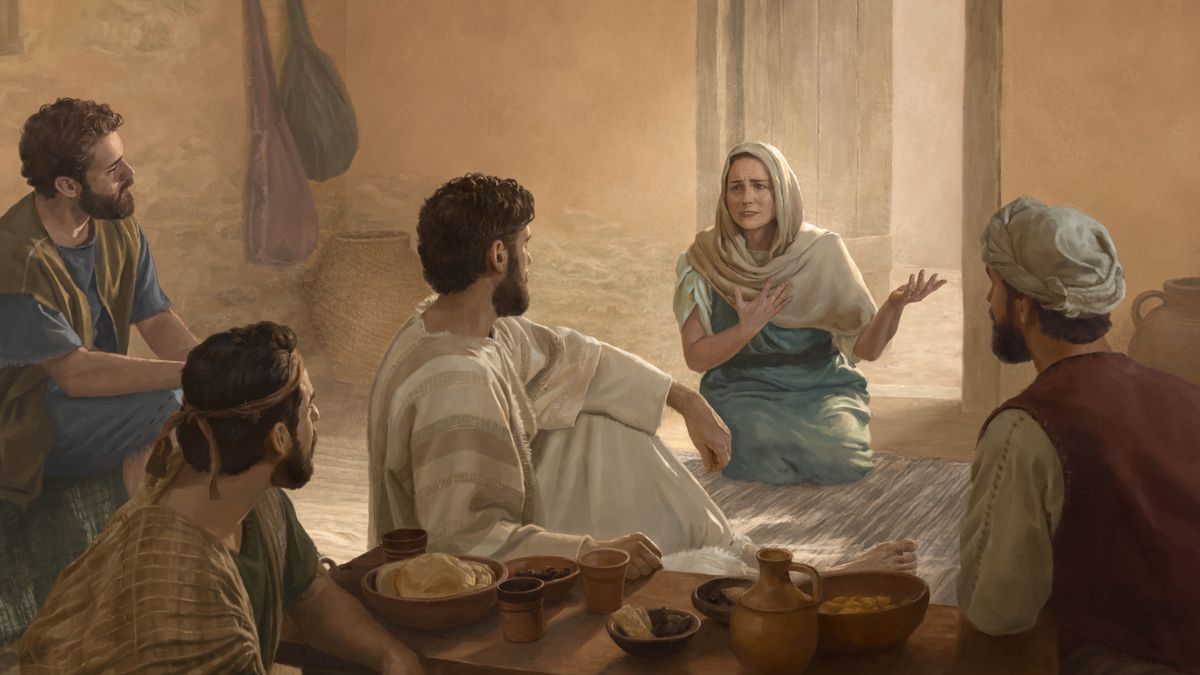
The Phoenician woman needed humility, persistence, and faith to get the help she wanted (See paragraph 5)
6. What do we learn from the account about the Phoenician woman?
6 In order to satisfy our spiritual need, we must develop the same qualities. We must be humble, be persistent, and have strong faith. Only a humble person will persistently beg God for help. We must also have strong faith in Christ Jesus and trust those whom he is using to direct his disciples. (Matt. 24:45-47) Jehovah and his Son are pleased to satisfy the spiritual need of those who display these qualities. (Compare James 1:5-7.) Now let us examine the way Jehovah provides us with spiritual food, clothing, and shelter. We will see what we need to do to gain these necessities by looking at the examples set by the apostles Peter and Paul as well as King David.
LIKE PETER—REMAIN WELL-FED SPIRITUALLY
7. What commission did Peter receive, but what did he also need to do? Explain. (Hebrews 5:14–6:1)
7 Consider the apostle Peter’s example. He was one of the first Jews to recognize that Jesus was the Messiah—the one whom Jehovah was using to feed His people “sayings of everlasting life.” (John 6:66-68) Before the resurrected Jesus ascended to heaven, he gave Peter this commission: “Feed my little sheep.” (John 21:17) Peter fulfilled that commission faithfully, and Jehovah even used him to write two letters that became part of the Bible. But Peter also needed to nourish himself with spiritual food. For example, he studied the inspired letters that the apostle Paul wrote previously. Peter acknowledged that some of the things Paul wrote about were “hard to understand.” (2 Pet. 3:15, 16) But Peter obviously persisted, having faith that Jehovah would help him to digest, or understand and apply, the “solid food” that Paul had been inspired to serve in his letters.—Read Hebrews 5:14–6:1.
8. How did Peter respond to new light that was revealed through God’s representative?
8 Peter proved that he had faith in Jehovah by obeying the direction he received. For instance, while in the port city of Joppa, Peter had a vision in which God’s representative told him to slaughter and eat animals that, according to the Mosaic Law, were unclean. To the Jews, that direction would have been shocking. At first, Peter responded: “Not at all, Lord, because I have never eaten anything defiled and unclean.” He was then told: “Stop calling defiled the things God has cleansed.” (Acts 10:9-15) Peter got the point. How do we know? Soon after he received the vision, three men sent by the Gentile Cornelius arrived and invited Peter to come and speak to their master. Normally, Peter would never have agreed to enter a Gentile’s house. The Jews considered the Gentiles to be unclean. (Acts 10:28, 29) But Peter immediately accepted the new light that Jehovah had revealed to him. (Prov. 4:18) He preached to Cornelius and his household and had the joy of seeing them accept the truth, receive holy spirit, and get baptized.—Acts 10:44-48.
9. What are two ways in which we benefit from developing a hearty appetite for solid spiritual food?
9 Like Peter, we must regularly feed on the milk, or basic truths, of God’s Word. We must also develop an appetite for solid spiritual food—truths that may be more difficult to understand. We have to set aside the time and be willing to make the effort to get a deeper understanding of God’s Word, but it’s worth it. Why? We benefit in at least two ways: One, we learn things about Jehovah that deepen our love and respect for him; and two, we feel even more motivated to tell others about our awe-inspiring heavenly Father. (Rom. 11:33; Rev. 4:11) Peter’s example teaches us another lesson: When we receive adjustments in our understanding of God’s Word, we need to be quick to adapt our thinking and actions. Only then will we remain spiritually well-fed and useful to Jehovah.
LIKE PAUL—REMAIN SPIRITUALLY WELL-CLOTHED
10. What does being spiritually well-clothed involve? (Colossians 3:8-10)
10 To please God, we must take advantage of another of Jehovah’s provisions: spiritual clothing. What do we mean by that? The apostle Paul wrote that we must “strip off the old personality” and clothe ourselves with “the new personality.” (Read Colossians 3:8-10.) Clothing ourselves in such a way can be an ongoing challenge. Consider Paul’s own example. From a young age, he worked hard to gain God’s favor. (Gal. 1:14; Phil. 3:4, 5) But he lacked accurate knowledge of God’s purpose and was thus in a poor spiritual condition. His ignorance of Christ’s teachings, coupled with pride, made him “an insolent man” who was clothed in negative personality traits.—1 Tim. 1:13.
11. What flaw did Paul have to work hard to overcome? Explain.
11 Before becoming a Christian, Paul had a hot temper. An account in Acts states that Paul was so angry with the disciples of Jesus that he was “breathing threat and murder” against them. (Acts 9:1) After becoming a Christian, Paul no doubt worked hard to strip off this aspect of his old personality. (Eph. 4:22, 31) Even so, when Paul and Barnabas had an argument, it erupted into “a sharp burst of anger.” (Acts 15:37-39) That was a setback for Paul, but he did not give up. He kept ‘pummeling his body’—fighting his imperfections—so as to retain Jehovah’s approval.—1 Cor. 9:27.
12. What helped Paul to succeed in stripping off negative traits?
12 Paul was able to succeed in stripping off his negative traits and then in clothing himself with the new personality because he did not rely on his own strength. (Phil. 4:13) Like Peter, Paul depended on “the strength that God supplies.” (1 Pet. 4:11) Still, Paul at times felt like a failure. But when he was discouraged, he thought of the good things his heavenly Father had done for him, and that strengthened his resolve to keep on trying.—Rom. 7:21-25.
13. How can we imitate Paul?
13 We can imitate Paul by recognizing that no matter how long we have been serving Jehovah, we need to keep working at stripping off the old personality and putting on the new personality—the spiritual clothing that God supplies. If we have a setback—such as losing our temper or speaking unkindly to someone—we do not need to view ourselves as a failure. Instead, we should keep pursuing our goal of transforming the way we think and act. (Rom. 12:1, 2; Eph. 4:24) As we do so, however, we must remember a key fact: Unlike literal clothes that are adjusted to fit us, we must adjust ourselves to fit the spiritual clothing that Jehovah supplies. It is only reasonable that we change who we are in order to measure up to God’s requirements.
LIKE DAVID—REMAIN SPIRITUALLY WELL-SHELTERED
14-15. In what sense does Jehovah provide spiritual shelter for his people? (Psalm 27:5) (See also picture.)
14 To be truly happy, we need more than spiritual food and spiritual clothing. We also need spiritual shelter. What is that, and how can we be sure to remain under its protection?
15 King David spoke about the spiritual shelter that Jehovah provides. (Read Psalm 27:5.) Jehovah protects his people from anyone and anything that could permanently harm their faith in Him. How does Jehovah shelter his servants from external threats? He promises that no weapon formed against them will have any success. (Ps. 34:7; Isa. 54:17) Although Satan and his agents are powerful, they are not able to cause us any lasting harm. Even if they take our life, Jehovah will give it back to us in the resurrection. (1 Cor. 15:55-57; Rev. 21:3, 4) Jehovah also helps us to cope with internal anxieties that have the potential to cause us lasting harm. (Prov. 12:25; Matt. 6:27-29) And our loving Father provides us with a spiritual family of brothers and sisters who support us and with elders who shepherd us. (Isa. 32:1, 2) When we meet together, we are often reminded of specific ways we can take advantage of Jehovah’s protection.—Heb. 10:24, 25.

A sister seeks spiritual help by attending a congregation meeting with her brothers and sisters (See paragraphs 14-15)
16. In what ways did Jehovah protect David?
16 When David obeyed Jehovah, he was protected from the harm that comes to those who sin willfully. (Compare Proverbs 5:1, 2.) By contrast, when David ignored God’s standards, Jehovah did not shelter him from the consequences of his actions. (2 Sam. 12:9, 10) What about the times when David suffered through no fault of his own? David poured out his heart to Jehovah in prayer, and Jehovah eased David’s anxiety by reassuring him that He loved him dearly and would care for him.—Ps. 23:1-6.
17. How can we imitate David?
17 We can imitate David by seeking Jehovah’s counsel when we make decisions. We also recognize that we may at times suffer hardship, not because Jehovah has failed to shelter us, but because we have made poor decisions. (Gal. 6:7, 8) And when we face trials through no fault of our own, we pour out our heart to Jehovah in prayer, trusting that he will guard our hearts and our thoughts.—Phil. 4:6, 7.
CONTINUE TO SATISFY YOUR SPIRITUAL NEED
18. What challenge do we face, and how can we continue to satisfy our spiritual need? (See also pictures.)
18 Our 2026 yeartext states: “Happy are those conscious of their spiritual need.” That is true today more than ever. Why? Because we are surrounded by unhappy people who deny that they have such a need or who try to satisfy that need in their own way through false religion or human philosophy. We must avoid letting their attitude influence us. How? By nourishing ourselves with the spiritual food that Jehovah provides, by clothing ourselves with the new personality, and by seeking shelter in the protection that Jehovah supplies.

We must continue to satisfy our need for spiritual food, clothing, and shelter (See paragraph 18)a
SONG 162 My Spiritual Need
a PICTURE DESCRIPTION: The sister from the previous image feeds on spiritual food by studying The Watchtower, shows kindness to others as part of her new personality, and seeks help from elders who lovingly shepherd her.
You Can Successfully Fight Negative Feelings
pp. 8–13
MARCH 9-15, 2026
SONG 45 The Meditation of My Heart
You Can Successfully Fight Negative Feelings
“Miserable man that I am!”—ROM. 7:24.
FOCUS
How to deal with our negative thoughts and feelings.
1-2. How did the apostle Paul feel at times, and why might we relate to what he wrote about himself? (Romans 7:21-24)
WHAT comes to your mind when you think of the apostle Paul? Do you think of a courageous missionary, a skilled teacher, or a prolific Bible writer? Those descriptions are certainly accurate. Yet, Paul was also a man of deep emotions. Like many of us, he at times battled with negative feelings.
2 Read Romans 7:21-24. In his letter to the Romans, Paul expressed feelings that many of us can relate to. Even though he was a faithful Christian, he had an inner struggle—a battle between his earnest desire to do God’s will and his inclination to act on wrong desires. In addition to this inner conflict, Paul at times struggled with negative feelings about his past and about a persistent problem he was facing.
3. What will we consider in this article? (See also “Expression Explained.”)
3 Despite his inner struggle, Paul did not allow his negative feelingsa to dominate his thinking. In this article, we will consider the following questions: What caused Paul at times to feel “miserable”? How did he deal with negative feelings? And how can we successfully fight our own negative feelings?
WHAT CAUSED PAUL TO HAVE NEGATIVE FEELINGS
4. What caused Paul to have negative feelings?
4 Things that he did in the past. Before becoming a Christian, Paul, earlier known as Saul, did things that he would later regret. For example, he watched with approval as faithful Stephen was stoned to death. (Acts 7:58; 8:1) Also, Saul took the lead in viciously persecuting Christians.—Acts 8:3; 26:9-11.
5. How was Paul affected by his past actions?
5 After he became a Christian, the apostle Paul was at times troubled by his past. His previous actions as a relentless persecutor of Christians may have bothered him even more as the years went by. For example, when he wrote his first letter to the Corinthians in about 55 C.E., he said: “I am not worthy of being called an apostle, because I persecuted the congregation of God.” (1 Cor. 15:9) Some five years later, in his letter to the Ephesians, he described himself as being “less than the least of all holy ones.” (Eph. 3:8) When writing to Timothy, Paul referred to himself as being formerly “a blasphemer and a persecutor and an insolent man.” (1 Tim. 1:13) Can you imagine how Paul must have felt when he visited a congregation and met those he had persecuted or the family members of those he had persecuted?
6. What else caused Paul much distress? (See also footnote.)
6 A thorn in the flesh. Paul compared something that was causing him much distress to “a thorn in the flesh.” (2 Cor. 12:7) The apostle did not mention the cause, but the word picture he used suggests something—whether it was a physical problem, an emotional problem, or something else—that pained him.b
7. How was Paul affected by his imperfections? (Romans 7:18, 19)
7 His imperfections. Paul struggled with his imperfections. (Read Romans 7:18, 19.) Although he wanted to do what was right, his imperfect flesh undermined his determination to do so. He admitted that there was a constant battle between his fleshly inclinations and the desire to do what is right. Yet, Paul worked very hard to improve. (1 Cor. 9:27) How frustrated he must have been whenever his bad traits resurfaced!
HOW PAUL DEALT WITH NEGATIVE FEELINGS
8. What do Paul’s letters indicate regarding how he dealt with his imperfections?
8 As indicated in his letters, Paul reflected on how he and his fellow believers could fight and overcome sinful tendencies with the help of God’s spirit. (Rom. 8:13; Gal. 5:16, 17) Paul often referred to undesirable traits and desires that Christians should combat. (Gal. 5:19-21, 26) No doubt Paul meditated on his own weaknesses, sought counsel in the Scriptures, and identified specific steps to deal with his imperfections. We can be sure that he applied the advice he gave to others.
9-10. What helped Paul to fight negative emotions? (Ephesians 1:7) (See also picture.)
9 Although Paul sometimes felt discouraged, he was able to remain positive. For example, he enjoyed receiving good reports from his traveling companions. (2 Cor. 7:6, 7) He found joy in his friendships with fellow believers. (2 Tim. 1:4) And he knew that he had Jehovah’s approval. Yes, Paul was happy because he could serve God “with a clean conscience.” (2 Tim. 1:3) Even when he was imprisoned in Rome, Paul urged his fellow believers to “rejoice in the Lord.” (Phil. 4:4) His words hardly sound like those of someone overcome by negative thoughts. Clearly, when negative thinking came into his mind, Paul was able to work through it so that he could be positive again.
10 Paul was also able to fight negative emotions successfully because he believed that the ransom was a gift to him personally. (Gal. 2:20; read Ephesians 1:7.) As a result, he could confidently trust in Jehovah’s forgiveness through Jesus Christ. (Rom. 7:24, 25) Despite his past errors and his imperfections, Paul was able to “render sacred service” to God with joy.—Heb. 9:12-14.
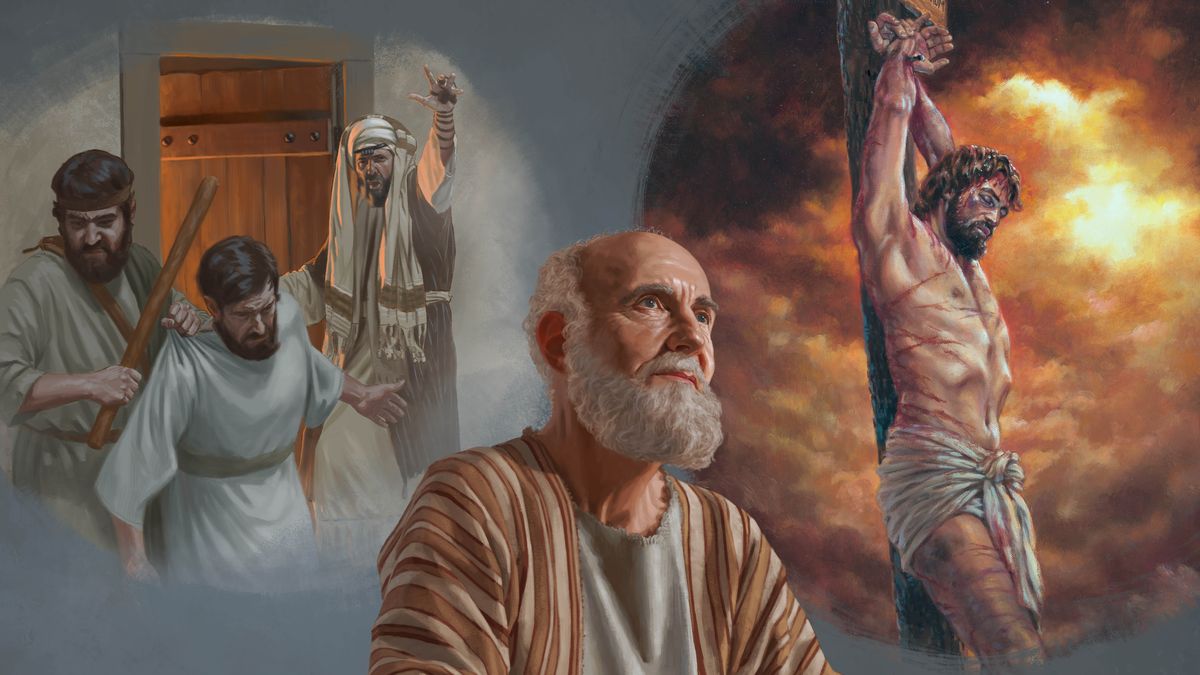
Although Paul was at times troubled by his past, he fought negative emotions by meditating on the ransom (See paragraphs 9-10)
11. Why is Paul’s example encouraging to us?
11 Like Paul, we may feel that there is always a battle going on from within. It may be about what we think, what we do, or what we say. We too may feel like saying, ‘Miserable person that I am!’ A sister in her 20’s named Elizac says this about her personal struggle: “It is encouraging for me to think about Paul’s situation. I am relieved that I am not the only one who feels this way. It is another reminder that Jehovah knows what his people are going through.” What can we do so that, like Paul, we can have a clean conscience and rejoice despite having negative feelings?
HOW WE CAN FIGHT NEGATIVE FEELINGS
12. How does maintaining a good spiritual routine help us in our fight against negative feelings?
12 Maintain a good spiritual routine. When we develop a good spiritual routine, we are better able to focus on the positive. We can compare such a routine to maintaining healthy habits that contribute to our overall physical well-being. When we eat well, exercise regularly, and get enough sleep, we usually feel better. Similarly, we all have experienced how good we feel when we read God’s Word regularly; prepare for, attend, and participate in our meetings; and engage in the ministry. Such upbuilding activities help us deal with our negative thoughts.—Rom. 12:11, 12.
13-14. How have some faithful Christians benefited from a good spiritual routine?
13 Consider the example of John, who was diagnosed with a rare form of cancer at age 39. At first, he struggled with negative feelings. ‘How could I get sick at such a young age?’ he wondered. At the time, his son was just three years old. What helped John deal with his negative emotions? “Despite my fatigue, I made sure that our family maintained a regular spiritual routine,” he says. “We attended all the meetings, had a weekly share in the ministry, and had regular family worship even when it was difficult to schedule it.” Looking back, John adds: “After the initial shock wears off, the nagging thoughts will be replaced by Jehovah’s strength and love. Jehovah can make you strong, just as he has made me.”
14 Eliza, quoted earlier, states: “Every time I attend Christian meetings and do my personal study, I am reminded that Jehovah hears me and really loves me. That makes me happy.” Nolan, a circuit overseer in Africa, speaks for himself and his wife, Diane, when he says: “We stick to our spiritual routine even when we feel discouraged. Jehovah always makes it clear that he is helping us to have the right attitude. We try to remember that Jehovah will help us and bless us; we do not know how, but we know that he will.”
15. What may we need to do to overcome negative thoughts? Illustrate.
15 We may need to do more than just follow the basics if we are to overcome negative thoughts. To illustrate, imagine that you have developed back pain. To get rid of it, you may have to do more than just walk every day. To identify the cause of the pain, you may need to do research and even talk to a doctor. Similarly, we may need to do research in the Bible and in our publications and even talk to a mature Christian to learn how to deal with recurring negative feelings. Consider some further suggestions that can help.
16. What can help you to identify the cause of your negative thoughts? (Psalm 139:1-4, 23, 24)
16 Prayerfully analyze your personal needs. King David was aware that Jehovah knew him well. So David asked Jehovah to help him identify the cause of his “anxious thoughts.” (Read Psalm 139:1-4, 23, 24.) You too can ask Jehovah to help you identify the cause of your negative thoughts and understand how to overcome them. You might also ask yourself such questions as: ‘What seems to be the root cause of my anxious thoughts? Is there something that triggers my negative thinking? Do I tend to dwell on the negative thought rather than dismiss it?’
17. What topics for personal study can help you to focus your mind on upbuilding thoughts? (See also picture.)
17 Adapt your personal Bible study to your needs. From time to time, you may find it beneficial to study some aspects of Jehovah’s personality. For example, the apostle Paul greatly benefited from reflecting on the ransom and on Jehovah’s forgiveness. You can do the same. Use the Research Guide for Jehovah’s Witnesses, Watch Tower Publications Index, or other Bible study aids available in your language to explore such topics as God’s mercy, forgiveness, and loyal love. Once you have found articles that would benefit you, make a list of them. Post the list where you can see it, and study the articles from your list when you start to feel down. Try to apply what you read to your own circumstances.—Phil. 4:8.

Choose study topics that will help you to overcome negative thoughts (See paragraph 17)
18. What kind of study projects have some Christians found helpful?
18 Eliza, quoted earlier, did a personal study project on the Bible character Job. She says: “I relate a lot to Job. He had one trial after another. Yet, when Job was at his lowest point, he never stopped looking to Jehovah—even though he did not know why his problems were happening.” (Job 42:1-6) Diane, mentioned earlier, says: “My husband and I are doing a study project using the book Draw Close to Jehovah. We appreciate that Jehovah molds us as a potter does clay. Instead of focusing on how disappointed we are in ourselves, we try to imagine Jehovah molding us and trying to make us better people. This brings us closer to him.”—Isa. 64:8.
LOOK TO THE FUTURE WITH CONFIDENCE
19. What can we realistically expect?
19 Even if we have a good spiritual routine and a good study program tailored to our needs, we cannot expect negative thoughts and feelings to disappear completely. We may still have days when we feel miserable! However, with Jehovah’s help, we can lessen negative feelings when they arise. We can be confident that on most days we will enjoy a clean conscience and have every reason to rejoice in our life and in our service to Jehovah.
20. What are you determined to do?
20 Let us be determined not to be controlled by negative feelings about our past, our troubles, or our imperfections. With Jehovah’s help, we can keep negative feelings in check. (Ps. 143:10) We can look forward to the day when positive thinking will no longer be a struggle. Rather, we will be able to wake up each morning without having any anxious thoughts, happy to serve our loving God, Jehovah!
SONG 34 Walking in Integrity
a EXPRESSION EXPLAINED: In this article, the expression “negative feelings” refers to occasional feelings of sadness and mood swings that we might experience. It does not refer to chronic depression, which is a serious medical condition.
b Paul’s writings indicate that he suffered from problems with his eyesight, which would have made it difficult for him to write letters and to carry out his ministry. (Gal. 4:15; 6:11) Or Paul may have been referring to the anxiety some false teachers were causing him. (2 Cor. 10:10; 11:5, 13) Whatever the source of his concern, it was distressing to Paul.
c Some names have been changed.
Why We Need the Ransom
pp. 14–19
MARCH 16-22, 2026
SONG 20 You Gave Your Precious Son
Why We Need the Ransom
“Who will rescue me from the body undergoing this death?”—ROM. 7:24.
FOCUS
How the ransom provides forgiveness, healing, and reconciliation.
1-2. From what do we need to be rescued, and why? (Romans 7:22-24) (See also picture.)
IMAGINE the scene. A building collapses, trapping a man in the rubble. He is alive, but he cannot remove himself from the wreckage. All he can do is cry out for help and hope that he can be rescued.
2 Each one of us is in a comparable situation. In what way? When Adam rebelled against his Creator, he became a sinner. Later, he passed on his sinful condition to his children. As a result, the entire human race became trapped in the rubble of inherited sin, and we cannot remove ourselves from its effects. The apostle Paul well described our sinful condition in his letter to the Romans. (Read Romans 7:22-24.) He begged to be rescued “from the body undergoing this death.” Paul was trapped by inherited sin, which unavoidably leads to death. (Rom. 6:23) We are in that same predicament. We need to be rescued!

Just as a man trapped in a collapsed building needs to be rescued, we are trapped by inherited sin and need to be rescued (See paragraphs 1-2)
3. In what ways can the ransom rescue us?
3 Paul did not end his comments about sin on a negative note. After asking: “Who will rescue me from the body undergoing this death?” he answered his own question emphatically: “Thanks to God through Jesus Christ our Lord!” (Rom. 7:25) Paul was referring to Jesus’ ransom sacrifice.a That ransom can rescue us by providing (1) forgiveness of our sins, (2) healing from our sinful condition, and (3) reconciliation with our Creator. As we consider these points, we will grow in our love for Jehovah, “the God who gives hope.” (Rom. 15:13) We will also grow in our appreciation for Jesus—“by means of whom we have our release by ransom.”—Col. 1:14.
THE RANSOM PROVIDES FORGIVENESS
4-5. Why do all of us need the ransom? (Ecclesiastes 7:20)
4 We need the ransom in order to be forgiven of our sins. Every imperfect human commits sins, whether in word or in deed. (Read Ecclesiastes 7:20.) Some sins are especially serious. For example, the crimes of adultery and of murder were punishable by death under the Mosaic Law. (Lev. 20:10; Num. 35:30, 31) Many sins, of course, are not as serious as that; nevertheless, they are still sins. For example, the psalmist David said: “I will guard my step to avoid sinning with my tongue.” (Ps. 39:1) Yes, at times even our speech can be sinful.—Jas. 3:2.
5 Think about your past words and actions. Have you said things to others that you wish you could take back? Have you made mistakes that you regret? No doubt, your answer to both questions is yes. The Bible states: “If we make the statement, ‘We have no sin,’ we are misleading ourselves and the truth is not in us.”—1 John 1:8.
6-7. What provides the basis for Jehovah to forgive our sins? (See also picture.)
6 The ransom provides a sound basis for Jehovah to forgive our sins. (Eph. 1:7) However, this does not mean that Jehovah simply overlooks our offenses, as if they do not matter to him. Sin does matter to Jehovah. (Isa. 59:2) His perfect justice requires that there be a basis for forgiveness.
7 The Mosaic Law required that the Israelites offer animal sacrifices to atone for their sins. (Lev. 4:27-31; 17:11) Those sacrifices foreshadowed the greater sacrifice of Jesus and the resulting blessings. His sacrifice would provide a legal basis for Jehovah to forgive our sins. Paul understood the value of Jesus’ sacrificial death, as shown by what he wrote to the Christians in Corinth. After listing their former bad practices, he told them: “You have been washed clean; you have been sanctified; you have been declared righteous in the name of the Lord Jesus Christ and with the spirit of our God.”—1 Cor. 6:9-11.

Animal sacrifices offered to atone sins foreshadowed the ransom sacrifice of Jesus and the blessings that would result from it (See paragraphs 6-7)
8. What can you think about as you prepare to attend this year’s Memorial?
8 As you prepare to attend this year’s Memorial, take time to think about what Jehovah’s forgiveness means for you. For example, because of the ransom, you do not need to be consumed with guilt over past sins for which you have repented. What if you find that difficult to accept? Perhaps you have said to yourself, ‘I understand that Jehovah can forgive, but I can’t forgive myself.’ If you feel that way, remember this: Jehovah is the one who forgives, and he has given his Son authority to judge. Jehovah has not given you or any other human the task of deciding who will or will not receive his mercy. The Bible says: “If we are walking in the light as [Jehovah] is in the light, . . . the blood of Jesus his Son cleanses us from all sin.” (1 John 1:6, 7) We can be as confident of that as we are of any other Bible teaching. The ransom has given Jehovah the legal basis to extend mercy to us, and his Word says that he is “ready to forgive.”—Ps. 86:5.
THE RANSOM PROVIDES HEALING
9. Besides wrong acts, what does sin include? (Psalm 51:5 and footnote)
9 In the Bible, the word “sin” refers not just to an action but also to a condition, one that we inherited the moment we were conceived. (Read Psalm 51:5 and footnote.) This condition not only inclines us to do wrong but also causes weaknesses that make us susceptible to disease, aging, and death. That helps explain why infants—who have not committed any sinful acts—can get sick and even die. It also helps explain why both bad people and good people suffer and succumb to death. Every imperfect descendant of Adam has inherited a sinful condition.
10. How were Adam and Eve affected by their sinful condition?
10 Think about how that sinful condition affected the first human couple. It produced an internal upheaval within them. After they rebelled, Adam and Eve immediately experienced the consequences of their violating God’s law—a law that was “written in their hearts.” (Rom. 2:15) They could sense a change in themselves—and not for the better. They felt compelled to cover portions of their body and hide like criminals from their Creator. (Gen. 3:7, 8) For the first time, Adam and Eve were subject to feelings of guilt, anxiety, insecurity, pain, and shame. To one degree or another, those feelings would plague them until their death.—Gen. 3:16-19.
11. What effect does our sinful condition have on us?
11 The condition of sin has a similar effect on us as it did on the first couple. Our physical and emotional anguish is rooted in our sinful condition. No matter how hard we try to improve our situation, we can only go so far. Why? Because, as the Bible says, we have been “subjected to futility.” (Rom. 8:20) This has proved true not only for us as individuals but also for mankind in general. For example, think about man’s efforts to manage the environment, to control crime, to eliminate poverty, and to achieve peace among nations. Despite any small steps of progress, those efforts have been futile. How can the ransom rescue us from our sinful condition?
12. What hope does the ransom provide?
12 The ransom provides hope that “the creation itself will . . . be set free from enslavement to corruption.” (Rom. 8:21) When the benefits of the ransom are fully applied in God’s new world, we will no longer be tormented by physical, mental, or emotional illness; nor will we be plagued by crippling feelings of guilt, anxiety, insecurity, pain, or shame. Furthermore, our efforts to manage the earth and to live in peace will no longer be futile but will succeed under the rule of the one who ransomed us, the “Prince of Peace,” Jesus Christ.—Isa. 9:6, 7.
13. What else can you think about as you prepare to attend this year’s Memorial?
13 Think about what being rescued from a sinful condition will mean for you. Imagine what it will be like to wake up each morning feeling well, to live each day without being afraid that you or your loved ones will go hungry, get sick, or die. Even now, you can find a measure of peace as you “take firm hold of the hope . . . as an anchor for the soul, both sure and firm.” (Heb. 6:18, 19) Just as an anchor can stabilize a boat, your Christian hope can stabilize your faith and help you to endure any trials you face now. Indeed, you can have confidence that Jehovah will become “the rewarder of those earnestly seeking him.” (Heb. 11:6) The comfort that you receive now and the hope you have for the future are possible only because of the ransom.
THE RANSOM PROVIDES RECONCILIATION
14. How has sin affected our relationship with our Creator, and why?
14 Ever since Adam and Eve sinned, humans have been alienated, or separated, from God. The Bible even says that mankind as a whole has been cut off from the Creator. (Rom. 8:7, 8; Col. 1:21) Why? Because Jehovah’s perfect standards do not allow him to condone sin. The Bible says about Jehovah: “Your eyes are too pure to look on what is evil, and you cannot tolerate wickedness.” (Hab. 1:13) Sin has thus created a breach between God and man. None of us can have a relationship with Jehovah unless that breach is healed and we are reconciled with him. The ransom makes that reconciliation possible.
15. What did the ransom appease, and with what result?
15 The Bible states that Jesus is “a propitiatory sacrifice for our sins.” (1 John 2:2) The Greek word rendered “propitiatory sacrifice” can refer to “a means of appeasement.” In what way was Jehovah appeased by the ransom? We are not to think that the death of His Son brought Him some kind of comfort. Rather, the ransom appeased, or satisfied, Jehovah’s standard of justice. He now had a basis to restore the relationship between himself and man. (Rom. 3:23-26) He could even ‘credit’ righteousness to those who worshipped him faithfully before Christ’s death. (Gen. 15:1, 6, ftn.) How? On the basis of the future ransom. Jehovah was absolutely certain that his Son, Jesus, would provide it. (Isa. 46:10) The ransom opened the way for man to be reconciled to God.
16. What more can you think about as you prepare to attend this year’s Memorial? (See also picture.)
16 Think about what reconciliation with God means for you. For example, perhaps you refer to Jehovah as your “Father,” as Jesus instructed. (Matt. 6:9) At times, you might even refer to Jehovah as your “Friend.” When we use terms like “Father” or “Friend,” we should do so with reverence and humility. Why? Because in our sinful state, any closeness we feel to Jehovah is not due to our own merit. It is only because of the ransom that we can even have a relationship with Jehovah. Through Jesus, Jehovah made it possible to “reconcile to himself all other things by making peace through the blood [Jesus] shed on the torture stake.” (Col. 1:19, 20) That is why we can enjoy a relationship with Jehovah—even now in our imperfect condition.

Only Jesus’ death provided a legal basis to restore a good relationship between Jehovah and mankind (See paragraph 16)
THE RANSOM SHOWS JEHOVAH’S MERCY
17. How does the ransom highlight Jehovah’s mercy? (Ephesians 2:4, 5)
17 The ransom highlights the fact that Jehovah is “rich in mercy.” He “made us alive . . . when we were dead in trespasses.” (Read Ephesians 2:4, 5.) Those who are “rightly disposed for everlasting life” cry out for help, realizing that they are trapped by the rubble of inherited sin and need to be rescued. (Acts 13:48) Jehovah responds to their calls for help by means of the Kingdom message, so that they might come to know him and his Son, Jesus. (John 17:3) If Satan thought that the fall of Adam and Eve had thwarted God’s purpose, he was mistaken.
18. While we meditate on the ransom, what issue do we need to keep in mind?
18 While we meditate on the benefits that the ransom makes possible for us, we need to keep the bigger issue in mind. Rather than view the ransom as a provision solely for our benefit, we should remember that it is the means Jehovah uses to answer the challenge Satan raised in the garden of Eden. (Gen. 3:1-5, 15) By means of the ransom, Jehovah sanctifies his name, clearing it of all reproach. He also saves us from sin and death, demonstrating that he is a God of love. And in his undeserved kindness, Jehovah allows us—despite our sinful condition—to have a share in answering Satan’s challenge. (Prov. 27:11) How can you show your appreciation for the ransom? We will answer that question in the following article.
SONG 19 The Lord’s Evening Meal
a EXPRESSION EXPLAINED: A ransom is a price paid to provide a release from captivity. Jesus’ sacrificial death is a ransom in that it frees obedient humans from captivity to sin and death.
How Will You Respond to the Ransom?
pp. 20–25
MARCH 23-29, 2026
SONG 18 Grateful for the Ransom
How Will You Respond to the Ransom?
“The love the Christ has compels us.”—2 COR. 5:14.
FOCUS
How all of us can show that we appreciate the ransom.
1-2. What should the ransom sacrifice of Jesus compel us to do, and why? (2 Corinthians 5:14, 15) (See also picture.)
IF YOU had been rescued from the rubble of a collapsed building, would you not feel indebted to the person who saved your life? Even if others were saved too, you would likely want to express your appreciation personally, to show that you do not take your rescue for granted.
2 As the preceding article explained, we cannot rescue ourselves from the effects of inherited sin. However, the ransom sacrifice of Jesus can rescue us by providing (1) forgiveness of the sins we commit, (2) hope of being completely healed from our sinful condition, and (3) reconciliation with God. As a result, we have the prospect of living forever in Jehovah’s new world. Truly, the ransom highlights Jesus’ love for people—a love that he had long before he was born as a perfect human. (Prov. 8:30, 31) The apostle Paul wrote that “the love the Christ has compels us.” (Read 2 Corinthians 5:14, 15.) This means that Jesus’ love should move us to respond in some way, to show that we do not take his ransom sacrifice for granted.

Whether rescued from a collapsed building or from our inherited sin, we are indebted to the one who saves us (See paragraphs 1-2)
3. Why might each person respond differently to the ransom?
3 In what way will the loving provision of the ransom compel you? Your answer might differ from that of another person. To illustrate why, imagine that three people are about to travel to the same destination, but each person is starting from a different city. The routes they take will differ. In a similar way, the “route” you take to your destination, or goal—that is, to show appreciation for the ransom—depends on where you stand right now in your relationship with Jehovah. With that in mind, this article will address three groups of people: (1) Bible students, (2) baptized Christians, and (3) sheep who have strayed from the flock.
BIBLE STUDENTS
4. In what way are Bible students noticed by Jehovah?
4 If you are studying the Bible, consider this: Your response to the good news indicates that you are among those whom Jehovah is drawing into a relationship with him. (John 6:44; Acts 13:48) “Jehovah is the examiner of hearts.” This means that he notices your efforts to learn about him, and he rejoices to see your progress as you make changes to conform to his standards. (Prov. 17:3; 27:11) The ransom makes it possible for you to have a close friendship with Jehovah. (Rom. 5:10, 11) Never take that for granted.
5. How can Bible students apply the direction found at Philippians 3:16?
5 As a Bible student, how can you respond appreciatively to the ransom? One way is to follow the apostle Paul’s counsel to the Philippians: “To the extent we have made progress, let us go on walking orderly in this same course.” (Phil. 3:16) Another Bible version renders this verse: “We must keep going in the direction that we are now headed.” In harmony with that counsel, do not let anything hinder your progress on the road to life.—Matt. 7:14; Luke 9:62.
6. What can Bible students do if they find it difficult to make changes? (Deuteronomy 30:11-14) (See also picture.)
6 What if you find it difficult to accept a Bible teaching that you recently learned? Do research on that teaching, and pray to Jehovah for a clearer understanding of it. (Ps. 86:11) If you still find it difficult to understand the teaching, set the matter aside for now—but do not stop studying the Bible. What if you find it difficult to abandon a practice that the Bible condemns? Remember that Jehovah never asks the impossible of imperfect humans. You can live by his standards. (Read Deuteronomy 30:11-14.) And Jehovah promises to help you. (Isa. 41:10, 13; 1 Cor. 10:13) So do not give up. Rather than dwell on the challenge that you are facing, focus on your appreciation for all that Jehovah has provided—including the ransom arrangement. As your love for Jehovah grows, you will find that “his commandments are not burdensome.”—1 John 5:3.a

Jehovah never asks the impossible. He will help us to live by his standards (See paragraph 6)
7. What can young ones who are being raised in the truth reflect on?
7 What about you young ones who are being raised in the truth? You too are Bible students. In fact, you are your parents’ most important Bible students. The Bible says: “Draw close to God, and he will draw close to you.” (Jas. 4:8; 1 Chron. 28:9) When you take the initiative to draw close to Jehovah, he responds by drawing close to you. Jehovah does not view you as just being part of a group. He draws each individual—including each individual who is being raised in the truth. What has made it possible for you to have a personal friendship with Jehovah? The ransom—something that you should never take for granted. (Rom. 5:1, 2) So before you attend this year’s Memorial, why not reflect on what Jesus’ death means for you? Let that thought compel you to work toward your next spiritual goal—whatever it might be—to show that you appreciate the ransom that Jehovah provided through his Son.b
BAPTIZED CHRISTIANS
8. How have baptized Christians demonstrated faith in the ransom?
8 If you are a baptized Christian, you have already demonstrated faith in the ransom in a number of ways. For example, you took steps to be close to Jehovah and to conform to his standards. You obeyed Jesus’ command to make disciples by sharing your faith with others. You dedicated yourself to Jehovah and got baptized. Have you faced opposition as a result of your stand for true worship? (2 Tim. 3:12) Your faithful endurance demonstrates your love for Jehovah and your appreciation for the ransom that he provided through his Son.—Heb. 12:2, 3.
9. What danger should baptized Christians be aware of?
9 As baptized Christians, we need to be aware of a danger. Over time, we could take the ransom for granted. How might that happen? Consider the first-century Christians in Ephesus. The resurrected Jesus commended them for their endurance. However, he told them: “I hold this against you, that you have left the love you had at first.” (Rev. 2:3, 4) As Jesus’ words indicate, a Christian’s worship could gradually lapse into a mechanical routine. Such a person could be praying, going to meetings, and participating in the ministry but is merely going through the motions. He or she is no longer motivated by love. What can you do if you feel that your love for Jehovah is not as strong as it once was?
10. How can you “ponder over” and “be absorbed in” your Christian activities? (1 Timothy 4:13, 15)
10 The apostle Paul told Timothy to “ponder over” and “be absorbed in” his own Christian activities. (Read 1 Timothy 4:13, 15.) In harmony with that counsel, try to think of ways that you can make your worship more meaningful so that you can remain “aglow with the spirit.” (Rom. 12:11; see study note on “Be aglow with the spirit.”) For example, perhaps you could improve your attention at meetings by preparing for them more thoroughly. Or you may be able to make your personal study sessions more rewarding by creating periods of solitude that will allow you to meditate on what you studied. Just as you would stoke a fire to keep it burning, you can apply yourself in these areas in order to rekindle your appreciation for all that Jehovah has provided, including the ransom. Also, why not use the weeks leading up to the Memorial to meditate on the unique blessings we enjoy as Jehovah’s Witnesses? No doubt that will help you build appreciation for the ransom—the basis for your relationship with Jehovah.
11-12. Does a temporary lack of zeal mean that you have lost God’s spirit? Explain. (See also picture.)
11 If for a time you do not feel as zealous in true worship as you would like to be, do not be discouraged or conclude that you have lost God’s spirit. Recall what the apostle Paul wrote to the Corinthians about his ministry: “Even if I do it against my will, I still have a stewardship entrusted to me.” (1 Cor. 9:17) What did he mean?
12 Paul had tendencies that at times put a damper on his desire to preach. Yet, he was determined to persevere in his ministry despite how he felt at that moment. You can have a similar resolve. Be determined to do the right thing even if you lack motivation. So pray for “the desire and the power to act.” (Phil. 2:13) Stay active in your spiritual routine. Be confident that in time your actions will affect your feelings and you will rekindle the love that is still in your heart.

Stay active in your spiritual routine even if for a time you lack motivation (See paragraphs 11-12)
13. How can we keep testing whether we “are in the faith”?
13 From time to time, we do well to examine ourselves in harmony with the direction found at 2 Corinthians 13:5: “Keep testing whether you are in the faith; keep proving what you yourselves are.” Periodically, we can ask ourselves such questions as: ‘Am I putting Kingdom interests first in my life?’ (Matt. 6:33) ‘Does my choice of entertainment show that I hate what is bad?’ (Ps. 97:10) ‘Do I promote peace and unity among fellow believers?’ (Eph. 4:2, 3) The Memorial—the occasion when we especially reflect on Jehovah’s provision of the ransom—gives us an opportunity to examine ourselves and make sure that we are living for Christ and not for ourselves.c
SHEEP WHO HAVE STRAYED
14. What might cause some Christians to stray from the flock?
14 Some Christians have stopped associating with the congregation after a period of months or even after years of faithful service. Why? Some are overwhelmed by the “anxieties of life.” (Luke 21:34) Others have been stumbled by the words or the actions of a fellow believer. (Jas. 3:2) Still others got involved in serious wrongdoing and are reluctant to ask for help. Whatever the cause, what can you do if you have strayed from the flock? What can the loving provision of the ransom compel you to do?
15. How does Jehovah show that he cares about sheep who have strayed? (Ezekiel 34:11, 12, 16)
15 Reflect on how Jehovah feels about those who have strayed. He does not reject them. Instead, he searches for lost sheep. He feeds them and helps them to return to him. (Read Ezekiel 34:11, 12, 16.) Could Jehovah be doing the same for you? Yes! The fact that you are considering this material indicates that your heart is inclined toward righteousness. Just as Jehovah saw your heart condition and drew you into the truth, might he now be drawing you back?
16. What can help lost sheep to return to Jehovah? (See also picture.)
16 The brochure Return to Jehovah contains these encouraging words: “Be assured that Jehovah will be there for you as you return to him. He will help you to deal with anxiety, to resolve hurt feelings, and to find the peace of mind and heart that comes from having a clean conscience. Then you may once again feel moved to serve Jehovah along with fellow worshippers.” Remember, too, that the elders are eager to help you. They can prove to be “like a hiding place from the wind, a place of concealment from the rainstorm.” (Isa. 32:2) In appreciation for the ransom, ask yourself, ‘What steps can I take now to “set matters straight” with Jehovah?’ (Isa. 1:18; 1 Pet. 2:25) For example, can you attend a meeting at the Kingdom Hall? Can you reach out to one of the elders and ask for spiritual assistance, which might include a regular Bible study for a time? You can be sure that Jehovah will bless your prayerful efforts to show appreciation for the ransom of his Son.
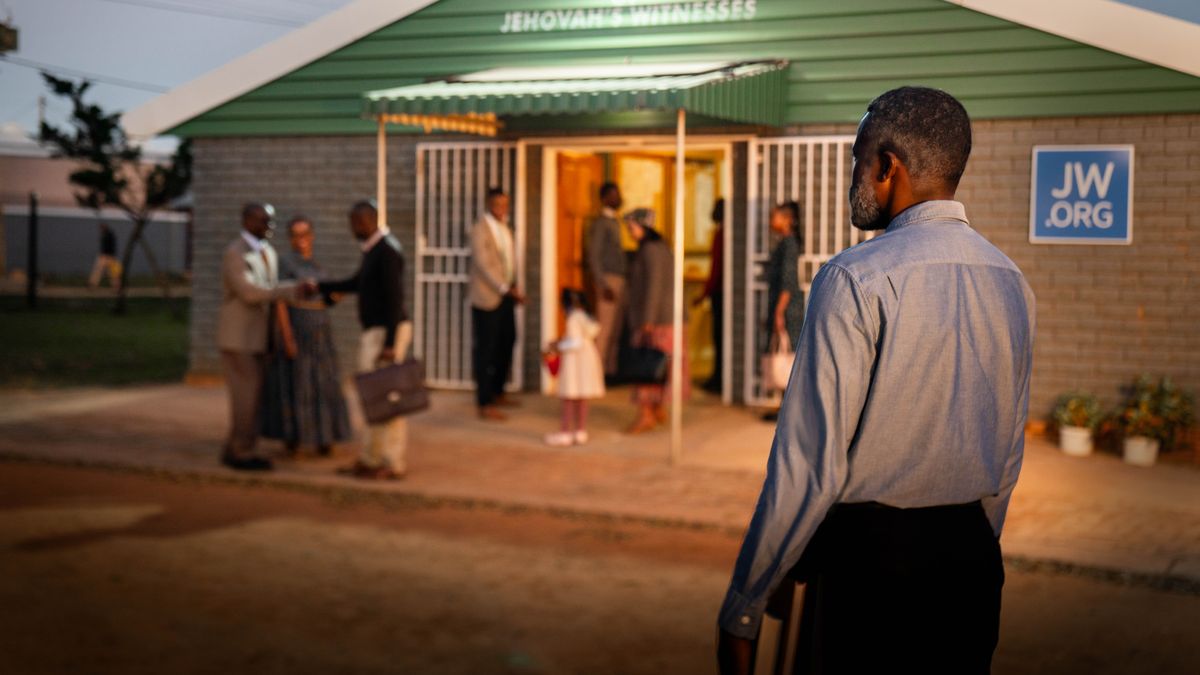
Ask yourself, ‘What steps can I take now to “set matters straight” with Jehovah?’ (See paragraph 16)
HOW WILL YOU RESPOND?
17-18. How can we wisely use our time before this year’s Memorial?
17 Jesus said that the ransom was provided “so that everyone exercising faith in him might not be destroyed but have everlasting life.” (John 3:16) The ransom is Jehovah’s means of rescuing us from the effects of sin and death. None of us should take it for granted. (Rom. 3:23, 24; 2 Cor. 6:1) The days before the Memorial give us an opportunity to reflect on the love that Jehovah and Jesus showed, and this love should compel us to respond appreciatively.
18 How will the ransom move you to respond? Your answer might differ from that of another person. But you can be sure that Jehovah will bless your efforts as you join millions of other worshippers who “live no longer for themselves, but for him who died for them.”—2 Cor. 5:15.
SONG 14 Praising Earth’s New King
a To help you progress as you study the Bible, use the “Goal” box near the end of each lesson in the Enjoy Life Forever! book.
b For suggestions on how you can progress spiritually, see the article “Young Ones—‘Keep Working Out Your Own Salvation’” in the December 2017 issue of The Watchtower.
c For suggestions on how you can maintain an appreciative attitude, see the article “What Motivates You to Serve God?” in the June 15, 1995, issue of The Watchtower.
Speak the Truth Graciously
pp. 26–31
MARCH 30–APRIL 5, 2026
SONG 76 How Does It Make You Feel?
Speak the Truth Graciously
“Jehovah, the God of truth.”—PS. 31:5.
FOCUS
How to speak the truth so that it will do the most good.
1. What must we do to be part of Jehovah’s family?
WHEN we first meet a fellow worshipper of Jehovah, one of the questions we usually ask each other is, “How did you learn the truth?” Some answer that question by saying that they were “raised in the truth.” Others might say that they recently “came into the truth.” We answer in such ways because the truth of God’s Word influences our entire way of life. Why? Because we know that we can be part of Jehovah’s family only if we prove that we love the truth and live by it. That includes being honest in our speech and actions.—Ps. 15:1-3.
2. (a) What reputation did Jesus have? (b) What effect would the truths Jesus taught have on people?
2 Jesus always spoke the truth. His enemies acknowledged that he would speak honestly even when what he had to say was unpopular. (Matt. 22:16) Regarding the effect of the truths he taught, Jesus said: “I came to cause division, with a man against his father, and a daughter against her mother, and a daughter-in-law against her mother-in-law.” (Matt. 10:35) Jesus did not want people to react negatively to the message that he and his followers preached, but he was realistic. (Matt. 23:37) He knew that his message would divide the world into two groups—those who love Bible truth and those who do not.—2 Thess. 2:9-11.
3. What will we discuss in this article?
3 Like Jesus, we try to be honest, speaking the truth at all times, even though doing so means being unpopular. And we preach and teach Bible truth, even though some might be upset by what we say. Does this mean that we do not need to give any consideration to how and when we speak the truth? Not at all! In this article, we will first answer a basic question: Where can we find the truth? We will then answer a related question: Why, how, and when should we speak the truth? The answers to those questions will help us improve our ability to speak the truth graciously, that is, with tact and at the right time.
WHERE CAN WE FIND THE TRUTH?
4. Why can we say that Jehovah is the Source of truth?
4 Jehovah is the Source of truth. Everything he says is truth. For example, the statements he makes about what is right and what is wrong are true. (Ps. 19:9; 119:142, 151) Everything he says about the future comes true. (Isa. 55:10, 11) He never breaks a promise. (Num. 23:19) In fact, it is impossible for Jehovah to lie! (Heb. 6:18) For good reason, Jehovah is known as “the God of truth.”—Ps. 31:5.
5. Why is it not hard to find “the God of truth”? Explain. (Acts 17:27)
5 Despite what some people say, it is not hard to find Jehovah, “the God of truth.” Evidence of his existence is all around us. (Rom. 1:20) When speaking to a group of Greek intellectuals in Athens, the apostle Paul said that God wants us to “find him” and that “he is not far off from each one of us.” (Read Acts 17:27.) In fact, Jehovah draws to himself humble people who are searching for the truth.—John 6:44.
6. What are some of the truths contained in the Bible, and why do you appreciate knowing those truths?
6 One of the ways we can find Jehovah is by studying the Bible. The men who wrote that book were inspired by God’s holy spirit. (2 Pet. 1:20, 21) So everything contained in the Bible is the truth and is worthy of our trust. For example, we can trust what it says about the origin of our universe and of life on earth. (Gen. 1:1, 26) We can believe what it says about why we all sin and why there is so much suffering and death. (Rom. 5:12; 6:23) We can trust it completely when it says that Jehovah, by means of his Son, will undo all the damage done by Satan, “the father of the lie.” (John 8:44; Rom. 16:20) And we can rely on the Bible’s promise that Jesus will destroy the wicked, raise the dead, restore the earth, and help us to become perfect. (John 11:25, 26; 1 John 3:8) What a privilege Jehovah has given us! He has taught us the truth, and he gives us the opportunity to teach it to others.—Matt. 28:19, 20.
WHY WE SPEAK THE TRUTH
7-8. Does our motive for speaking the truth matter? Give an example. (Mark 3:11, 12) (See also pictures.)
7 As mentioned earlier, we must speak truthfully if we want to be part of Jehovah’s family. However, to please him, we must do more than just speak honestly. The reason why we speak the truth matters to Jehovah. Consider what happened during Jesus’ ministry on earth. (Read Mark 3:11, 12.) While Jesus was preaching near the Sea of Galilee, large crowds gathered around him. Among them were some demon-possessed people who fell down in front of Jesus and then cried out to him: “You are the Son of God.” Why did the demons tell the truth about Jesus? Their goal may have been to gain the confidence of those who listened to them and then to draw them away from serving Jehovah. The demons initially told the truth, but their motives were selfish. They did not fool Jesus or please him. In fact, Jesus ordered the demons not to preach about him.
8 What lesson can we learn from this account? Our motives for telling the truth matter to Jehovah. How important it is that our motive for teaching the truth is pure and that we direct any glory we receive, not to ourselves, but to Jehovah!—Matt. 5:16; compare Acts 14:12-15.

When you teach the truth, to whom do you draw attention? (See paragraphs 7-8)
9. What should we avoid doing, and why?
9 Consider another situation in which we need to avoid seeking glory for ourselves. Suppose that a responsible brother entrusted us with some confidential information and we then pass on that information to others. If our listeners later find out that what we told them was true, they might be impressed with what we know and assume that we are entrusted with a lot of confidential information. This could raise their estimation of how important we are, but it will not elevate God’s view of us. (Prov. 11:13) Why? Because not only did we share confidential matters but we also told the truth with an improper motive.
HOW TO SPEAK THE TRUTH
10. How would you define “gracious” speech? (Colossians 4:6)
10 Read Colossians 4:6. The apostle Paul reminded Christians living in Colossae that their speech should “always be gracious.” What does that mean? The original-language expression conveys the idea that our speech should not only be beneficial to the listener but also be kind and appealing.
11-12. Why must we teach the truth with care? Illustrate. (See also pictures.)
11 We need to apply Paul’s counsel to be gracious when we teach the truth to others. The Bible itself likens the truths it contains to a sharp sword that can divide our soul and spirit. In other words, it can reveal our true inner feelings and motives. (Heb. 4:12) But if we do not use the Bible skillfully, we could cause needless offense and unnecessary conflict. How might that happen?
12 Imagine this scene. In our ministry, we meet a sincere man who regularly prays to images, and he enjoys celebrating Christmas and Easter with his family. Using the Bible, we could show the man how foolish it is to pray to lifeless statues and prove to him that Christmas and Easter are pagan celebrations. (Isa. 44:14-20; 2 Cor. 6:14-17) If we did so during our very first conversation with him, we would be telling the truth, but we would not be using God’s Word skillfully.

How can you teach the truth skillfully? (See paragraphs 11-12)a
13. How can we season our words with salt?
13 Paul also said that his readers should season with salt what they say. He did not mean that we should try to disguise the truth or to hide it. Rather, he was urging us to use speech that is “seasoned” so that we will present the truth in a way that appeals to the “taste” of the listener. (Job 12:11) Doing that can be a challenge. Regarding literal food, our tendency may be to think that others want their food seasoned to our taste. Similarly, we may think that our manner of speaking is appealing to everyone. But that is not the case. For instance, people from some cultural backgrounds may tend to have a direct way of expressing their opinion, even when speaking to those who are older than they are. Those from other cultures might find that type of communication unacceptable, even offensive. Paul said that we must know how we “should answer each person.” This implies that we should season what we say, not according to our taste or cultural background, but according to our listener’s taste.
WHEN TO SPEAK THE TRUTH
14. While on earth, did Jesus teach his disciples all that he knew? Explain.
14 Jesus always spoke graciously to his followers, and he kindly taught them many things. (Mark 6:34) But there was still much for them to learn. Jesus did not try to teach them everything he knew. He was considerate of their limitations. He understood that it was not the right time for them to learn some truths. In fact, he said that they would not be able to bear those truths. (John 16:12) What does this teach us?
15. Must we teach our Bible students everything we know all at once? Explain. (Proverbs 25:11) (See also picture.)
15 Jesus’ example shows that knowing the truth does not mean that we need to teach everything we know all at once. How might we follow Jesus’ example? We must be considerate of people’s circumstances. Think again of the man who enjoys celebrating Christmas and Easter with his family. We know that these celebrations are of pagan origin and are not approved by God. But imagine that you started studying the Bible with the man a week or two before Christmas. Would we be speaking graciously if we showed him what the Bible says about pagan celebrations and expected him to stop celebrating Christmas immediately? True, some students may quickly apply all that they learn from the Bible. Others, however, take more time to adjust their thinking and actions. We can help our Bible students make progress if we tell them what they need to know when they need to hear it, that is, when they are able to bear it.—Read Proverbs 25:11.

Follow Jesus’ example in deciding when to speak the truth and how much to say (See paragraph 15)
16. How can we help our Bible students to “go on walking in the truth”?
16 Few things bring us as much joy as helping others learn the truth about Jehovah. We can help them to “go on walking in the truth” if we do the following: Continue to set a good example for them. (3 John 3, 4) Make sure that your way of life proves that you believe in the promises found in God’s Word. Speak the truth with a pure motive. Speak graciously, using gentle, kind words at the right time when teaching the truth. And direct any praise you receive to Jehovah. If you do so, you will prove that you belong to Jehovah, the God of truth.
SONG 160 “Good News”!
a PICTURE DESCRIPTION: In the first photo, a brother sees the householder’s Christmas tree and shows him an article about the pagan origins of Christmas. In the second photo, the brother shows the householder an article that has practical suggestions for fathers. Which of the two approaches will be more effective?
Visualize Bible Accounts
p. 32
STUDY TIP
Visualize Bible Accounts
The Bible contains many historical narratives that teach important lessons. By creating mental images of these accounts, we can better understand what we read and benefit more from it. Consider some tips that can help you visualize Bible accounts.
Read aloud. Reading the Bible aloud can help you imagine the scenes more clearly. When reading the Bible as a family, you can make the account come alive by assigning each person a different character to read.
Picture the scenes. Try to capture the thoughts and the feelings of the characters involved. For instance, ask yourself: ‘Why did the person speak or act as he did? What would I have been thinking or feeling if I had been in that situation?’
Draw or sketch. Sketching Bible scenes can help you visualize and remember the narratives better, even if your finished product is not a work of art.