The Watchtower — Study Edition · February, 2026
Study Edition
pp. 1–32

Study Edition
FEBRUARY 2026
STUDY ARTICLES FOR: APRIL 6–MAY 3, 2026
© 2025 Watch Tower Bible and Tract Society of Pennsylvania
This publication is not for sale. It is provided as part of a worldwide Bible educational work supported by voluntary donations. To make a donation, please visit donate.jw.org.
Unless otherwise indicated, Scripture quotations are from the modern-language New World Translation of the Holy Scriptures.
Table of Contents
p. 32
Table of Contents
IN THIS ISSUE
Study article for April 6-12, 2026
2 How to Help Our Unbelieving Relatives
Study article for April 13-19, 2026
8 Understanding the Meaning of Baptism
Study article for April 20-26, 2026
14 Keep Working Toward Baptism
Study article for April 27, 2026–May 3, 2026
20 Are You Prepared for Challenges After Baptism?
How to Help Our Unbelieving Relatives
pp. 2–7
APRIL 6-12, 2026
SONG 82 “Let Your Light Shine”
How to Help Our Unbelieving Relatives
“Let us not give up in doing what is fine.”—GAL. 6:9.
FOCUS
How to maintain good relationships with unbelieving relatives and how to help them spiritually, if possible.
1-2. What may have affected our relationships with our relatives when we first learned the truth?
JESUS said to a man who wanted to become his follower: “Go home to your relatives, and report to them all the things Jehovah has done for you.” (Mark 5:19) In saying that, Jesus acknowledged a natural human trait—the desire to share good news with our loved ones.
2 Do you recall how you felt when you first learned the good news? You likely could not keep it to yourself! Your loved ones, however, may not have responded positively. Or the way you presented the truth may have caused friction between you and them. If so, how can you maintain or restore good relationships with your relatives without compromising Christian standards?
3. What will we discuss in this article?
3 In this article, we will see: (1) How compassion can motivate us to take a personal interest in our unbelieving relatives,a even if they do not respond; (2) how to look beyond negative words and actions; (3) how our patient and hopeful attitude can help our relatives recognize the truth; and (4) how we can show them that we love them.
LET COMPASSION MOTIVATE YOU TO HELP THEM
4. How did Jesus respond to those who were indifferent to his message?
4 Jesus did not quickly give up on those who were indifferent to his message. He compared himself to a worker in a vineyard who spared no effort in order to get an unproductive fig tree to bear fruit. (Luke 13:6-9) When Jesus gave that illustration, he had been trying to cultivate faith among his fellow Jews for more than three years. Why did he keep trying to help them? Jesus had compassion for people, and that helped him to be patient with them.
5. What motivated Jesus to show compassion to his fellow Jews?
5 Jesus felt compassion for his fellow Jews because the religious leaders had failed to help them develop true faith in God. Jesus saw that the people were “as sheep without a shepherd.” (Mark 6:34) Shortly before his death, Jesus even wept over Jerusalem because he knew that most of its inhabitants would lose their lives because of a lack of faith. (Luke 19:41-44) When we develop similar warm feelings for our relatives, we will be motivated to help them.
6. Why should we be patient with our unbelieving relatives? (Galatians 6:9)
6 Read Galatians 6:9. Even if our relatives are not yet interested in our beliefs, we should be patient with them and not give up in “doing what is fine.” We know that it takes time for a person to overcome deep-seated prejudice and to build faith. At one time, were you like those who had “no hope and were without God in the world”? (Eph. 2:12) If so, no doubt someone came to your aid. Are you not also moved to help fill the spiritual needs of your family, if possible?
LOOK BEYOND NEGATIVE WORDS AND ACTIONS
7. What may have prevented Jesus’ half brothers from putting faith in him?
7 Jesus’ half brothers likely heard about the miracles Jesus performed in Galilee. (Luke 4:14, 22-24) At first, though, they did not put faith in him. (John 7:5) Why? The Bible does not say. But it reveals at least two things that held back some Jews from becoming Jesus’ disciples. Some were afraid of being rejected by the community. (John 9:18-22) Others had known Jesus from his youth and could not imagine him as God’s representative. (Mark 6:1-4) Jesus’ half brothers may also have been affected by this kind of thinking. Could similar factors affect our loved ones?
8. What may cause unbelieving relatives to speak or act unkindly?
8 Consider the motives behind their words and actions. Jesus’ brothers may have been among the relatives who once said that he had “gone out of his mind.” (Mark 3:21) Why might they have come to that conclusion? The context shows that Jesus was so much in demand that he did not even have time to eat a meal. (Mark 3:20) Did his relatives think that he was being fanatical? It is possible. Our relatives may think that we take our religion far too seriously. If they feel that way, we do well to show by our actions how reasonable we truly are.
9. What might help our relatives to change how they feel about us? (1 Peter 3:1, 2) (See also pictures.)
9 Let your conduct speak for you. Our kind words and actions can move our relatives to change the way they feel about us. (Read 1 Peter 3:1, 2.) An unbelieving husband could easily feel left out or upset when his wife attends congregation meetings or goes out in the ministry. Because she does not want him to feel that way, she might adjust her schedule of spiritual activities in order to spend more time with him. For example, she could share in the ministry when her husband is busy or not at home. By being flexible and reasonable, a Christian wife might help her husband to reconsider his opinion of the Witnesses.

Our kind words and actions can change how an unbelieving mate feels about Witnesses (See paragraph 9)g
10. When we are criticized, how can we imitate Jesus?
10 Do not feel pressured to respond to all criticism. When Jesus was falsely accused of eating and drinking too much, he did not become defensive. Instead, he encouraged people to look at the facts. (Matt. 11:19) He also showed by his example that he had a balanced view of life. (Compare John 2:2, 6-10.) Likewise, do not feel that you have to respond to every criticism. Rather, show your relatives through your actions that you are balanced and happy and let them draw their own conclusions. They may be moved to reject false information that they have heard about us.
REMAIN PATIENT AND HOPEFUL
11. How did Jesus deal with his unbelieving siblings?
11 The Gospel accounts indicate that Jesus remained patient with his brothers. For example, they too were evidently in Cana when Jesus performed his first miracle. (John 2:11, 12) As mentioned earlier, Jesus’ siblings did not put faith in him. However, Jesus did not cut ties with them. The Bible reveals that about three years after his first miracle in Cana, Jesus was speaking kindly to his brothers.—John 7:5-8.
12. What can help us to remain hopeful that some of our relatives will have a change of heart?
12 Our clear understanding of Jehovah’s mercy can help us to remain hopeful. When false religion comes to an end, our relatives may recall that we had told them about this event.b (Rev. 17:16) They may even join us in pure worship after the great tribulation starts. And if our relatives are facing hard times now, we will certainly do all we can to be there for them. Perhaps they will be more receptive to Bible truths as they see that our love and kindness are genuine.
SHOW THEM THAT YOU LOVE THEM
13. Though we are busy in Jehovah’s service, what should we be careful about?
13 Even though we are busy serving Jehovah, we do not want to give our relatives the impression that we have no time for them or that we no longer love them. (Matt. 7:12) How can we show that we care about them? Consider a few ways.
14-15. What is one way to show that we love our unbelieving relatives? Give an example.
14 Keep in touch, and express your love for them. We show that we love our relatives by regularly letting them know how we are doing. For example, we could send them a text message along with a few pictures taken during a vacation, a trip, or a get-together with friends. A modest gift or a kind letter may be all that is needed to improve the relationship. By taking the initiative in such ways, we tell them that we love them.
15 Consider the example of Anna, a sister in Armenia. Her family spends a lot of time together, especially during birthdays and holidays. When Anna accepted the truth, her relatives began to worry about how her new faith would affect their relationship. They were also worried about how her decision to become a Witness would affect her future. How does Anna ease their concerns? “When I visit my relatives,” she says, “I share information about my life and what has kept me busy. I also invite them to my place and introduce them to my friends. As a result, most of my relatives are well-acquainted with those I am close with and feel comfortable with them.” She adds: “Many of my relatives have commented on how happy I am, and they no longer worry about me.”
16. How did Jesus show personal interest in his half brother James? (See also footnote.)
16 Take an interest in their lives. After being resurrected, Jesus showed interest in his brother James by appearing to him personally. (1 Cor. 15:7) Can you imagine how James must have felt when he realized that Jesus had not given up on him? This reunion likely convinced James that Jesus was the Messiah. After that meeting, James may have helped other members of his family to come to the right conclusion about Jesus’ identity.c—Acts 1:14.
17. How can we apply the principle found at Romans 12:15? (See also picture.)
17 Read Romans 12:15. If we show interest in our loved ones when they need it most—both in good times and in bad times—we may help them to change their attitude toward us.d For example, we could congratulate them on the birth of a child and give them a gift to show that we share in their happiness. When family members lose a loved one in death, we could speak consolingly to them, offer some practical help, or send them a comforting card. And of course, we could check on them regularly, especially when they are facing hard times.

If you show interest in your loved ones when they need it most, they may change their attitude toward you and your faith (See paragraph 17)h
18. How can we imitate the disciple Andrew?
18 Introduce them to fellow believers. When the disciple Andrew identified Jesus as the Messiah, Andrew eagerly introduced his brother Peter to Jesus. (John 1:40-42) Can we do something similar? For example, could we occasionally invite a relative to a meeting or to a meal with our friends? As we introduce him to fellow believers, he will see that Witnesses are normal, decent people.
19. Even if our relatives do not fully understand some of our beliefs, how should we treat them? (1 Peter 3:15)
19 Read 1 Peter 3:15. Our family members may not fully understand why we refuse to do certain things, but they will always remember our kind and respectful ways. They may also appreciate our effort to make up for the time we cannot spend with them on some occasions. For example, we cannot participate in unscriptural celebrations and customs, but we can visit them, have meals together, and give gifts at other times.
NEVER GIVE UP ON YOUR RELATIVES
20. Why is James’ example encouraging for us?
20 James missed the opportunity to accompany Jesus in his ministry, but he eventually became a disciple. (Gal. 1:18, 19; 2:9) Though not an early disciple, James obviously took to heart Jesus’ teachings. For example, under inspiration he wrote a letter that alludes to the Sermon on the Mount.e
21. Why should we not give up on our unbelieving relatives?
21 Despite our best efforts, our unbelieving relatives may not show interest in the truth or respond favorably when we show personal interest in them. Why should we not give up on them? Because we will be imitating our merciful God, Jehovah, and his Son, Jesus, each time we show our relatives kindness. (Luke 6:33, 36) Over time, our loving conduct may move them to change how they feel about us. They may even remember the beliefs we shared with them in the past. If we do not give up on them, we may have the joy of seeing some of our dear relatives join us in true worship!
SONG 60 It Means Their Life
a EXPRESSION EXPLAINED: As used in the Bible, the terms “unbeliever” or “unbelieving” do not necessarily refer to a person who has no religious beliefs or who does not believe in God. (1 Cor. 7:12; see study note on “an unbelieving wife.”) As used in this article, such terms refer to a person who does not worship Jehovah God the way Jehovah’s Witnesses do.
b See the article “What Do We Know About Jehovah’s Future Judgments?” in the May 2024 issue of The Watchtower, p. 11, pars. 11-13.
c At least two of Jesus’ fleshly brothers, James and Jude, embraced the truth after Jesus’ death and resurrection.
d See the box “Would You Attend a Wedding or a Funeral?”
f For more information on how to handle such matters, see “Questions From Readers” in the May 15, 2002, and November 15, 2007, issues of The Watchtower.
Understanding the Meaning of Baptism
pp. 8–13
APRIL 13-19, 2026
SONG 52 Christian Dedication
Understanding the Meaning of Baptism
“Make disciples . . . , baptizing them.”—MATT. 28:19.
FOCUS
The meaning of baptism, its importance, and what it involves.
1. What indicates that baptism is a fundamental Bible teaching?
HOW happy we are when new ones get baptized! Did you know that this joy can be traced back to the very first meeting of the Christian congregation? That meeting included a baptism and a talk that explained the fundamental teaching about baptism. (Acts 2:38, 40, 41) The apostle Paul wrote that “the primary doctrine about the Christ” includes “the teaching on baptisms.” (Heb. 6:1, 2) Although the subject of baptism might seem basic, we need to understand it well. Why?
2. Why do we need a thorough understanding of baptism?
2 Just as a solid foundation can help make a house sturdy, a thorough understanding of baptism can help us to have strong faith. We need this understanding whether we are progressing toward baptism or have been baptized for many years. So in this article, we will answer these questions: What is the meaning of baptism? What does Christian baptism involve? And why do we get baptized in the name of the Father, of the Son, and of the holy spirit?
THE MEANING OF YOUR BAPTISM
3. What does baptism symbolize?
3 Getting baptized shows publicly that you have accepted the truth about Jehovah God and Christ Jesus, repented of your sins, adjusted your life course to serve Jehovah, recognized Jesus as God’s way of salvation, and expressed to God in prayer your sincere desire to do His will in association with His organization. Once you make that promise, or dedication, and get baptized, you begin a course that leads to everlasting life.
4. What does being completely immersed in water symbolize? (See also picture.)
4 When you get baptized, you are completely immersed in water and then raised out of it,a as if you had been buried and then resurrected. (Compare Colossians 2:12.) Baptism illustrates the dramatic changes that you have made in your life. How? When you go under the water, you show that you have ended your former way of life. When you come out of the water, you begin your new life centered on doing God’s will.

When you get baptized, you end your old way of life and begin your new life centered on doing God’s will (See paragraph 4)
5. How does the work that you do to prepare for baptism compare to the work that Noah did to build the ark? (1 Peter 3:18-21)
5 Read 1 Peter 3:18-21. In a sense, we can compare the work that you do to get ready for baptism to the work Noah did to build the ark. If you are just starting to learn about Jehovah, the work ahead might seem overwhelming, perhaps even as massive a job as building Noah’s ark. Is all that effort really necessary? It certainly was for Noah. God himself designed the ark, and Noah had to follow that design closely to preserve life through the Flood. With faith and God’s support, Noah obeyed and built the ark. Like Noah, you can successfully do according to “all that God [has] commanded.”—Gen. 6:22.
6. In what sense can baptism save you?
6 In verse 21, the apostle Peter wrote that baptism is “saving you.” Of course, the simple act of being immersed in water does not bring salvation; nor does it somehow wash your sins away. Only the blood of Jesus can cleanse you from sin. (1 John 1:7) However, baptism is a vital part of doing all that God has commanded and serves as your “request to God for a good conscience.” Jehovah will be pleased to give you what you asked for. In that sense, baptism is “saving you,” or leading you to salvation.
WHAT CHRISTIAN BAPTISM INVOLVES
7. How should a baptism be conducted?
7 Apart from the requirement for total immersion, the Bible does not provide many details about baptism. Still, the Scriptures do help us to know what is appropriate. For example, Bible principles help baptism candidates know how to dress and also help observers know how to behave. (1 Cor. 14:40; 1 Tim. 2:9) Today, immersion is usually performed by an elder, and we avoid giving prominence to those who have this privilege. (1 Cor. 1:14, 15) A baptism is valid whether it is witnessed by a large audience or not.—Acts 8:36.
8. What questions are baptism candidates asked, and why? (Acts 2:38-42) (See also picture.)
8 The Bible shows that we should make “public declaration for salvation,” that is, express our faith. (Rom. 10:9, 10; see study note on “publicly declare.”) How fitting it is, then, that we do so when we get baptized, the very action that is crucial for salvation! For that reason, candidates for baptism are asked two questions. The first is, “Have you repented of your sins, dedicated yourself to Jehovah, and accepted his way of salvation through Jesus Christ?” This question focuses on how a person has prepared for baptism, and it is similar to the exhortation that Peter gave to the crowd at Pentecost. The second question is, “Do you understand that your baptism identifies you as one of Jehovah’s Witnesses in association with Jehovah’s organization?” This question reminds us that we live up to our dedication by cooperating with the direction provided through Jehovah’s organization and serving God alongside fellow Christians, just as the first-century disciples did. (Read Acts 2:38-42.) Those who can wholeheartedly answer yes to both questions qualify for baptism.

Your baptism includes a “public declaration for salvation” (See paragraph 8)d
9. What steps must everyone take to gain God’s favor?
9 Even before you began learning the truth, you may have lived a reasonably good life and never committed any serious sins. Or you may have been raised by Christian parents, who helped you to love Jehovah. Do you still need to repent and get baptized to gain God’s favor? Yes. Regardless of our background, we must all recognize that we inherited sin, which alienated us from God. (Ps. 51:5) As we come to know Jehovah, though, we choose to put his will ahead of ours. Once we do that, we can repent of our previous course and turn around—begin following a way of life that pleases our Father in heaven. We can then get baptized.—Acts 3:19.
10. What should you do if you previously got baptized as an adherent of another religion?
10 If you previously got baptized as an adherent of another religion, you still need to get baptized as one of Jehovah’s Witnesses. Why? Because you did not then sufficiently understand the truth about Jehovah God and Jesus. And even if you dedicated yourself to God in prayer, your promise would not have been based on a correct understanding of his will. When the apostle Paul met men in Ephesus who previously got baptized without having the needed understanding of Christian teaching, he arranged for them to get rebaptized.b (Acts 19:1-5) Likewise today, baptism is valid only if it is based on an accurate knowledge of God’s will.
“IN THE NAME OF THE FATHER AND OF THE SON AND OF THE HOLY SPIRIT”
11. What does it mean to get baptized “in the name of the Father and of the Son and of the holy spirit”? (Matthew 28:18-20)
11 Jesus commanded that new disciples be baptized “in the name of the Father and of the Son and of the holy spirit.” (Read Matthew 28:18-20.) What did he mean? In the Bible, the word for “name” often refers to someone’s reputation. It can also refer to the position and the authority represented by a name. So when we do something “in the name of” someone or something, we recognize the authority behind that name. (Compare Matthew 10:41; see study note on “because he is a prophet.”) Consider how you can recognize the position and the authority of the Father and of the Son as well as the role of God’s holy spirit.
12. How do we get baptized in the name of the Father? (Revelation 4:11) (See also picture.)
12 In the name of the Father. We acknowledge Jehovah as our heavenly Father, or Life-Giver. He is the almighty God, the Creator of all things. (Read Revelation 4:11.) We recognize him as the Hearer of prayer, and we use his personal name respectfully and freely when we pray to him and speak to others about him. (Ps. 65:2) Yet, more is involved in getting baptized in the name of the Father. Peter’s listeners at Pentecost already knew about Jehovah, but they now needed to recognize him as the loving Provider of everlasting salvation through Jesus Christ.—Rom. 5:8.

After your baptism, continue to recognize the position and the authority of the Father (See paragraph 12)
13. How do we get baptized in the name of the Son? (See also picture.)
13 In the name of the Son. We recognize Jesus as the only-begotten Son of God. Jesus is “the way,” the only one through whom we can have a good relationship with Jehovah. (John 14:6) Jesus is also our Redeemer, the one who died for us so that we might gain life. That knowledge moves us to follow his example every day of our life, not just when we get baptized. (1 John 2:6) So we zealously preach, as he did, letting nothing deter us. (Luke 4:43) We are even willing to endure persecution for loyally serving God. (2 Tim. 3:12) We respect Jesus as the “head of the congregation,” so we gladly submit to those whom he entrusts to take the lead and to care for his followers.—Eph. 4:8, 11, 12; 5:23.

After your baptism, continue to recognize the position and the authority of the Son (See paragraph 13)
14. (a) How do we get baptized in the name of the holy spirit? (See also picture.) (b) What additional baptisms do the anointed undergo? (See the box “Baptisms That the Anointed Undergo.”)
14 In the name of the holy spirit. We accept the truth about the holy spirit. It is, not a person or part of a Trinity, but God’s active force. We recognize that holy spirit guided the prophets and the Bible writers, so we regularly read the Bible and follow its teachings. (2 Pet. 1:20, 21) And we avoid committing serious sins, for such conduct could not only block God’s spirit from reaching us but also hinder the free flow of his spirit in the congregation.—Eph. 4:30.

After your baptism, continue to recognize the role of the holy spirit (See paragraph 14)
15. What should be our determination?
15 If you are already a baptized Christian, be determined to understand all aspects of “the teaching on baptisms”c and to live up to the promise you made to Jehovah with your dedication and baptism. But what if you are not yet a baptized Christian? Could something be holding you back? The next article will discuss how you can keep working toward baptism.
SONG 161 To Do Your Will Is My Delight
a The Greek word ba’pti-sma, translated “baptism,” means “immersion,” or “dipping.” So baptism refers to a person being completely immersed in water, not merely sprinkled with water as some religions teach.
b Those men in Ephesus had undergone “John’s baptism.” (Acts 19:3) John the Baptist urged the Jews to repent over their sins against the Law of Moses, and John baptized those who responded. (Mark 1:4, 5) However, John’s baptism ceased to be valid once the Law ended. From then on, God approves of only “one baptism” that leads to salvation.—Eph. 4:5.
c See on jw.org and in JW Library® the article “What Is Baptism?” in the series “Bible Questions Answered.”
d PICTURE DESCRIPTION: At an assembly, baptism candidates stand to make a public declaration of their faith.
Keep Working Toward Baptism
pp. 14–19
APRIL 20-26, 2026
SONG 49 Making Jehovah’s Heart Glad
Keep Working Toward Baptism
“Now is the especially acceptable time.”—2 COR. 6:2.
FOCUS
Now is the time to build a close friendship with Jehovah and get baptized.
1. (a) What are some of the benefits we gain from getting baptized? (b) What will we consider in this article?
HAVE you dedicated yourself to Jehovah and symbolized that dedication by water baptism? If so, you have requested a clean conscience from God. (1 Pet. 3:21) In doing so, you have set a fine example for both young ones and new ones associating with your congregation. So you have made an excellent decision! What, though, if you are not baptized yet? No doubt you love Jehovah and want to do his will. You know that baptism is vital in order for you to have your sins forgiven and to gain Jehovah’s approval. (Acts 2:38-40) But you may still hold back. What can help? In this article, we will consider (1) why some hold back from getting baptized, (2) why it is wise to keep the end close in mind, and (3) how you will benefit from working toward baptism without delay.
WHY SOME HOLD BACK
2. Why do some hold back from getting baptized?
2 Some hold back from getting baptized out of fear. For example, although they want to serve Jehovah, they are afraid that they will never be good enough to please him. If you feel this way, review Bible verses that can convince you that Jehovah does not expect perfection and that he is pleased with your worship when you give him your best. (Ps. 103:13, 14; Col. 3:23) If you fear opposition, ask Jehovah to give you the same confidence expressed by the psalmist who wrote: “Jehovah is on my side; I will not be afraid. What can man do to me?”—Ps. 118:6.
3. What thinking might prevent some from getting baptized? (See also picture.)
3 Some who love Jehovah put off getting baptized because they think that they lack sufficient knowledge. But how much do you really need to know? Consider a Scriptural example. After an earthquake shook the prison where the apostle Paul and Silas were being held, they witnessed to the jailer and his household. The man and his family likely understood that a miracle had taken place. Additionally, they learned a great deal that night. As a result, they were moved to get “baptized without delay.” (Acts 16:25-33) If you know Jehovah, love him with your whole heart, have gained a basic knowledge of Bible teachings, have repented of your sins, and are determined to keep living by his standards, you are ready for baptism.—Mark 12:30.
Paul and Silas witnessed to the jailer and his family, which led to them getting “baptized without delay” (See paragraph 3)
4. What do some focus on that causes them to hold back from getting baptized? (See also picture.)
4 Some who want to please God focus on the cost of doing so. Of course, it is wise to consider the cost of any decision. (Luke 14:27-30) Some, though, worry about the sacrifices they will have to make in order to serve God. Candace, who was raised around the truth, felt that way when she was offered a Bible study as an adult. She says: “I knew what I should be doing for Jehovah, but part of me held back because I enjoyed what I was doing in the world. I knew that it would be hard to give up those things.” Others are concerned about the high standard of conduct for those who get baptized. They worry that after baptism, they will commit a serious sin and be removed from the congregation. If such concerns are holding you back, what can you do?

Some who want to please God worry about the sacrifices they will have to make in order to serve God (See paragraph 4)
5. What should we focus on when we consider whether to get baptized? (Matthew 13:44-46)
5 When we want to buy something, we look at not only the cost but also the value. If the value of the item is far greater than the cost, we will likely buy it right away. Likewise, when we consider whether to get baptized, we should focus not solely on the cost of the changes we must make but on the great value of a good relationship with Jehovah. Jesus used two illustrations to teach this point. (Read Matthew 13:44-46.) In each illustration, a man gladly sold all his possessions so that he could buy the valuable item he had found. You too have found something of great value—the truth about the Kingdom. If you wonder whether living in harmony with the truth is worth the effort, think carefully about Jesus’ illustrations. You might ask yourself: ‘Am I truly convinced of the value of what I have found? Do I treasure my relationship with Jehovah, the hope he has given me, and the loving brotherhood?’ Depending on your answers, you can focus on building your appreciation for the truth or identifying what holds you back from acting on what you know.
6. How can we develop a good heart condition?
6 In his illustration of the sower, Jesus described heart conditions that could prevent a person from making spiritual progress. Yet, Jesus also showed that some would hear “with a fine and good heart” and respond to the Kingdom message. (Luke 8:5-15) If you are concerned that your heart is divided, do not give up. With God’s help, you can “acquire a new heart,” one that will respond to his guidance. Ask Jehovah in prayer to help you soften your heart so that Kingdom truth can flourish.—Ezek. 18:31; 36:26.
7-8. Why do some young people fail to progress to baptism? (See also picture.)
7 Some young people who love Jehovah fail to progress to baptism because of the influence of others. For example, some school counselors might advise students to “keep an open mind” about moral standards, even those that violate God’s standards. But such advice can lead to disaster. (Ps. 1:1, 2; Prov. 7:1-5) You can avoid this danger by following the example of the psalmist who told Jehovah: “I have more insight than all my teachers, because I ponder over your reminders.”—Ps. 119:99.
8 Reports indicate that some Witness parents hold their children back from baptism. The parents focus excessively on their children’s education and career, or the parents simply fail to help their children set spiritual goals. What if you feel that your parents could be more supportive of your spiritual progress? Why not discuss the matter with them? Be assured that your age does not need to prevent you from building a close friendship with Jehovah.—Prov. 20:11.

Why not discuss the matter of baptism with your parents? (See paragraph 8)
9. Why might some delay getting baptized?
9 Some who qualify to get baptized might delay taking this step because of peer pressure, perhaps even waiting for a particular person to take the same step. For instance, they might hope one day to get baptized on the same day as a friend or a loved one. Of course, you can get baptized at the same time as others you care about. Really, though, should such factors hold you back now? Remember, your dedication to God is a personal promise. Your baptism should not depend on what someone else does.—Rom. 14:12.
WHY KEEP THE END CLOSE IN MIND
10. Why might some delay making spiritual progress?
10 In addition to the reasons mentioned above, some might delay making spiritual progress because they reason that there is plenty of time before the end. But is that reasoning sound? Jesus warned his disciples: “Keep ready, because at an hour that you do not think likely, the Son of man is coming.”—Luke 12:40.
11. According to Psalm 119:60, how do we feel about Jehovah’s commands as we come to know him?
11 Our dedication to Jehovah must be motivated by love. The more we come to know our loving God, the more we are moved to love his commands and to follow them as soon as they are brought to our attention. (Read Psalm 119:60.) The disciple James highlighted another vital reason to obey Jehovah’s commands promptly: None of us knows what tomorrow will bring. We may not even have one more day “to do what is right,” so we should act now on what we know.—Jas. 4:13-17.
12. What can we learn from Jesus’ illustration of the vineyard?
12 What about Jesus’ illustration of the vineyard? Did he not teach that some would work just one hour and still receive the same wages as those who worked all day? That is true. However, note the reason that the one-hour workers gave for not starting sooner. They said: “Because nobody has hired us.” Those workers had not tried to get out of working all day—they simply had not been hired. As soon as they were called, they joined the workforce. (Matt. 20:1-16) Today, Jesus has called us to be his disciples and join in the Kingdom work. We should respond to his call as soon as we hear it.
13. What can we learn from the wife of Lot?
13 Any who delay taking steps toward spiritual progress might discover that making last-minute changes to please God is too difficult. Jesus knew this and warned his disciples: “Remember the wife of Lot.” (Luke 17:31-35) She was well-aware that God’s judgment on Sodom and Gomorrah was imminent; yet, it seems that she still could not break her attachment to the things she left behind. (Gen. 19:23-26) Her experience also reminds us that the door of salvation will not remain open indefinitely. At God’s due time, that door will be closed and permanently locked.—Luke 13:24, 25.
14. How should Bible prophecies about the end affect you?
14 With each passing day, world events fulfill Bible prophecies about the end of this system. Even if you are not yet directly affected by some of those events, seeing what is happening in one place after another should increase your sense of urgency to progress to baptism. Consider a first-century example. The apostle Peter urged Christians to “be vigilant,” or “alert,” because “the end of all things [had] drawn close.” (1 Pet. 4:7; ftn.) “The end” was evidently that of the Jewish system of things. Those whom Peter wrote to lived far away from Jerusalem, so they would not be directly affected by the destruction of that city. (1 Pet. 1:1) However, once they saw the fulfillment of that prophecy, their confidence in all of Jehovah’s other promises would be strengthened. Similarly, as you see prophecies related to the coming end being fulfilled, you will be moved to be vigilant by advancing toward the goal of baptism.
15. How should we view the timing of Jehovah’s day? (2 Peter 3:10-13)
15 In his second inspired letter, Peter explained how we should view the timing of Jehovah’s coming day of judgment. For Christians living in the first century, that day was still in the far distant future; yet, Peter told them to “keep close in mind,” or “eagerly desire,” that day. (Read 2 Peter 3:10-13; ftn.) We can keep that day close in mind by being ready and eager for it to come. We show our eagerness by performing “holy acts of conduct and deeds of godly devotion.” Think of how it would please Jehovah to see you performing “deeds of godly devotion”! He would surely be delighted to see you dedicate yourself to him and get baptized.
THE BENEFITS OF ACTING NOW
16. When is the best time to progress to baptism? (2 Corinthians 6:1, 2) (See also pictures.)
16 The best time to progress toward baptism is right now. (Read 2 Corinthians 6:1, 2.) The Ethiopian eunuch whom Philip met recognized the need for urgent action. Once he understood the good news and had the opportunity to get baptized, he did not think to himself: ‘I would like to learn more about the good news first. There will be another body of water farther along the road.’ Instead he asked Philip, “What prevents me from getting baptized?” (Acts 8:26, 27, 35-39) What a fine example! After the eunuch got baptized, he “went on his way rejoicing.”

Learn a valuable lesson from the Ethiopian eunuch: The best time to progress to baptism is right now (See paragraph 16)a
17. Of what can we be assured?
17 If you are holding back from getting baptized, be assured that Jehovah is ready to lead you into a good relationship with him. (Rom. 2:4) He can help you overcome any fears, concerns, or outside influences that might be limiting your progress. Once you gain a good conscience with God through your baptism, you will likely find that “the things behind” no longer matter to you. (Phil. 3:8, 13) You can then look forward to “the things ahead,” that is, the fulfillment of Jehovah’s promises to those who dedicate themselves to him and get baptized.—Acts 3:19.
SONG 38 He Will Make You Strong
a PICTURE DESCRIPTION: Just as the Ethiopian eunuch told Philip that he wanted to get baptized, a Bible student approaches the elders to express her desire to get baptized.
Are You Prepared for Challenges After Baptism?
pp. 20–25
APRIL 27–MAY 3, 2026
SONG 99 Myriads of Brothers
Are You Prepared for Challenges After Baptism?
“Let my steps stay on your tracks.”—PS. 17:5.
FOCUS
How newly baptized Christians can prepare for possible challenges in the truth.
1-2. What steps can we take to be prepared for challenges that may come up in the truth? Illustrate.
WE EXPECT to have difficulties in Satan’s world. Jesus realistically warned his followers: “It is inevitable that stumbling blocks will come.” (Matt. 18:7) With that warning in mind, we need to be prepared to face challenges, and that may include having problems with fellow believers.
2 Consider an illustration. Jehovah’s people have been encouraged to prepare for natural disasters. How do we do so? First, we identify what disasters may occur in our region. It is especially important to do that if we are new to the area. After identifying the potential disasters, we need to plan what we can do to be ready for each one. (Prov. 21:5) Similarly, we can identify potential challenges in the truth and prepare now so that we will be ready if they come up in our life. In that way, those challenges will have less of an impact on us and will not harm our relationship with Jehovah. (Ps. 17:5) Therefore, let us discuss three possible challenges and how we can prepare for each one.a
A BROTHER OR A SISTER OFFENDS YOU
3. What challenge could we face in the congregation?
3 Do you remember how you felt the first time you attended a meeting and saw the love among Jehovah’s people? Were you convinced that you had found the truth? (John 13:35; Col. 3:12) That is how Blancab felt. However, she had an unexpected experience after she got baptized. She says: “A sister treated me harshly. I also noticed that she would speak negatively about others. I wasn’t expecting this; I had learned that Jehovah’s Witnesses strive to be peaceful and loving.” Of course, your brothers and sisters work hard at refining their Christian qualities, but Jehovah’s people are not perfect. (Eph. 4:23, 24; 1 John 1:8) So at some point, one of them is likely to say or do something that hurts you. (Jas. 3:8) Sadly, such challenges have caused some to stop serving Jehovah.
4. What can help us to be ready in the event that a brother or a sister offends us? (Ephesians 4:32)
4 What can you do now to be ready in the event that a brother or a sister hurts or offends you? Make it a habit to apply the advice found at Ephesians 4:32. (Read.) If you do your best to remain kind and compassionate, you will surely avoid needless conflicts with others. Make it your goal to forgive others freely for the mistakes they make. What can help you to do so? Think of how often you ask Jehovah to forgive your mistakes and how freely he does so. (Matt. 6:12) When you focus appreciatively on how generous Jehovah has been in forgiving you, you will find it easier to forgive others.
5. What Bible principle can help us when someone offends us? (Proverbs 19:11) (See also pictures.)
5 Read Proverbs 19:11. The Bible says that when we are offended, insightc can slow down our anger. This principle has helped Rima, who has been baptized for a few years. She says: “When I see brothers and sisters act in a way that I find hurtful or offensive, I first remember Proverbs 19:11. I consider their circumstances and background, and I try to think of why they may have acted in that way. I also try to work with them in field service. Doing so helps me to know them better.” That is good advice. You can get to know your brothers and sisters now. The more you understand them, the easier you may find it to forgive them if they ever act in a hurtful way.

If you have a misunderstanding with a spiritual brother or sister, try working together in the ministry (See paragraph 5)
6. What can help us to enjoy positive relationships in the congregation?
6 What can you do to enjoy positive relationships in the congregation? As you get to know your brothers and sisters, make sure to focus on their good qualities. (Compare Proverbs 10:12; Rom. 12:10; Phil. 2:2, 3) Note how doing so helped a newly baptized brother named Mark. As he began spending more time with the brothers and sisters in his congregation, he became aware of their imperfections. What helped Mark to avoid being stumbled by the faults he saw in them? He says: “I came to realize that I was focusing on minor faults, and these paled in comparison to the wrongdoings prevalent in the world. It became clear to me that I shouldn’t dwell on the imperfections of my fellow believers. So I shifted my focus to their good attributes.” If you respond similarly, you will enjoy positive relationships in the congregation.
YOU BEGIN TO MISS WHAT YOU LEFT BEHIND
7. What could lead us to begin to miss what we left behind?
7 When you first learned the truth, no doubt you felt relieved to leave behind Satan’s wicked world. You may think, ‘How could anyone ever miss it?’ Yet, when undergoing difficult trials, you could begin to recall—and even yearn for—some of the things that you gave up as you began to serve Jehovah. (Compare Numbers 11:4-6.) For example, some brothers may have decided to give up a prestigious but time-consuming career. Others may have had close friends who pulled away from them when they began to study the Bible. Still others may have overcome an addiction that, although unclean, provided some pleasure. How sad it would be if a Christian were to allow anything from his past to cause him to drift away from Jehovah! What can you do now so that no matter what comes your way, you will never return to what you rightly left behind?
8. What do we learn from the example of Abraham and Sarah?
8 The Bible contains examples of faithful worshippers who could have started missing what they left behind. For example, in obedience to Jehovah’s command, Abraham and Sarah left the fortified city of Ur to dwell in tents. (Heb. 11:8, 9) Obviously, they might occasionally have called to mind the comforts of Ur. But “if they had kept remembering” or if they had looked longingly to the past, they could have been tempted to return to those comforts. Instead, they focused on the future.—Heb. 11:15, 16.
9. How did the apostle Paul view the things that he had left behind? (Philippians 3:7, 8, 13)
9 The apostle Paul changed course to serve Jehovah. Before becoming a Christian, he had studied under the highly esteemed Law teacher Gamaliel. (Acts 22:3) Paul was on track to reach a very prominent position in Judaism. (Gal. 1:13, 14) However, when he accepted the good news, he left all of that behind. Was life always easy after his conversion? No. He was beaten, imprisoned, and hated by his own people. (2 Cor. 11:23-26) If he had focused solely on those trials and compared his present life with his previous life, he could have concluded that he was better off before his conversion. Instead, Paul focused on the immense privilege he currently had of serving Christ Jesus with a glorious future ahead. Paul was convinced that such blessings far outweighed any sacrifices that he had made.—Read Philippians 3:7, 8, 13.
10. On what should we regularly reflect? (Mark 10:29, 30) (See also pictures.)
10 What is the lesson? If you start thinking about the things you gave up in order to become a Christian, be sure you also remember why you gave them up. (Eccl. 7:10) Compare what you left behind with the blessings you have gained by coming into the truth. You have a close friendship with the Sovereign of the universe. (Prov. 3:32) You are surrounded by a loving spiritual family. (Read Mark 10:29, 30.) And you have a wonderful future before you! (Isa. 65:21-23) If you regularly reflect on the blessings that come from serving Jehovah, you will be less likely to miss what you left behind.

Instead of looking longingly to the things you left behind, enjoy the precious ministry God has given you (See paragraph 10)e
11. What do you learn from Rosemary’s experience?
11 A sister named Rosemary got baptized in her 50’s. Note what she did to avoid longing for what she left behind. She says: “At first, I missed Christmas, since it had always been an enjoyable time with family. I enjoyed giving gifts to my loved ones. I liked having the children around the Christmas tree and seeing their little faces light up when they opened their presents.” What has helped her? Rosemary says: “I have found a way to replace Christmas. Each year on a different day, I gather my family, give them gifts, and explain why I appreciate them.” Rosemary also faced another challenge. She says: “When I learned the truth, my old friends left me. At times, I would miss them and feel lonely.”d What helped her? She started making plans with different sisters to go out preaching. She says: “In doing so, I have made new friends whom I love and value.” What might you learn from her? You may miss something that made you happy before you learned the truth, but you may very well be able to replace what you miss with something wholesome. (Phil. 4:8, 9) And remember: With Jehovah, you always gain much more than you lose.
OTHERS LEAVE JEHOVAH
12. What challenge in the congregation could be especially difficult?
12 When you became a Witness, you likely felt relieved to leave behind a corrupt world and enter a spiritual and moral oasis. (Isa. 65:14) And yet, at times, you may hear of wrongdoing in the congregation. Someone may even be removed from the congregation. (1 Cor. 5:13) Note how such a situation affected a sister named Samar. She says: “Not long after my baptism, an elder committed a serious sin and was removed from the congregation. I was almost stumbled because I couldn’t believe that it was possible for an elder to sin against Jehovah and the congregation.” Of course, we should always trust that our brothers and sisters love Jehovah and want to stick to him. (1 Cor. 13:4, 7) Still, we must be realistic; each year some are removed from the congregation. And it could be especially challenging if someone close to you or someone you looked up to chooses a bad course.
13. How can we strengthen ourselves now so that if someone close to us leaves Jehovah, we will not be stumbled?
13 How can you prepare yourself now so that if someone close to you leaves Jehovah, you will not be stumbled? Continue strengthening your personal relationship with Jehovah. (Jas. 4:8) Do not allow your relationship with God to be dependent on someone else’s faithfulness. For example, although we may often worship together as a family and as a congregation, we also need to have our own personal routine of prayer and Bible reading.—Ps. 1:2; 62:8.
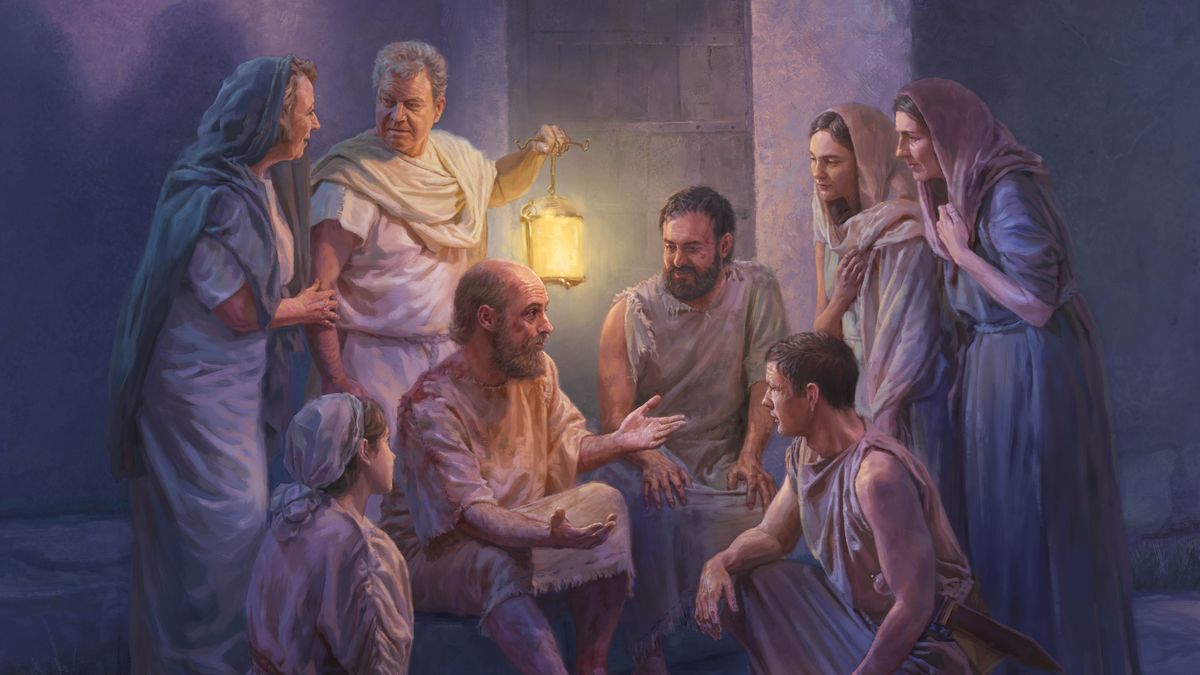
14. What do we learn from the apostle Peter’s example? (John 6:66-68)
14 We can also draw a lesson from the way the apostle Peter reacted when many disciples stopped following Jesus. Peter himself may have been somewhat confused at that time. But note what he said according to John 6:66-68. (Read.) Instead of focusing on what others were doing, Peter focused on the sayings of truth that he had received from Jesus. As a result, Peter was not stumbled. Similarly today, the actions of others do not change the valuable truth you have found with the help of God’s organization. Cling to that truth! Samar, mentioned earlier, says, “I always remind myself that the wrong actions of one individual do not represent the entire congregation or organization; neither do they represent Jehovah’s qualities.”
15. What do you learn from Emily’s experience?
15 Consider the example of Emily. Only a week after Emily got baptized, her mother left the family and was removed from the congregation. Emily says: “Never could I have imagined that this would happen. This has been my biggest challenge, and I miss my mom a lot.” What has helped Emily? She says: “I am not alone. I have support not only from my dad but also from others in the congregation, who have been like a family to me. Everyone is dealing with a trial. That’s why it’s important to stay close to one another and encourage one another.” (1 Pet. 5:9) You do not have to wait for a challenge before you strengthen your bonds with your brothers and sisters. Continue doing so now. In that way, no matter what happens, you are less likely to feel alone.
16. What should we remember? (See also picture.)
16 Remember, too, that Jehovah disciplines those he loves. (Heb. 12:6) He wants all who are removed from the congregation to return. (2 Pet. 3:9) So if someone close to you is removed from the congregation, you can be sure that the elders will do all that they can to help him to return to Jehovah.—2 Tim. 2:24, 25.

If someone close to you is removed from the congregation, remember that the elders want to help him to return to Jehovah (See paragraph 16)f
17. Of what can we be sure?
17 We have discussed just a few of the challenges that you may face after baptism. True, some may seem daunting, but you have no reason to fear. There is much you can do to prepare. And never forget that you have the greatest help available: Jehovah God. He has already helped you, and he wants to help you forever! (1 Pet. 5:10) He will always give you the strength and the endurance you need to face any trial. As you keep accepting Jehovah’s help, there is no challenge that could ever pull you away from him!—Ps. 119:165; Rom. 8:38, 39.
SONG 154 Unfailing Love
a Although this article is directed at newly baptized Witnesses, all of us can benefit from this information.
b Names have been changed.
c Insight includes the ability to see beyond the obvious. This quality can help us to discern why another person spoke or acted in a certain way.
d All of us—not only those who are conducting Bible studies—should help Bible students and newly baptized ones feel welcomed in the congregation. See paragraphs 15 and 16 of the article “As a Congregation, Help Bible Students to Progress to Baptism” in the March 2021 issue of The Watchtower.
e PICTURE DESCRIPTION: While in the ministry, a sister notices a sports team in action, and she recalls her own days as an athlete. Later, that sister gets to witness to a female athlete, perhaps a former teammate.
f PICTURE DESCRIPTION: Two elders pay a visit to a man who was removed from the congregation, encouraging him to return to Jehovah.
Children Are “an Inheritance From Jehovah”
pp. 26–29

Children Are “an Inheritance From Jehovah”
WHAT comes to your mind when you hear the word “inheritance”? You may think of money, a piece of property, or a treasured heirloom passed on to you by a beloved family member. Whatever form it takes, an inheritance is valuable and you surely want to take good care of it.
The Bible calls children “an inheritance from Jehovah.” (Ps. 127:3) Certainly, Christian parents view their children as precious gifts from their heavenly Father and want to do all they can to keep them safe and well cared for physically, emotionally, and spiritually.
Sad to say, though, some parents today do not consider their children to be a reward from God. (Isa. 49:15; 2 Tim. 3:1-3) Others may genuinely want to care for their children but struggle to do so because of various challenges. What are some of these challenges that make it difficult for parents to care for their children? What does Jehovah require of parents? And how can Christian parents succeed in raising their children?
THE CHALLENGES
Community and family pressure. In some areas of the world, parents with many children receive more respect from the community. Thus, couples may be pressured by their family or by their neighbors to have many children—perhaps more than the couple can care for personally.
Concern about the future. In lands where infant mortality is high because of malnutrition, disease, and limited health services, some couples have many children to ensure that at least some reach adulthood. Other couples may choose to have many children to make certain that as parents they will be cared for during old age. This is especially true in countries where there is no government assistance for the elderly.
Family planning. In other areas, some couples have limited access to birth control. Others are afraid of the side effects of low-quality contraceptives that are available to them. Still others cannot afford to use birth control because of the high cost.a
WHAT DOES JEHOVAH REQUIRE OF PARENTS?

Spend time with each of your children
Provide for your children’s needs. Jehovah entrusts parents with the responsibility to provide materially for their minor children. He expects parents to be willing to work hard to provide food, clothing, and shelter for each child. Jehovah also requires that parents educate their children. So Christian parents do not simply send their children off to boarding schools. Rather, they ensure that their children live at home as they mature so that they can receive the proper schooling and personal attention, which make them feel safe, secure, and loved. Still, Jehovah is reasonable; he does not expect parents to be wealthy. In fact, Jehovah chose hardworking yet materially poor parents to raise his own beloved Son.—Matt. 13:55, 56; Luke 2:24.
Bible principle: “Certainly if anyone does not provide for those who are his own, and especially for those who are members of his household, he has disowned the faith and is worse than a person without faith.”—1 Tim. 5:8.
Jehovah understands that parents may need to receive practical help as they grow older. In fact, one way that children can honor their parents is by arranging for their care later in life. (Ex. 20:12; 1 Tim. 5:4) However, Jehovah is pleased when parents think primarily about how they will care for their children rather than about how their children might care for them.—2 Cor. 12:14.
Provide spiritually. Christian parents also have the responsibility to train their children to love and worship Jehovah. He considers the spiritual training that parents provide to be an essential part of their children’s upbringing.—Deut. 6:6, 7.
Bible principle: “Go on bringing [your children] up in the discipline and admonition of Jehovah.”—Eph. 6:4.
JEHOVAH WANTS YOU TO SUCCEED

Discuss in advance how many children you hope to have
Plan ahead. If you are contemplating having children, carefully consider your circumstances. For example, will you have the means to feed, clothe, and educate numerous children? If not, discuss with your mate whether to limit the size of your family so that you can provide any children you do decide to have with the care Jehovah requires. Of course, Jehovah understands that not everything in life can be planned. (Eccl. 9:11) But he will bless your sincere efforts to be successful parents.
Bible principles: “The plans of the diligent surely lead to success, but all who are hasty surely head for poverty.”—Prov. 21:5.
“Who of you wanting to build a tower does not first sit down and calculate the expense to see if he has enough to complete it?”—Luke 14:28.
Put Jehovah first in your family. Make the worship of Jehovah the priority for your family. If you already have children, be determined to teach each one of them to love Jehovah. Help them to pay attention and learn at congregation meetings. Maintain a weekly Family Worship routine. Train your children in the ministry. Do not turn over your parental responsibilities to your older children or to other relatives. Raising children to love Jehovah will require time and effort, but the rewards are great.
Bible principle: “No greater joy do I have than this: that I should hear that my children go on walking in the truth.”—3 John 4.b
Trust in Jehovah. Whether you are thinking of starting a family or you already have children, be convinced that Jehovah’s standards are more important than local culture or custom.

Caring for the spiritual needs of children requires time and effort
If you choose to limit the number of children you have, trust that Jehovah will still provide for you in your old age. Resist any pressure to view children as a kind of “retirement plan.” You never need to fear that you will be abandoned. Jehovah has promised to care for you, and he always keeps his promises.—Josh. 23:14.
Bible principles: “Trust in Jehovah with all your heart, and do not rely on your own understanding. In all your ways take notice of him, and he will make your paths straight.”—Prov. 3:5, 6.
“I was once young and now I am old, but I have not seen anyone righteous abandoned, nor his children looking for bread.”—Ps. 37:25.
“Keep on, then, seeking first the Kingdom and his righteousness, and all these other things will be added to you.”—Matt. 6:33.
Children are precious gifts that Jehovah has entrusted to parents. How happy Jehovah must be when Christian couples live up to that trust! They lovingly provide for the physical, emotional, and spiritual needs of their children; they plan the size of their family; and they faithfully put God’s requirements ahead of local culture or custom. In doing so, Christian couples show that their children are a cherished gift—“an inheritance from Jehovah.”
a Each couple will decide how many children they will have, when they will have them, and whether to use a nonabortive form of birth control. No one should judge them for their personal decisions. (Rom. 14:4, 10-13) Additionally, married Christians keep in mind the counsel recorded at 1 Corinthians 7:3-5.
b Although the children mentioned in this Bible verse refer to Christian disciples, a parent can easily relate to these sentiments expressed by John.
Questions From Readers
pp. 30–31

Questions From Readers
When will the nations proclaim “peace and security”?
As we considered in the “Questions From Readers” published in a recent issue of The Watchtower,a Jehovah will soon put into the hearts of “the ten horns” (all the political powers) “his thought,” namely, that they give their power and authority to the “scarlet-colored wild beast”—the United Nations. This beast is also called “the image of the wild beast.” (Rev. 13:14, 15; 17:3, 16, 17) Then “the ten horns” and the newly empowered wild beast will remove false religion worldwide. Will the nations proclaim “peace and security”b before or after the destruction of false religion?—1 Thess. 5:3.
Put simply, we do not know for sure the timing of the future proclamation of “peace and security.” If we knew all the details, we would not need to stay alert and watchful. Yet, Jesus repeatedly counseled his followers to “keep on the watch.” (Matt. 24:42; 25:13; 26:41) Let us now take a close look at the inspired prophecy that the apostle Paul set out in his letter to the Thessalonians.
Paul wrote: “Whenever it is that they are saying, ‘Peace and security!’ then sudden destruction is to be instantly on them.” (1 Thess. 5:2, 3) Our publications have often explained Paul’s words this way: The proclamation of “peace and security” will be made just before the outbreak of the great tribulation, which begins with the destruction of Babylon the Great—the world empire of false religion. This future proclamation has been described as the final signal that the great tribulation is about to begin.
However, after further careful consideration, it seems that there is another possible explanation that we cannot rule out. Perhaps the proclamation of “peace and security” will be made after the destruction of false religion. Why might this be the case? Consider the following questions.
What has been false religion’s role in the wars of the nations? The Bible explains: “In her [“the great prostitute,” Babylon the Great] was found the blood of . . . all those who have been slaughtered on the earth.” (Rev. 17:1, 5; 18:24) Throughout history, the great prostitute has promoted the wars of the nations and often fueled acts of terrorism. So she has been a force for war and aggression, not peace and security. That raises the question: Will the nations proclaim “peace and security” only after they have removed Babylon the Great? That is possible, but we cannot be certain.
What will follow the proclamation of “peace and security”? Paul says: “Then sudden destruction is to be instantly on them.” (1 Thess. 5:3) The study note on this verse says: “Paul here indicates that there will be little or no time between the proclamation of ‘peace and security’ and the destruction that will come upon those making that cry. It will be sudden and inescapable.” If the world’s political powers proclaim “peace and security” after false religion has been removed, then the destruction of all those nations would follow with striking suddenness.
How will Jehovah’s people react to the foretold events? Paul says: “Brothers, you are not in darkness, so that the day should overtake you as it would thieves.” (1 Thess. 5:4) Consider: If the proclamation of “peace and security” is made after the destruction of false religion, then Jehovah’s people will know that the destruction of the nations is imminent. However, from the point of view of the nations, their destruction will come as a thief—suddenly, without warning.
What, then, may we expect? In the near future, “the ten horns” and the greatly empowered wild beast will destroy false religion. This will be the start of the great tribulation. We also know that at some point, the nations will proclaim “peace and security.” When will that happen? We have discussed two possibilities. Possibility one: That proclamation will be made before the destruction of false religion. Possibility two: That proclamation will come after the political elements have completely destroyed false religion. We will have to wait and see what happens. Bible prophecies are often fully understood when they are being fulfilled or after they have been fulfilled.—Compare John 12:16.
In the meantime, what matters most is, not the timing of the future proclamation of “peace and security,” but our standing before God. We must “stay awake and keep our senses,” so that we may be fully prepared no matter how events unfold.—1 Thess. 5:6.
a See “Questions From Readers” in The Watchtower of November 2025.
b The wording that the apostle Paul uses allows for the possibility that this could be, not one, but a series of proclamations.
Obadiah—Cultivate Godly Fear
p. 32
BIBLE CHARACTER
Obadiah—Cultivate Godly Fear
Obadiah was the household steward of wicked King Ahab, the ruler who allowed the evils of Baal worship to fill the land. Yet, Obadiah developed a healthy fear of Jehovah “from his youth.” (1 Ki. 18:1-13) So when Queen Jezebel ordered that all the prophets of Jehovah be killed, Obadiah knew that he had to act courageously to prevent that evil outcome. Concealing just one prophet was dangerous; yet, Obadiah hid 100 prophets and supplied them with food during a severe famine! Imagine how difficult it was to avoid being detected by the hundreds of false prophets serving the king and the queen.—1 Ki. 18:19.
What can we learn from this God-fearing man? Although Obadiah was afraid of Ahab, his fear of God was greater. It gave him the courage to risk his life to protect his brothers. If true worship is banned where we live, we too can cultivate godly fear. This kind of fear will strengthen us to support our brothers and sisters who are facing trials.