The Watchtower — Study Edition · December, 2026
Study Edition
pp. 1–32

Study Edition
DECEMBER 2026
STUDY ARTICLES FOR: FEBRUARY 1-28, 2027
© 2026 Watch Tower Bible and Tract Society of Pennsylvania
This publication is not for sale. It is provided as part of a worldwide Bible educational work supported by voluntary donations. To make a donation, please visit donate.jw.org.
Unless otherwise indicated, Scripture quotations are from the modern-language New World Translation of the Holy Scriptures.
Table of Contents
p. 32
Table of Contents
IN THIS ISSUE
Study article for February 1-7, 2027
2 See Yourself as Jehovah Does
Study article for February 8-14, 2027
8 Keep Your Eyes “on the Things Unseen”
Study article for February 15-21, 2027
14 Like Jesus, Promote God’s Kingdom as the Real Solution
Study article for February 22-28, 2027
20 Prepare Now for Tests of Your Neutrality
30 Three Tips to Help You Linger in Prayer
32 Bible Phrase—“If Possible, . . . Be Peaceable With All Men”
See Yourself as Jehovah Does
pp. 2–7
FEBRUARY 1-7, 2027
SONG 136 “A Perfect Wage” From Jehovah
See Yourself as Jehovah Does
“You became precious in my eyes.”—ISA. 43:4.
FOCUS
When we understand how valuable we are to Jehovah, we can serve him with confidence and joy.
1. Why do we need to have an accurate view of the way that Jehovah sees us?
MANY of God’s people struggle to accept that they are precious to Jehovah. They are certain that Jehovah cherishes his loyal servants as a group, but they are not sure whether he feels that way about them personally. (Ps. 149:4) The emotional pain they feel seems endless. It is important that we have an accurate view of the way that Jehovah sees us. Why? When we are confident that Jehovah loves us, we will feel drawn to him and will want to be his friend. And when we sense how much Jehovah values us personally, we can serve him with joy.—Ps. 32:11.
2. Why might some faithful Bible characters have struggled to have a proper view of themselves?
2 If you struggle to see your own worth, you are not alone. Some faithful ones in Bible times also found it difficult. For example, Mephibosheth felt so insignificant that he called himself “a dead dog.” Did he feel that way because he was crippled? Was he ashamed that his grandfather Saul had rebelled against Jehovah? In any case, Mephibosheth did not have an accurate view of himself. But King David considered him worthy of loyal love and assigned him a place at the royal table. (2 Sam. 9:3-10) Also, consider the apostle Peter, who told Jesus: “Depart from me, Lord, because I am a sinful man.” Peter was so troubled by his flaws that he felt unworthy even to be in Jesus’ presence, let alone to be his disciple. But Jesus knew that Peter would work tirelessly to spread the good news despite his shortcomings. (Luke 5:8-11) In this article, we will consider the following questions: Why do some faithful Christians today struggle to believe that they are valuable to Jehovah? How does Jehovah see us? And what can help us to see ourselves as Jehovah does?
WHY SOME STRUGGLE TO SEE THEIR VALUE
3. How might the world affect how we view ourselves? (See also picture.)
3 What might lead us to feel that we are worthless or unlovable? Consider three influences. First, people in the world often act in ways that cause others to feel bad about themselves. For instance, your workmates might be unthankful, disloyal, or fierce. They might regularly belittle or even slander you. The world can also promote the thinking that you need constant praise to feel valued. The world’s commercial system wants you to believe that you are a failure if you cannot afford the lifestyles it promotes. And many on social media are “lovers of themselves, . . . boastful, . . . puffed up with pride.” (2 Tim. 3:1-5) Their posts give the impression that they have a better life than you do—a life filled with more friends, more fun, and more happiness.

How could people in the world influence the way you view yourself? (See paragraph 3)
4. How might our circumstances affect how we view ourselves? (See also picture.)
4 Second, we might link our circumstances to our value in Jehovah’s eyes. You might have grown up without a loving family. Or maybe you have been told that you would never amount to anything. Perhaps you would like to do more for Jehovah but are held back by physical or emotional health problems. You may have served Jehovah faithfully for decades, but now you can no longer do what you once did. (Ps. 71:9) Such challenges could cause you to feel that you are of no value to Jehovah.
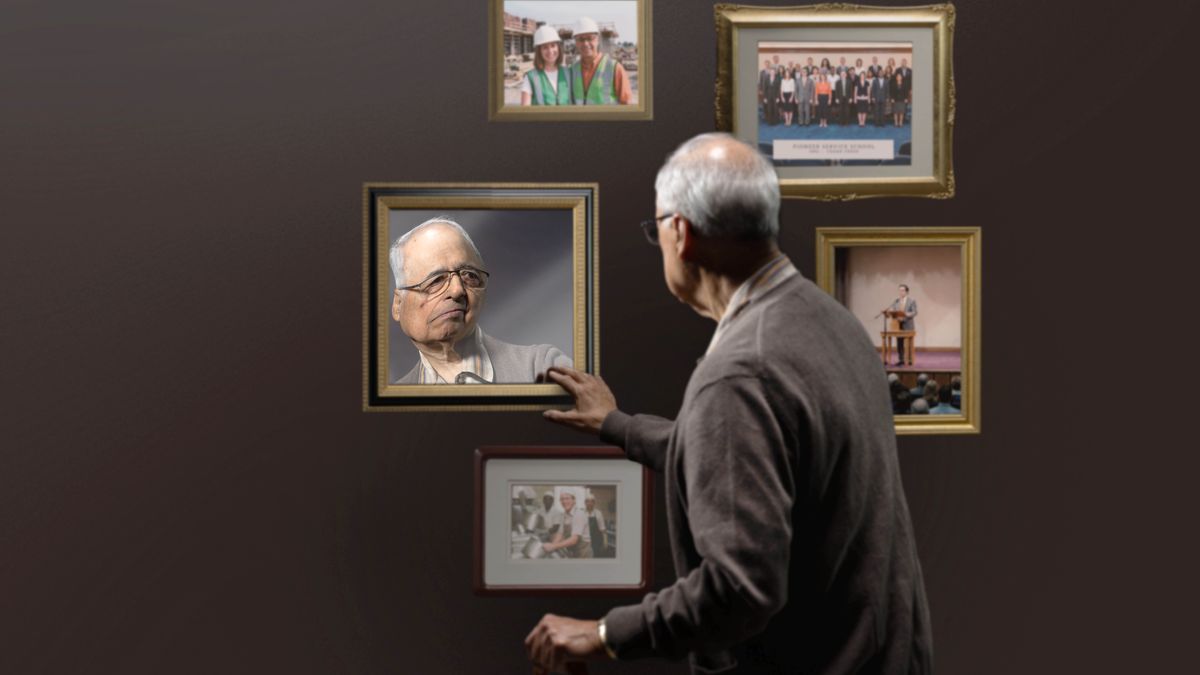
How could your circumstances influence the way you view yourself? (See paragraph 4)
5. How might our imperfection affect how we view ourselves? (See also picture.)
5 Finally, we might view ourselves as having little value because of our imperfection. The Bible tells us to live by Jehovah’s righteous standards. (1 Pet. 1:15, 16) At present, we cannot live up to Jehovah’s perfect standards; yet, our treacherous heart could lead us to feel worthless or unlovable when we fall short. We might become “overwhelmed by excessive sadness” for sins that Jehovah has forgiven. (2 Cor. 2:7) Because of his sins, the apostle Paul described himself as a miserable man even though he knew that Jehovah loved him.—Rom. 7:21-24.

How could your imperfection influence the way you view yourself? (See paragraph 5)
6. How might a self-condemning heart affect us?
6 Because we are imperfect, we might struggle with guilt or other negative feelings even when we have done nothing wrong. For instance, a sister serving at Bethel said: “When I hear, ‘Do your best for Jehovah,’ I always feel that I’m not doing enough. Only if I dig deeper, push harder, or find a new limit will it qualify as my best. As a result, I’m never content with what I give to my heavenly Father.” We too might have a self-condemning heart that causes us to feel guilty without actually being guilty. As a result, our battle against such feelings persists.—1 John 3:19, 20.
HOW DOES JEHOVAH SEE YOU?
7. What value does Jehovah see in us?
7 Jehovah’s view is far superior to ours. (Isa. 55:9) So, what value does he see in you? As humans, we are the pinnacle of his earthly creation. Made “a little lower than angels,” we are created in God’s image, endowed with qualities that enable us to imitate him. (Heb. 2:6, 7; Gen. 1:27) But has your imperfection damaged you so much so that you are worthless to Jehovah? Not at all! Long ago, he arranged for the ransom to open the way for you to have a relationship with him. (Rom. 5:8) And before you knew Jehovah, he saw your potential and gently drew you to himself.—Jer. 31:3.
8. What does Jehovah see in us as his dedicated servants? (Isaiah 43:1, 4, 10, 13)
8 Now that you dedicated yourself to Jehovah and got baptized, what does he see? He sees your loyalty and integrity, which make you special to him. (Read Isaiah 43:1, 4, 10, 13.) He says: “You belong to me.” This means that he has chosen you to be part of his family, and no one can snatch you out of his hand. (John 10:28, 29) He also trusts you to be a Witness for his name. Because you answered his call, he says: “You became precious in my eyes, you were honored, and I have loved you.” You are his beloved son or daughter. What a treasure you are to Jehovah! He rejoices when you defend his name and help to disprove the lies told about him.—Prov. 27:11.
9. How does Jehovah view our sins?
9 If you struggle with feelings of pain or guilt over your sins, remember that Jehovah is well-aware of your sins but chooses not to focus on them. (Ps. 103:12-14) Instead, he takes note of your repentance and freely forgives you. (1 John 1:7, 9) For example, Jehovah viewed repentant Christians in Corinth, who had abandoned gross sins, as being clean in his eyes. (1 Cor. 6:9-11) Those faithful Christians could worship God with the assurance that he viewed them as precious. And you can too.
10. How do we know that our privileges do not affect our value in Jehovah’s eyes?
10 What if you lose a special assignment or privilege or fail to receive one? Does that diminish your value as a person? Not at all! What matters most is Jehovah’s view, not ours or that of others. The Bible mentions many whom Jehovah highly valued, not because of having some special assignment, but because of their faith. (1 Ki. 19:18) If you ever doubt your value to Jehovah, ask yourself, ‘Am I trying to follow the example of Jesus?’ If your answer is yes, you are part of Christ’s “own special possession.” (Titus 2:11-14) This is true regardless of your current assignments or privileges.
HOW TO SEE YOURSELF AS JEHOVAH DOES
11. How can we begin to overcome the idea that Jehovah does not value us? (2 Corinthians 10:4, 5)
11 Recognize and reject the lie. Jehovah, “the God of truth,” has given you abundant evidence that he values you as his loyal servant. (Ps. 31:5) So the idea that Jehovah does not cherish you must be based on a lie. Such a view can be “strongly entrenched” and will require powerful tools from God to overturn it. (Read 2 Corinthians 10:4, 5.) Consider this. When you learned the truth, strong evidence from the Bible convinced you that God has a name, that the dead are unconscious, and that mankind can live forever in Paradise on earth. To accept such teachings, you had to admit that any of your previous beliefs that contradicted what you were learning were based on lies. Likewise, the Scriptures we have considered thus far teach a heartwarming truth, namely, that each one of Jehovah’s worshippers is precious to him. To accept that truth, remember that any belief that contradicts it, such as the belief that you are worthless in God’s eyes, is based on a lie. By recognizing and rejecting the lie, you can begin to see yourself as Jehovah does.
12. How can we use the Bible as a mirror? (James 1:22-25)
12 Use God’s Word as a mirror. We primarily read the Bible to learn about Jehovah, and this includes learning to see ourselves as he does. (Read James 1:22-25.) So before you read God’s Word, ask Jehovah to help you to have the correct view. As you read about the imperfect men and women whom Jehovah loved and valued, ask yourself: ‘What specific qualities made each one of them precious to Jehovah?’ You might note that Jehovah valued their love for him and their endurance. Then ask yourself: ‘Do I love Jehovah? And am I trying my best to endure faithfully?’ By reflecting on how you show the same qualities as faithful ones in Bible times did, you can begin to see yourself as Jehovah does. Never forget that Jehovah treasures your love for him and your faithful endurance.—Mal. 3:16; Jas. 1:12.
13. How can we use what we learn about Jehovah’s thoughts?
13 Build a personal collection of Jehovah’s thoughts. Look for comforting scriptures and experiences that prove how much Jehovah values his loyal ones. You can do this as you read the Bible and do personal study or research. When associating with fellow Christians, discreetly ask them how they came to appreciate that Jehovah values them. Write down what you learn. Then review your notes when negative thoughts resurface. For example, suppose that you feel that you do not deserve God’s loyal love. You could research the topics of Jehovah’s love and undeserved kindness. None of us deserve his love; yet, he gives it generously.—John 1:16; 1 John 4:10.a
14. How can we limit the effect of negative influences on our thinking? (See also picture.)
14 Limit negative influences. What if you notice that certain people make you feel worthless? If possible, limit your interactions with them. When you cannot avoid such contact, remember that their harsh speech and actions do not reflect Jehovah’s feelings. Similarly, what if you are affected by the pressure to keep up with the world’s lifestyles? Remind yourself that Satan’s commercial system pushes people to buy things that they do not need and that they may not be able to afford. Divine wisdom can help you to resist that pressure. (Luke 12:15) And if social media makes you feel unhappy about yourself, consider reducing or even stopping your use of it.—1 Tim. 6:8.

Limit negative influences (See paragraph 14)
15. How can we deal with circumstances that limit what we can do for Jehovah? (See also picture.)
15 Focus on what you can do for Jehovah. Your circumstances may limit what you can do in God’s service. For instance, you may have physical limitations. Family obligations might prevent you from expanding your service as you would like. Or perhaps you served at Bethel but were transferred to the field, allowing you to use your training in your new assignment. Rather than dwell on what you cannot do for Jehovah, put your heart into whatever opportunities are open to you now. Just as each part of our body has an important function, you have a valuable place in Jehovah’s organization regardless of where you serve him or what your assignment is.—Rom. 12:4, 5.

Focus on what you can do for Jehovah (See paragraph 15)
16. What can we do if a negative view of our value to God returns? (Romans 12:2) (See also picture.)
16 Continue to transform your thinking. Just as we do not yet fully understand God’s purposes, we cannot yet see ourselves exactly as Jehovah does. (1 Cor. 13:12) So do not give up if a negative view of your value to God returns. We all must continue to adjust and even transform our thinking to match Jehovah’s. (Read Romans 12:2.) Your work of “making your mind over” will end only when you reach perfection. In the meantime, keep transforming your thinking to be in harmony with God’s.

Continue to transform your thinking (See paragraph 16)
17. How do you know that you are valuable to Jehovah?
17 Continue to fight against the idea that you are worthless to Jehovah. (1 Tim. 6:12) Remember that his viewpoint is the most important and is always accurate. Throughout the Bible, he provides convincing evidence that you are precious to him and that he wants you as his friend forever. Take Jehovah at his word. (Rom. 3:4) Using the Bible, find comfort in knowing that he highly values you.
SONG 102 “Assist Those Who Are Weak”
a For help in starting your collection, see the article “Accept Jehovah’s Love” in the August 2025 issue of The Watchtower as well as chapter 24 of the book Draw Close to Jehovah.
Keep Your Eyes “on the Things Unseen”
pp. 8–13
FEBRUARY 8-14, 2027
SONG 144 Keep Your Eyes on the Prize!
Keep Your Eyes “on the Things Unseen”
“We keep our eyes, not on the things seen, but on the things unseen.”—2 COR. 4:18.
FOCUS
How strong faith in Jehovah’s promises for the future can help us now.
1-2. Why did the first-century Christians need to keep their eyes “on the things unseen”? (2 Corinthians 4:18)
IT SEEMS impossible. How can a person keep his eyes on something that he cannot see? Yet, that is precisely what the apostle Paul urged first-century Christians to do. (Read 2 Corinthians 4:18.) What did he mean?
2 Christians in the first century were enduring much hardship. Paul said that they were “hard-pressed,” “perplexed,” and even “persecuted.” (2 Cor. 4:8, 9) Nevertheless, he told them to focus on their hope, “the things unseen,” rather than on their trials, “the things seen.” Christians who would follow this exhortation would benefit in two ways. First, they would be better able to endure their hardships. Second, they would be better equipped to make wise decisions that reflect confidence in their future reward.—Heb. 11:1.
3. Why do we need to keep our eyes on God’s promised new world?
3 We are in a similar situation to that of the first-century Christians. During these difficult times, it is easy for us to be consumed by our trials. After all, we are faced with problems every day. That is why we need to keep our eyes on something that at present we cannot physically see—God’s promised new world. (Ps. 37:10, 11) Doing so will remind us that our trials, no matter how severe, are temporary.—2 Cor. 4:17.
4. How should faith in Jehovah’s promises affect our decisions in life? Illustrate.
4 Besides helping us maintain a balanced view of our trials, serving Jehovah “with everlasting life in view” will affect the way we use our life today. (Jude 21) To illustrate, a woman who is pregnant hopes to give birth to a healthy child. Each day, she thinks about what life as a mother will be like. But she does more than simply imagine her future. She makes decisions now to protect her health and that of her unborn child. In a similar way, our hope is to live in God’s new world. But we need to do more than just imagine ourselves there. If we have strong faith in Jehovah’s promises for the future, it will affect the important decisions that we make in life now. Let us consider some Bible examples of individuals who kept their eyes on the fulfillment of God’s promises and made good decisions in line with their hope. Then we will see how our faith can help us endure trials and make wise decisions.
ABRAHAM’S FAITH HELPED HIM OBEY
5-6. (a) What promise did Jehovah make to Abraham? (b) How did the faith of Abraham and Sarah affect their decisions? (Genesis 17:1, 2, 6) (See also picture.)
5 Abraham received a life-changing promise. Jehovah told him: “I will make you a great nation.” (Gen. 12:2) Even though Abraham and his wife, Sarah, were elderly and childless, they had faith that Jehovah would carry out his promise. They demonstrated their faith by obeying Jehovah’s command: “Go out from your land and away from your relatives . . . to the land that I will show you.”—Gen. 12:1.
6 For Abraham and Sarah, that meant leaving behind a stable life of comfort and moving from place to place and living in tents. (Heb. 11:8, 9) What helped them make such a sacrifice? Their eyes were fixed on something that they could not yet see—a son through whom a great nation would be produced. (Read Genesis 17:1, 2, 6; Heb. 11:11) That hope was just as real to Abraham and Sarah as any comforts they had in their hometown of Ur. In time, Jehovah’s promise began to be fulfilled with the birth of their son, Isaac.

Abraham and Sarah made sacrifices because they were focused on something they could not yet see (See paragraphs 5-6)
7-8. Why was Abraham ready to obey Jehovah’s command to sacrifice Isaac?
7 Years later, Jehovah told Abraham to sacrifice Isaac, who was then about 25 years old. Why was Abraham ready to obey that command? Because his eyes were fixed on something that he could not physically see—the fulfillment of Jehovah’s promise to him. Jehovah had told Abraham: “Your offspring will be through Isaac.” (Gen. 21:12) Even though Isaac had no children at the time, Abraham “reasoned that God was able to raise [Isaac] up even from the dead.” (Heb. 11:19) Abraham’s faith in God’s ability to resurrect his son was remarkable, since up to that point, there was no record of anyone being resurrected. Abraham had so much faith in Jehovah’s words that it was as if he could already see Isaac’s future descendants.
8 Jehovah stopped Abraham from following through with the sacrifice. (Gen. 22:11, 12) Nevertheless, that man of God “as good as offered up Isaac.” (Heb. 11:17, 18) Abraham proved by his actions that his eyes were fixed on the things unseen—the future fulfillment of Jehovah’s promise.
MOSES’ FAITH HELPED HIM MAKE WISE DECISIONS
9. (a) During Moses’ early years, what was the situation of the Israelites? (b) What was Moses’ situation in his early years?
9 Moses’ parents likely taught him about Jehovah’s promises to Abraham. Among those promises was the assurance that God’s people would receive the land of Canaan “as a lasting possession.” (Gen. 13:15) But how would that happen? The Israelites were slaves in Egypt. Moses was mostly unaffected by the plight of his fellow Israelites. As an infant, he had been adopted by Pharaoh’s daughter, and as he grew up, he was “instructed in all the wisdom of the Egyptians.” (Acts 7:22) Nevertheless, Moses showed that he was focused on something else.
10. When Moses was 40 years old, what decision did he make, and why? (Hebrews 11:24-26) (See also picture.)
10 Read Hebrews 11:24-26. When Moses was 40 years old, he made an important decision. He chose “to be mistreated with the people of God.” Why? The Bible says: “He looked intently toward the payment of the reward.” Moses’ eyes were fixed on something that he could not physically see—the fulfillment of Jehovah’s promise that the Israelites would receive the land of Canaan. Having a part in the fulfillment of that promise meant more to Moses than all the wealth and prominence he likely had in Egypt. Later, Jehovah told Moses: “You will bring my people the Israelites out of Egypt.”—Ex. 3:10.
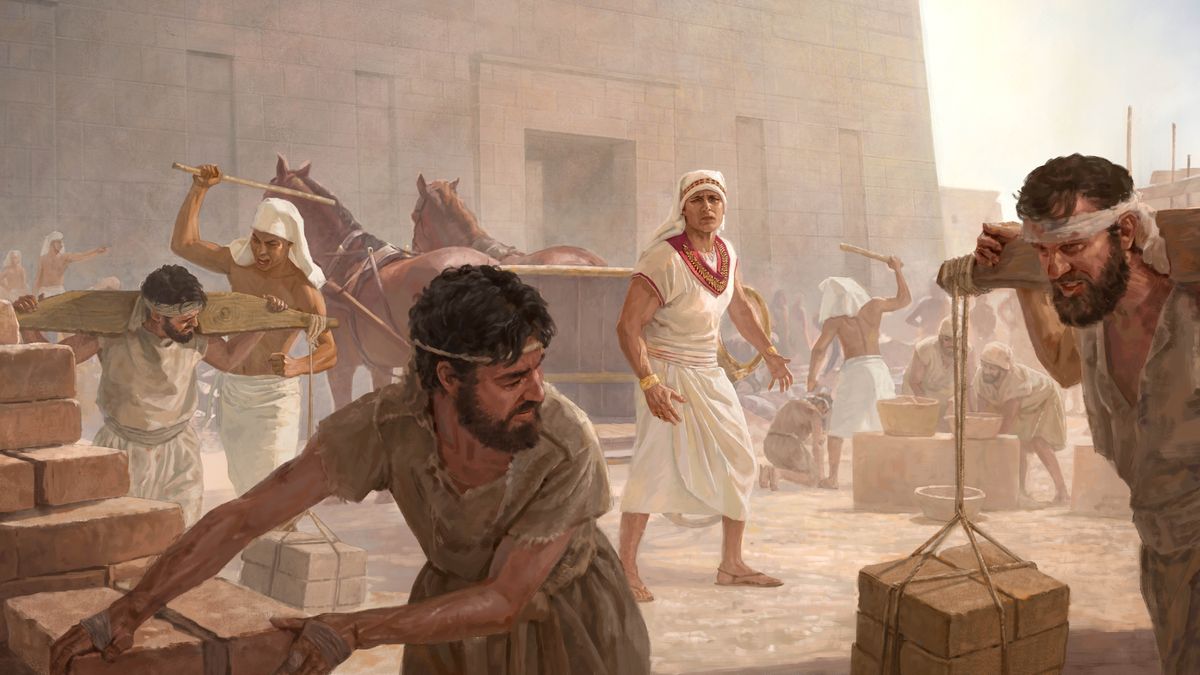
At the age of 40, Moses makes an important decision: He chooses “to be mistreated with the people of God” (See paragraph 10)
11. How did others in the Bible show that God’s promises were real to them? (Hebrews 11:39, 40)
11 The Bible contains many other examples of men and women who had faith in what God promised. (Heb. 11:31, 32) To them, the fulfillment of Jehovah’s promises was just as real as the world they lived in. Yet, they will not experience the complete fulfillment of those promises until they are resurrected in the new world. (Read Hebrews 11:39, 40.) Meanwhile, we benefit from seeing how their faithful acts supported Jehovah’s purpose. How can our faith help us endure trials and make wise decisions?
OUR FAITH HELPS US ENDURE TRIALS
12. How can faith in Jehovah’s promises for the future help us deal with our trials today?
12 We have been promised something that at present we cannot see—a new world in which we can enjoy life forever. (2 Pet. 3:13) Faith in that promise can help us deal with our trials. For example, although we may at first feel devastated when faced with a serious illness, our outlook can eventually become positive. Why? Because we have faith in God’s promise of a new world where “no resident will say: ‘I am sick.’” (Isa. 33:24) Like Abraham, Sarah, Moses, and others, we can “see” Jehovah’s promises as if they were already fulfilled.
13. (a) Why is it good for us to picture ourselves in Paradise? (b) How can we make sure that our thoughts about the future are based on more than just our imagination?
13 One way to build your faith in Jehovah’s promises is to picture yourself in Paradise. What will it be like to live in perfect health, to enjoy peace, and to welcome back loved ones who have died? The artwork in our publications as well as our videos can help you to picture yourself in God’s new world. However, your faith should be based on more than just a vivid imagination. Your faith needs a solid foundation. With that in mind, is there a particular Bible prophecy or account that strengthens your faith in God’s promises? Do certain Bible passages strengthen your conviction that Jehovah’s purpose will be realized? Meditate on such scriptures. In doing so, you will build your faith on the solid foundation of God’s promises.—Heb. 6:17, 18.
OUR FAITH HELPS US MAKE WISE DECISIONS
14. How should faith in God’s promises affect our choices with regard to entertainment?
14 Faith in God’s promises helps us make wise decisions in life. Consider our choice of entertainment. The debased content found in much of today’s movies, music, and TV shows will not exist in God’s new world. We know this because Jehovah condemns violence, sexual immorality, and spiritism. (Ps. 11:5; Rev. 21:8) So why be entertained by such things now? And if we are entertained by them, can we really say that we are keeping our eyes on Jehovah’s promised new world?
15. How have some allowed God’s promises to guide their decisions regarding their use of leisure time? (See also picture.)
15 Each Christian must make personal decisions with regard to how to spend leisure time. In order to make Jehovah’s promises for the future real, some parents have included activities that build appreciation for Jehovah and for his organization. For example, one married couple who raised three daughters in the truth say: “We often visited Kingdom Halls or branch offices when we traveled so that we could strengthen the family’s appreciation for the worldwide brotherhood.” Another couple who also raised a family relate: “We enjoyed spending time learning about creation. We would invite other families to join us as we visited museums and aquariums.” These families spent their leisure time learning about Jehovah’s creation and getting to know our brotherhood. This helped them to keep their eyes on the things unseen.

Do my activities show that I have my eyes fixed on Jehovah’s promises? (See paragraph 15)
16. How should God’s promises for the new world affect our priorities? (1 Corinthians 7:29-31) (See also picture.)
16 Read 1 Corinthians 7:29-31. Faith in God’s promises can also help us make wise decisions regarding material things. Obviously, we need to provide for ourselves. At the same time, our priority is not to accumulate possessions. Why? Because the Bible says: “The world is passing away and so is its desire, but the one who does the will of God remains forever.” (1 John 2:17) We believe that statement, and we show it by the decisions we make. With our eyes set on God’s new world, we avoid making use of the world “to the full” by putting the interests of God’s Kingdom first in our life.—Matt. 6:33.

Do my priorities show that I have my eyes fixed on Jehovah’s promises? (See paragraph 16)
17. What decisions have some been able to make because of their faith in God’s promises? (See also picture.)
17 Faith in God’s promises can also affect decisions we make about our future. For example, as young ones grow to adulthood, they might wonder: ‘What kind of career will I pursue? Will I get married? Will I raise a family?’ These are personal decisions, and each choice brings along blessings and challenges. (1 Cor. 7:28, 37, 38) The question is, Do your decisions demonstrate your conviction that this world is temporary and that the real and permanent life is to come? (1 Tim. 6:19) Many young ones have shown such conviction by pursuing some form of full-time service. They have no regrets. Instead, they have come to realize that “there is great gain in godly devotion along with contentment.”—1 Tim. 6:6.

Do my decisions show that I have my eyes fixed on Jehovah’s promises? (See paragraph 17)
18. How can faith in Jehovah’s promises bring us blessings even now?
18 As we have learned, faith in Jehovah’s promises for the future can bring us blessings even now. Our faith in the new world to come can help us endure the trials we face today. It can also help us to make wise decisions about how we use our time and what we put first in our life. We eagerly look forward to the day when all of Jehovah’s promises will be fulfilled. In the meantime, let us be determined to keep our eyes “on the things unseen.”
SONG 156 With Eyes of Faith
Like Jesus, Promote God’s Kingdom as the Real Solution
pp. 14–19
FEBRUARY 15-21, 2027
SONG 16 Praise Jah for His Son, the Anointed
Like Jesus, Promote God’s Kingdom as the Real Solution
“Let your Kingdom come.”—MATT. 6:10.
FOCUS
What it means to be politically neutral and how we can remain neutral.
1-2. Why did Jesus not involve himself in political controversies? (1 Peter 2:21)
MANY today feel insecure because government policies are constantly changing. Even some of Jehovah’s people may fear losing their job; suffering cruel, unjust treatment; or becoming victims of war. Do you worry that political changes might make life hard for you and your family? If so, what can you do?
2 In the face of political instability, all Christians should imitate Jesus, our model. (Read 1 Peter 2:21.) Like many today, he lived amid political turmoil and social injustices. In that world of political uncertainty, he promoted God’s heavenly Kingdom as the solution. He taught his followers to do the same. (Matt. 4:23; 6:33; 10:7) Accordingly, he did not take sides in the political controversies of that world.
3. (a) What does it mean to be politically neutral? (b) What will be discussed in this article?
3 In imitation of Jesus, we promote God’s Kingdom as the only solution to all problems on earth. To be consistent with that stand, we must remain neutral with regard to politics. This means that we do not take sides in the world’s political issues. To help us imitate Jesus closely in this respect, this article will discuss what he did when he had the opportunity to (1) take part in politics, (2) fight against his enemies, and (3) engage in political conversations.
JESUS REFUSED POLITICAL POWER
4. While Jesus was on earth, what was the political climate in Israel?
4 Did Jesus have opportunities to become a political leader on earth? He certainly did. And that was at a time when the political climate in Israel—the land of Jesus’ ministry—was highly unstable. Many Jews were eager to find a leader who would fight to free them from Roman oppression. Previously, a number of self-proclaimed “messiahs” had led them into revolts against Rome. (Acts 5:37) Some of these false messiahs resorted to violence. All of them failed. But the Jews expected that when the real Messiah arrived—the Messiah of Bible prophecy—he would break the yoke of Rome and establish an independent kingdom in Israel.
5. What were many of Jesus’ disciples hoping he would do?
5 Even those who associated closely with Jesus hoped that he would deliver them from Roman rule. Recall that John the Baptist asked Jesus: “Are you the Coming One, or are we to expect a different one?” (Matt. 11:2, 3) John may have wanted to know whether Jesus would soon fulfill the Jews’ hope of deliverance from Rome. Also, two disciples who met the resurrected Jesus on the road to Emmaus said that they had hoped that Jesus would deliver Israel. (Luke 24:21) Soon thereafter, Jesus’ apostles asked him: “Lord, are you restoring the kingdom to Israel at this time?”—Acts 1:6.
6. What did Jesus do when the people of Galilee wanted to make him king? (See also picture.)
6 It is not surprising that the Jews in Galilee wanted to make Jesus their king. They saw that he was an outstanding leader of people; he could cure the sick; and he had just performed a miracle that fed some 5,000 hungry men, besides women and young children. (John 6:8-11) Did Jesus grasp this opportunity for political power? The apostle John’s account tells us: “Jesus, knowing that they were about to come and seize him to make him king, withdrew again to the mountain all alone.”—John 6:14, 15.
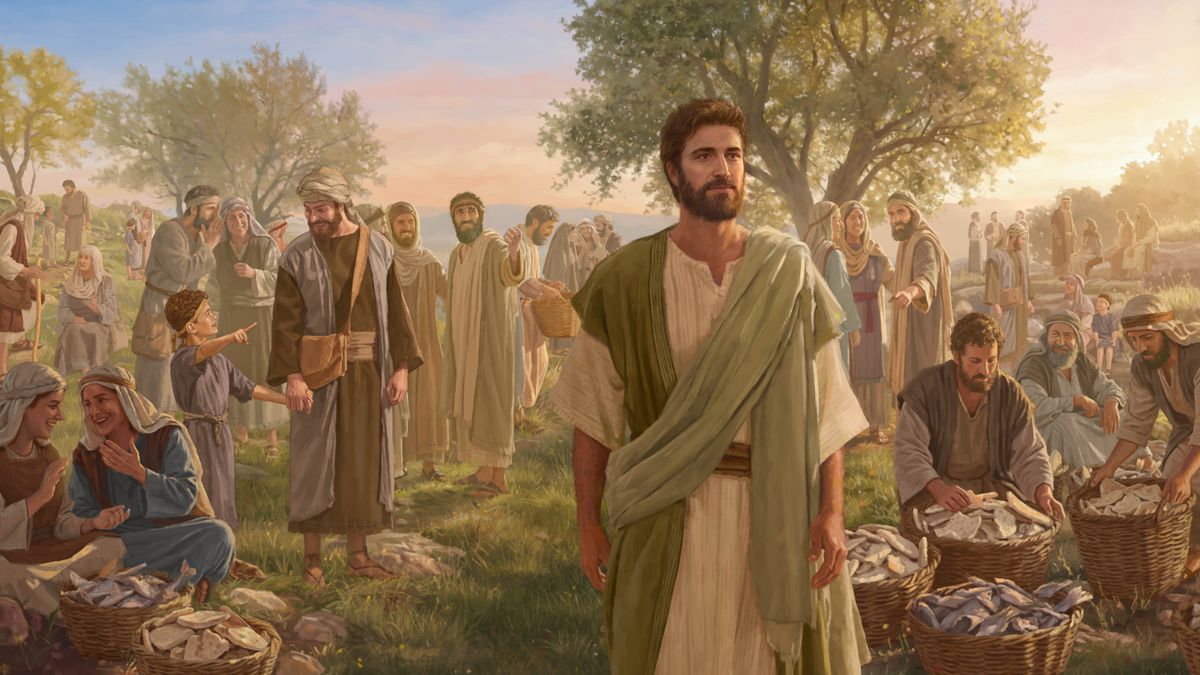
When Jesus saw that the people of Galilee wanted to make him their king, he refused (See paragraph 6)
7. Why did Jesus not allow the people to make him king?
7 Why did Jesus not accept a political position that people thought would enable him to bring much-needed relief to mankind? Because he supported God’s Kingdom as the real solution. He knew that even if some human rulers were well-meaning, they could never bring lasting relief. (Ps. 146:3) He also knew that although Jehovah allows human governments to exist, it is Satan who gives them their authority. (Luke 4:5, 6; John 12:31; Rev. 13:2) Thus, Jesus remained no part of the world. (John 17:14) He did not seek or accept political office; nor did he teach his followers to do so. Instead, he taught them to pray: “Father, . . . let your Kingdom come.”—Matt. 6:9, 10.
8. What did Jesus tell Pilate about God’s Kingdom?
8 Shortly before his death, Jesus made his politically neutral position clear to the Roman authorities. Roman Governor Pontius Pilate asked him: “Are you the King of the Jews?” Jesus answered: “My Kingdom is no part of this world.”a (John 18:33, 36) That Kingdom was a heavenly one. Furthermore, it was not involved in any way with the world’s political system. Therefore, Jesus never took sides in political issues.
9. How can we be like Jesus with regard to political matters?
9 Like Jesus, Christians today remain neutral as to the world’s politics. We respect the governments under which we live and endeavor to be good citizens. We obey the laws of the land and pay our taxes. (Rom. 13:1, 7; Titus 3:1; 1 Pet. 2:13, 14) But we promote God’s Kingdom as the rightful and real solution to mankind’s problems. Because that Kingdom has not yet taken control of earth’s affairs, people everywhere suffer unjust treatment and other hardships. (Eccl. 4:1; Heb. 10:36) But as followers of Jesus, we do not seek relief through political measures. We do not try to influence the decisions of a government by holding office or by voting for political candidates. (John 15:19; 17:16) If we were to become involved in the world’s political controversies, we would in effect be rejecting Jehovah’s Kingdom as the real solution.
JESUS DID NOT RESORT TO VIOLENCE
10. Why were the chief priests and the Pharisees determined to kill Jesus?
10 Human politics are closely associated with war and other violent conflicts. Jesus, however, taught his disciples to avoid violence. For example, consider what occurred during the events that led to his death. The chief priests and the Pharisees were planning to kill him. Why? They viewed Jesus as a political and religious rival who threatened their status. They said: “If we let him go on this way, [the Jews] will all put faith in him, and the Romans will come and take away both our place and our nation.”—John 11:48-50, 53.
11. Why did Jesus have his apostles carry swords on the night of his arrest?
11 Jesus was aware that his enemies were plotting against him. So during his final meal with the apostles, he asked them to get some swords. When they replied: “Here are two swords,” Jesus said: “It is enough.” (Luke 22:36-38) Enough? Were two swords really enough to fight against the “large crowd” who came later that night to arrest Jesus, equipped “with swords and clubs”? (Matt. 26:47) Clearly not! But two swords were enough for Jesus to use as an object lesson. What lesson did he have in mind?
12. After Peter used his sword, what did Jesus say? (See also picture.)
12 Jesus wanted to teach his followers that they should not resort to violence when persecuted. The apostles could have learned that lesson simply by observing what Jesus did when the mob came to arrest him. Jesus did not fight; nor did he direct his apostles to use the two swords they had. However, as matters turned out, impulsive Peter used his sword to strike a slave of the high priest. So Jesus stated plainly: “Return your sword to its place, for all those who take up the sword will perish by the sword.” (Matt. 26:51, 52) Clearly, then, Jesus would not approve of the disciples’ participating in a violent political conflict against Rome or any other nation.
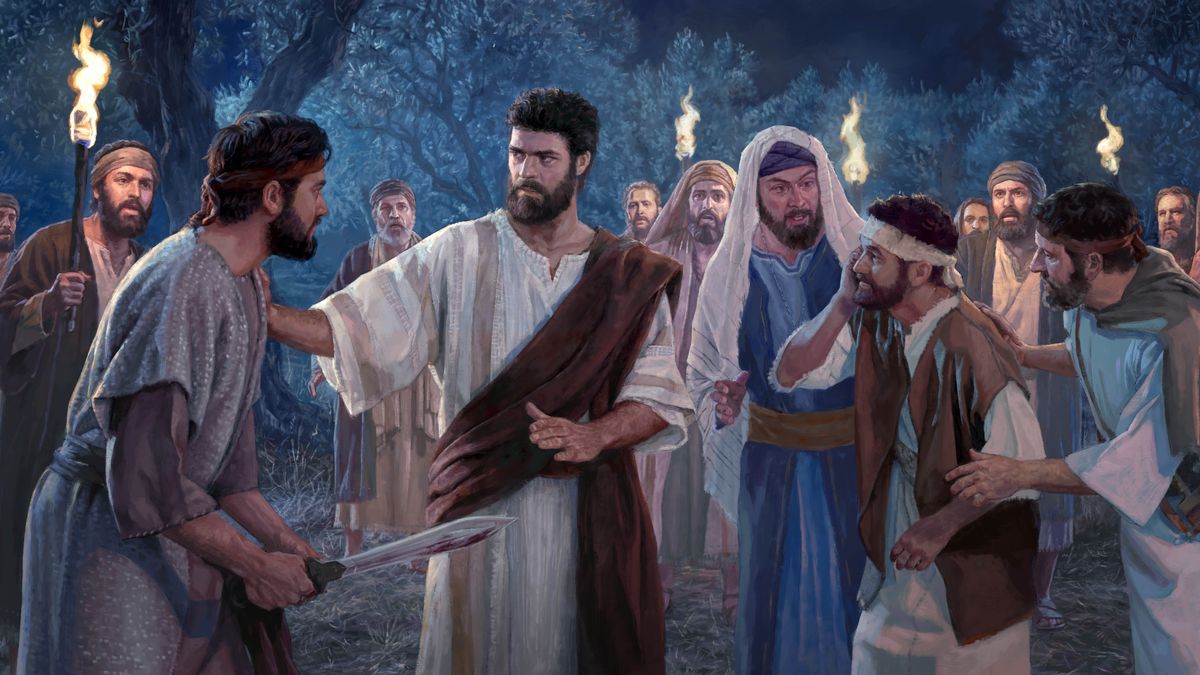
Jesus taught his disciples not to resort to violence (See paragraph 12)
13. Why do Jehovah’s Witnesses refuse to participate in violent conflicts? (John 13:35; 17:11, 20-23)
13 Today, Jehovah’s Witnesses imitate Jesus’ example and follow his direction. We do not fight in or lend support to the world’s violent conflicts. If we did, we would be disregarding Jesus’ counsel against violence. Additionally, we would destroy the love and unity that Jesus said would characterize his true followers. (Read John 13:35; 17:11, 20-23.) And joining in such conflicts would also mean taking sides in political matters. As mentioned earlier, we remain politically neutral primarily because we promote God’s Kingdom.
JESUS DID NOT DEBATE POLITICAL ISSUES
14-15. Why was taxation a political issue in Jesus’ day, and how did Jesus’ enemies attempt to trap him? (Matthew 22:19-21)
14 On one occasion, Jesus’ enemies tried to get him to take sides with regard to taxes. Taxation was a hot political issue in Jesus’ time. Subjects of Rome felt that the government required too many taxes.b The Jews especially resented the head tax because the coin used to pay it had the emperor’s image on it, which reminded them of their subjection to Rome. With that in mind, disciples of the Pharisees along with party followers of Herod asked Jesus where he stood on the matter.
15 Actually, Jesus’ enemies were setting a trap. How so? They framed their inquiry in the form of a simple yes-or-no question: “Is it right to pay head tax to Caesar or not?” (Matt. 22:15-17, ftn.) If Jesus had said it was right, the people might have misunderstood and turned on him. If he had said it was not right, he might have been accused of sedition against Rome. Jesus, however, carefully framed his reply so as to avoid involving himself in this political controversy.—Read Matthew 22:19-21.
16. What must we avoid when we see or experience gross injustices? (See also picture and the box “Remain Neutral From the Heart.”)
16 We can be sure that Jesus empathized with those who were unjustly burdened by heavy taxation. (Matt. 9:36) But as a promoter of God’s Kingdom, he refused to take sides, even in his speech. As Christ’s disciples, we follow his example. Even when we see or experience gross injustices, we know that Jehovah is aware of the situation and that his Kingdom is the real solution. Therefore, in imitation of Jesus, we must avoid getting involved in conversations about political issues.—Luke 6:45.

Why is this Witness walking away? (See paragraph 16)
17. Why is it important that we promote only God’s Kingdom?
17 How important it is that we promote only God’s Kingdom as the real solution to mankind’s difficulties! Jehovah has made it clear that this world’s rulers, even those with the best of intentions, cannot end mankind’s troubles. (Eccl. 8:9; Jer. 10:23) As a result, people in the world continue to be like a sea that tosses and turns and knows no peace. (Isa. 17:12; 57:20, 21) But Jehovah’s heavenly government ruled by Christ will bring in true peace, justice, and unending happiness. Meanwhile, it must warm the heart of our heavenly Father to see his people wholeheartedly promoting, not any particular government of this world, but the superior Kingdom ruled by his Son, Jesus Christ.—Zeph. 3:17.
18. What challenges might Christians face, and what will we consider in the following article?
18 At times, however, maintaining our neutrality is particularly difficult. Some governments may pressure us to take sides by joining a political organization or by participating in their wars. They might even threaten us with imprisonment if we do not change our stand. How can we prepare now for such tests of our neutrality? That will be the topic of our next article.
SONG 22 The Kingdom Is in Place—Let It Come!
a Jesus could call God’s Messianic Kingdom “my Kingdom” because Jehovah had determined that Jesus would rule as its King.
b Additionally, corrupt tax collectors often exacted more than the tax rate, thus adding to the financial burden of the people.—Luke 19:2, 8.
Prepare Now for Tests of Your Neutrality
pp. 20–26
FEBRUARY 22-28, 2027
SONG 126 Stay Awake, Stand Firm, Grow Mighty
Prepare Now for Tests of Your Neutrality
“My Kingdom is no part of this world.”—JOHN 18:36.
FOCUS
Why we need to prepare now for future tests of our Christian neutrality and how we can do so.
1-2. Why must we prepare for tests of our Christian neutrality?
YOU hear that a hurricane is headed straight for your area. What will you do? No doubt you will prepare for it! You will gather the supplies you need, secure your home the best you can, and seek refuge in a safe place.
2 Likewise, the storm of nationalism is spreading throughout the world, and we need to prepare for it. Why? Because with this storm comes the pressure to take sides in political matters. And like Jesus, we take a neutral stand with regard to politics. As a result, our brothers and sisters in some lands have been severely persecuted—even imprisoned. We expect such tests of our neutrality to increase everywhere as we advance toward and into the great tribulation.—Matt. 24:9, 21; John 15:19.
3. What will we discuss in this article?
3 In this article, we will consider how we can prepare for tests of our Christian neutrality. Specifically, we will discuss two types of tests: military conscriptiona and imprisonment. First, though, let us consider why we can be sure that it is possible to remain faithful to Jehovah even when confronted with severe tests of our neutrality.
JEHOVAH WILL HELP YOU TO REMAIN NEUTRAL
4. How did the first-century Christians remain faithful under severe test?
4 We strongly promote God’s Kingdom, but we are neutral with regard to the politics of this world. We are confident that we can maintain this neutrality under test because Jehovah has promised to give us the strength we need. (Isa. 41:10; 2 Cor. 4:7) With Jehovah’s help, countless Christians have been able to remain “no part of the world.” (John 17:14) For example, the first-century Christians refused to get involved in the politics of their day. They obeyed Jesus’ command not to “take up the sword” and declined to fight in warfare. (Matt. 26:52) They also refused to engage in emperor worship. For this, they were severely mistreated. Some were executed. But Jehovah gave them the strength to remain loyal to him.
5. How does Jehovah feel about those who loyally support his Kingdom?
5 In modern times, God’s people have suffered similar mistreatment because of their neutral stand.b Jehovah is eager to reward his integrity-keepers in the new world. (Ps. 18:25) Even now, he treasures such loyal ones and blesses them with his approval.—Ps. 5:12; Rom. 5:3-5.
6. What must we personally prepare for?
6 With Jehovah’s help, you can remain “steadfast, immovable” in your resolve to be politically neutral. (1 Cor. 15:58) If we want to benefit from all the help Jehovah gives, preparation is vital. Elders and others can assist you. But you made a personal decision to remain neutral when you dedicated yourself to Jehovah, so you must personally prepare to explain your beliefs and stand by them. How can you do that?
PREPARE NOW FOR THE TEST OF MILITARY CONSCRIPTION
7. Why do Christians not take sides in political affairs? (John 18:36)
7 We have the privilege of taking our own stand in support of God’s Kingdom. If you expect to face military conscription, keep in mind how Jehovah views human governments. Do research on the topic. (See the box “Helpful Resources.”) You could periodically review this article and the preceding one. The scriptures cited in these articles help us to see that as Christians we respect the governments under which we live and we endeavor to be obedient citizens. (Rom. 13:1, 7; Titus 3:1; 1 Pet. 2:13, 14, 17) Yet, as promoters of God’s Kingdom, we choose to remain neutral in political affairs. (Read John 18:36.) After prayerfully researching the topic of neutrality, you will be better equipped to make a personal decision regarding conscription that will honor the “King of eternity,” Jehovah, and his Son, Jesus, the “Lord of lords and King of kings.”—Rev. 15:3; 17:14.
8. Explain why Christians do not engage in or support warfare. (John 17:16)
8 As Christians, we do not join organizations that support or promote violence and war. Our primary reason for this stand is that we promote God’s Kingdom as the rightful government to rule the earth. (Matt. 6:10) We are subjects and supporters of that Kingdom, so we take no part in the world’s political affairs. (Read John 17:16.) We understand that God’s Word condemns human warfare. (Isa. 2:4; Acts 5:29) Additionally, Jesus commands us to love people—even our enemies! (Matt. 5:44) And we are commanded to love our fellow believers intensely. (John 13:34, 35; 1 Pet. 4:8) How could we obey these Bible commands if we engaged in or even supported warfare? (See the box “What About Compulsory Civilian Service?”) Doing so could actually make us responsible for killing members of our own spiritual family!
9. What are some additional ways you can prepare for the conscription process?
9 You are no doubt already aware of the basic Bible principles regarding neutrality. The question is, Are you able to explain them clearly? (1 Pet. 3:15) The authorities might give you only a few minutes to do so. Or they might ask you to provide a more thorough explanation. So it is wise to prepare for both possibilities. Make it clear that your beliefs are based on the Bible. Our refusal to fight reflects our firm support for God’s Kingdom, not fear or cowardice. Equip yourself to speak with respect, clarity, and conviction, as did the apostle Paul. (Acts 26:1, 28, 29) Prepare to defend your faith, but try not to be overly anxious about what you will say. Remember that Jehovah will give you his spirit and the wisdom to give a witness for his name. (Luke 21:12-15) He will also give you the strength to endure any mistreatment you might experience as a result of your neutral stand. (1 Cor. 10:13) If possible, talk to the brothers who have been through the conscription process in your area. Ask them what challenges they faced and how they prepared for them.—Prov. 20:18.
10. What good can result when you prepare to explain your neutral position?
10 Remember, too, that a clear explanation may result in a good witness. During the conscription process, some of our brothers have had the joy of hearing one or more of their listeners express the desire to learn more about Jehovah’s Witnesses. However, what if, despite your best efforts, you still receive a prison sentence? Understandably, that could cause some anxiety. How can you prepare now for possible imprisonment?
PREPARE NOW FOR THE TEST OF IMPRISONMENT
11. What is the primary goal of a Christian who is imprisoned for his neutrality? (Revelation 2:10)
11 In Bible times, many of Jehovah’s people were unjustly imprisoned, and that is still the case today. (Gen. 39:20; Acts 8:3; Phil. 1:7) To prepare for that possibility, keep building your relationship with Jehovah. Remember that our suffering for “righteousness’ sake” contributes to the vindication of Jehovah’s name and sovereignty. (Matt. 5:10, 11; Job 2:4, 5; 1 Pet. 3:17) Be assured that Jehovah wants you to succeed. So do not be afraid. Jehovah will help you to remain faithful.—Read Revelation 2:10.
12. Why is it important that we cultivate good Bible study habits now?
12 Cultivate now the good habits and qualities that will help you to remain loyal to Jehovah in prison. For example, maintain good Bible study habits. Takis, who spent a year and a half in prison for neutrality and who now serves as a circuit overseer, recalls, “Before entering prison, I devoted many hours to personal study—a practice I continued in prison.” What if you are sent to a prison where Bible reading is not permitted? Jehovah’s spirit can help you remember Bible truths, promises, and principles that you have already learned and that will fortify your faith.c (John 14:26) So now is the time to develop and maintain good study habits.
13. How can you prepare now to be a peacemaker?
13 Regrettably, some of our brothers in prison with other Witnesses have found it challenging to get along with one another. How can you prepare for possible differences between fellow believers? Develop now the qualities that will help you to be a peacemaker. (Matt. 5:9; Rom. 12:18) Work at getting along with those whose personality or background is different from yours. Be willing to sacrifice personal preferences for the sake of peace—without compromising Bible standards. By becoming a peacemaker now, you will be better able to promote peace and unity in the event that you go to prison.
14. What challenge do those who are in prison commonly face, and how have some dealt with it?
14 Those in prison inevitably feel discouraged at times. How can you prepare for that? Develop now an active interest in others, especially your fellow believers. When you focus on helping others, you will likely feel better. While imprisoned, the apostle Paul wrote: “Look out not only for your own interests, but also for the interests of others.” (Phil. 2:4) Ho-Seon, an elder and a pioneer, recalls when he was imprisoned for neutrality, “I would pray for my family, friends, and fellow believers who were facing various challenges outside of prison.” What if other brothers are imprisoned with you? Takis, mentioned earlier, shares what helped him. He says, “My deep desire to be useful to my brothers gave me strength and motivation to remain steadfast.” How can you help your brothers in prison? Look for ways to encourage them and to assist them in practical matters. Focusing on helping others can lift your spirits.
15. Why is it important that we establish now the habit of turning to Jehovah in prayer? (James 1:5) (See the box “When a Situation Is Not Clear-Cut.”)
15 How else can you prepare to endure faithfully in prison? If you know brothers who have been in prison for neutrality, ask them what challenges they faced and how they handled them. Of course, you cannot anticipate every possible scenario. An elder, recalling the time he spent in prison for neutrality, says, “A confusing situation can arise unexpectedly.” He learned to make prayer his first response to any question, decision, or challenge. (Rom. 12:12; Phil. 4:6) Of course, now is the best time for you to establish the habit of turning to Jehovah in prayer, asking for the wisdom to deal with any challenge you face, big or small.—Read James 1:5.
16. What have many brothers in prison been able to do? (See also pictures.)
16 Remember that even in prison you are still a preacher of the good news, both in word and in deed. (Matt. 28:19, 20; Acts 10:42; 1 Pet. 2:12) Prepare to preach in prison by remaining as active as you can in the ministry now. Many brothers in prison have been able to organize meetings for service, witness to inmates, engage in letter writing, auxiliary pioneer, and conduct Bible studies.d In some cases, our incarcerated brothers have helped other prisoners and even guards to learn the truth. If you work to refine your witnessing skills now, you may have a productive ministry even if you are imprisoned. (Acts 17:1-4) Also, prepare to maintain fine conduct in prison by learning to conduct yourself properly in difficult circumstances now. By being kind, mild, hardworking, and respectful to all, including opposers, you might draw onlookers to Jehovah through your good conduct.—Matt. 5:16; Titus 3:1, 2.
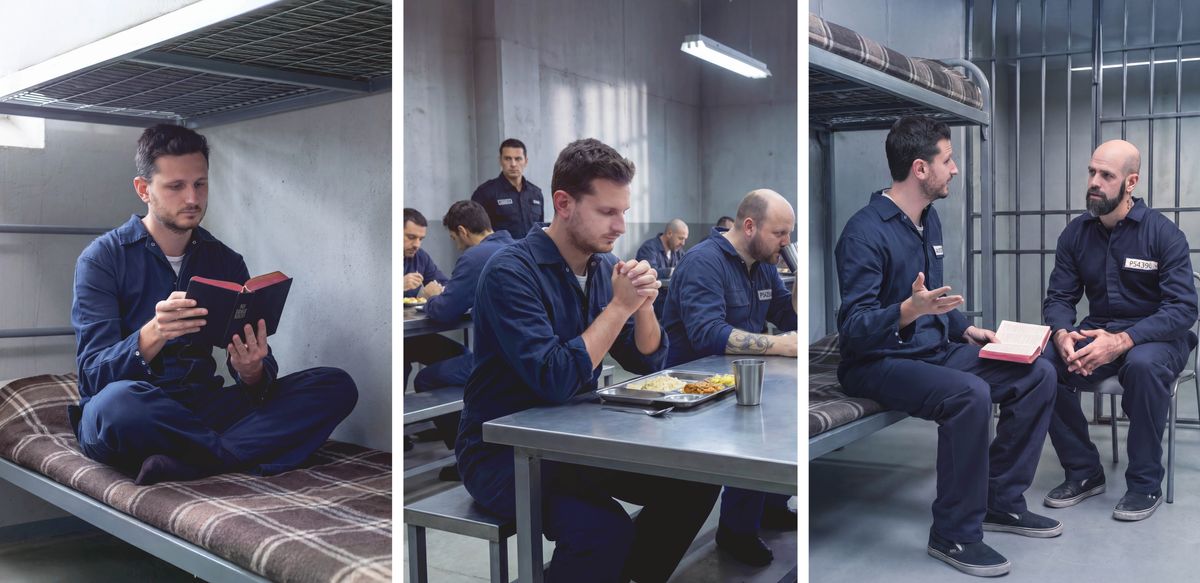
In prison, stay as involved as possible in spiritual activities (See paragraph 16)
17. Why is it vital that you maintain a strong relationship with Jehovah throughout your imprisonment? (1 Peter 1:6, 7 and footnote)
17 Countless brothers and sisters have emerged from prison with a strong and refined faith. (Jas. 1:2-4; read 1 Peter 1:6, 7 and footnote.) They have since been useful in strengthening others. Sadly, however, some who failed to maintain a strong relationship with Jehovah while in prison later stopped serving him. By applying the counsel in the preceding paragraphs, you will be able to maintain a close relationship with Jehovah even if you are in prison.
SUPPORT THOSE UNDER TEST
18. What is one way to help a young Christian prepare for conscription?
18 Might someone in your family or congregation, who has made a personal decision to remain neutral, have to deal with conscription? If so, can you help him to prepare? A father devoted time during sessions of family worship to help his two sons defend their neutrality. He also held practice sessions with them. He played the role of a conscription officer, and his sons practiced what they would say. Can you do something similar for someone in your family or congregation who might have to face such a test of neutrality?
19. How can a family prepare if one member is likely to be sentenced to prison?
19 What if someone in your family is likely to be sentenced to prison? The very possibility can make the entire family anxious. Praying together and maintaining a strong routine of family worship can alleviate some of that anxiety. If your loved one is about to be sent to prison, he may be worried about how you will fare, especially if he is the family head. What can you do? Together with him, plan now how the family will carry on in his absence. For example, what will the family’s spiritual routine be? Might there be financial challenges at home, and if so, how can these be dealt with? What arrangements can be made for the family to receive regular support and encouragement from the elders? Can those left at home plan to visit the family member in prison as often as their circumstances allow? By making sensible plans now, you may help your loved one endure faithfully in prison.
20. How can elders and others in the congregation support those in prison and their families?
20 How can elders and others in the congregation help? The apostle Paul wrote: “Keep in mind those in prison, as though you were imprisoned with them.” (Heb. 13:3) Those who are in prison are especially strengthened when they receive visits, phone calls, and letters. They may need nutritious food, basic items that make prison life more bearable, or money for expenses. (Jas. 2:16; 1 John 3:17) Keep in mind also the families of those who are in prison. They likely need shepherding visits and possibly some practical assistance. Remember, too, that on their release, some who were in prison need help getting back to a normal life and resuming a good spiritual routine.
21. As nationalism spreads, what are you determined to do?
21 As the storm of nationalism spreads, tests of our neutrality will increase. But these tests will not last forever. At Armageddon, Jehovah will bring human politics to their end. (Dan. 2:44) He will then deliver his people into a righteous new world. There, under the Kingdom that his people have long promoted, nobody will be subjected to unjust imprisonment or mistreatment. Until that time, let us remain determined to maintain our neutrality. And may we continue to promote and preach the good news of God’s heavenly Kingdom.
SONG 38 He Will Make You Strong
a EXPRESSION EXPLAINED: Conscription is the mandatory enrollment for service in a country’s armed forces. In some countries, both men and women are required to enroll.
b You can read about some of these experiences under the News tab on jw.org and in the Watch Tower Publications Index, under the heading “Neutrality,” subheading “life stories.”
c Some make it a point to memorize scriptures and songs in the event that they are refused access to a Bible or to Bible literature.
d In prisons where brothers had no means of preaching at all, some witnessed to imaginary householders. Doing so sustained the brothers’ faith and their ability to defend it.
Do You Remember?
p. 27
Do You Remember?
Have you carefully read this year’s issues of The Watchtower?
How can we fight negative feelings?
We should maintain a good spiritual routine, prayerfully analyze our personal needs, and adapt our personal Bible study to those needs. By doing so, we can look to the future with confidence.—w26.01, pp. 10-13.
When will the nations proclaim “peace and security”? (1 Thess. 5:3)
The proclamation may be made just before the destruction of false religion, or it may come after false religion is destroyed. We will have to wait and see what happens.—w26.02, pp. 30-31.
What are some essentials to improve your art of teaching?
Try to understand the concerns of those whom you teach, direct them to God’s Word and to Jehovah, and be a good listener.—w26.03, pp. 3-6.
What will help us to have the right view of adversity?
We need to accept that adversities are unavoidable in this system. Jehovah may allow them, but trials can teach us to depend on him, not on ourselves.—w26.04, pp. 14-16.
How does Galatians 6:5 apply to decisions involving additional education?
Each one must carry his own load of responsibility, and in the case of minor children, parents will carry the load. Aspects to consider are one’s motives, the schedule required, the length, the location, the financial cost, and the work prospects.—w26.05, pp. 15-18.
How can we benefit from our field service group?
One benefit is that we can be shepherded by the appointed group overseer. In addition, we can gain emotional and practical benefits by forming friendships with those in our service group.—w26.06, pp. 18-19.
Why can we be encouraged by the thought found at Isaiah 38:17?
That text depicts God as throwing our sins behind his back. If we commit sins but repentantly seek his forgiveness, he will put our sins behind him. He will no longer see them or bring them up again.—w26.07, p. 11.
In Bible times, what things occurred at city gates?
Markets were nearby, so people gathered and conducted business near the gates. Judges held court, and God’s representatives often presented his messages there.—w26.08, p. 31.
Psalm 91 promises what sort of protection for God’s people?
Psalm 91 promises that God will protect his people spiritually. It is also a promise that Jehovah will protect his people as a group from physical and emotional harm at the hands of their enemies. During the war of Armageddon, Jehovah will provide that protection for his people not just as a group but also as individuals.—w26.09, pp. 3, 7.
How does considering the day’s text benefit us?
Doing so helps us focus on Jehovah. It is a good use of our time, strengthening us to face the day’s troubles and to remain faithful. It helps us progress spiritually and prepare for future assignments.—w26.10, pp. 25-27.
Elders can imitate what characteristics of literal shepherds in Bible times?
A shepherd was diligent in feeding and in caring for his sheep. He was dependable in checking on them and was brave in protecting them.—w26.11, p. 9.
Why did Jesus tell his apostles to buy a sword? (Luke 22:36)
The night before his death, Jesus advised his apostles to carry a sword. He would use it as an object lesson to teach them that they were not to resort to violence when persecuted.—w26.12, pp. 16-17.
The Benefits of Solitude
pp. 28–29

The Benefits of Solitude
JEHOVAH told Joshua: “This book of the Law should not depart from your mouth, and you must read it in an undertone day and night, in order to observe carefully all that is written in it.” (Josh. 1:8) We need to do the same so that we can keep drawing closer to our God, Jehovah.—Jas. 4:8.
To read God’s Word “in an undertone” means to meditate on it or to think carefully about what you read and to try to understand how you can apply it. That kind of personal Bible study is best done in solitude—when you are alone in a quiet place, free from distractions. Solitude will also give you an opportunity to pray to Jehovah without rushing.
JESUS VALUED SOLITUDE
Jesus often sought out solitude. For example, on one occasion he tried to find “an isolated place to be alone” but a crowd of people found him. What did Jesus do? He changed his plans. He took time to cure the sick and even to feed the crowd.—Matt. 14:13, 14, 19, 20.
Does this mean, though, that Jesus sacrificed his solitude entirely? Not at all. The Bible says that after Jesus fed the crowd, “he went up on the mountain by himself to pray. When evening came, he was there alone.” Jesus did not come down from the mountain until “the fourth watch”—somewhere between 3:00 a.m. and 6:00 a.m.—Matt. 14:23-25.
Clearly, Jesus made sure that he had periods of solitude so that he could pray and think deeply about his relationship with Jehovah, his Father. If the perfect Son of God needed solitude for those important reasons, we do too.
WHY SOME FIND SOLITUDE CHALLENGING
Today we are bombarded with distractions. Even when we are alone, an electronic device may demand our immediate attention. If we power off the device, we may get anxious and wonder: ‘What if someone is trying to reach me?’ ‘What if there is an emergency?’ ‘Shouldn’t I always be available?’
There is another factor. Today’s hectic pace of life has made many people uncomfortable with solitude. Some find it difficult to sit still and think quietly without something to occupy or distract them. Sociologist Sherry Turkle observed: “People are uncomfortable if left alone with their thoughts, even for a few minutes.” What can we do to make sure that we, like Jesus, benefit from periods of solitude?
HOW CAN WE MAKE ROOM FOR SOLITUDE?
As noted earlier, Jesus made sure that he had time for solitude. But note how he did so.
First, the Bible says: “He sent the crowds away.” (Matt. 14:22) Could Jesus have cured more people? Possibly. Could he have taught more truths? Absolutely. There was always more that Jesus could do for people. But he recognized his need for some solitude. After all, if Jesus had neglected his relationship with Jehovah, he would eventually have been of no help to anyone.
Second, the account states about Jesus: “He made his disciples board the boat and go ahead of him to the opposite shore.” (Matt. 14:22) According to one reference work, the expression “he made” has a sense of urgency to it and can mean that he “compelled” or even “commanded.” Evidently, Jesus realized that he would not have solitude unless he created the circumstances for it—even if that meant, just for a time, putting his disciples on a boat and sending them to the opposite shore.
Like Jesus, we may need to create the circumstances to have solitude. For example, if our social or theocratic calendar is so full that we have no time to be alone to pray and meditate, we need to take control, as Jesus did. We should not feel obligated to accept every social invitation that comes our way; nor should we feel guilty if we cannot respond to every opportunity to help others. Sometimes we need to say no tactfully.

When can you carve out quiet time for prayer and for reading God’s Word and meditating on it?
Like Jesus, we need solitude. When we carve out periods of quiet time to read God’s Word and meditate on it, we are taking care of one of “the more important things”—our relationship with our heavenly Father, Jehovah.—Phil. 1:10.
Three Tips to Help You Linger in Prayer
pp. 30–31

Three Tips to Help You Linger in Prayer
What a privilege we have to speak to Jehovah in prayer! Our loving God assures us that our prayers are “a pleasure to Him.” (Prov. 15:8) However, do you wish you could linger in prayer to Jehovah? That would be a commendable goal. Some of our prayers will need to be long enough for us to express our thoughts and feelings fully. (Luke 6:12) In this article, we will discuss three tips that can help you to linger in prayer. Your efforts will be worthwhile. Why? Because prayer is one of “the more important things” that help us draw closer to Jehovah.—Phil. 1:10.
1 SET ASIDE TIME
Life is so busy. Realistically, our prayers will often be short, and there is nothing wrong with that. A prayer does not need to be lengthy to be meaningful. However, if you would like to linger in prayer, you will need to set aside time for it. When should that time be?
Choose a time when you are less likely to be distracted. For example, you could get up a little earlier in the morning or stay up later at night to pray. On some occasions, Jesus prayed early in the morning, and on other occasions, he did so late at night. (Matt. 14:23; Mark 1:35) Another example is Hannah, the mother of the prophet Samuel. After she and her family had eaten a meal, Hannah prayed for a long time. (1 Sam. 1:9, 12) She chose a place where she would not be distracted.
2 THINK OF TOPICS IN ADVANCE
Now that you have set aside some time to linger in prayer, what will you pray about? Have you ever started praying and then forgotten what you wanted to talk to Jehovah about? Or have you found yourself in a rut, praying about the same things over and over again? That can happen to any one of us. What can help?
Think in advance of topics you would like to pray about. As you think of different topics, write them down. Then before you pray, look at your list to remind yourself of what you want to pray about. This will help you to make sure that you share with Jehovah everything that is on your mind and in your heart.—Ps. 19:14.
3 CHOOSE THE RIGHT SETTING
In addition to scheduling time for prayer and for thinking about what to share with Jehovah, give thought to where you will pray. Choose a place where you will have privacy. Jesus did that. He often went to isolated places to pray. (Luke 5:16) Where might you find the right setting so that you can share your feelings with Jehovah?
You might choose a quiet place at home. For example, a sister named Keirsten says: “I sit by the window where I can see the moon and the stars. In this setting, I feel as though Jehovah were right there with me. This helps me to speak to him more freely.”
Or you may prefer to pray outdoors. A sister named Elizabeth says, “I enjoy lingering in prayer while walking outside.” Whether you are indoors or outdoors, choosing the right setting will make your prayers to Jehovah even more enjoyable.
“If Possible, . . . Be Peaceable With All Men”
p. 32
BIBLE PHRASE
“If Possible, . . . Be Peaceable With All Men”
True Christians try to keep the peace with everyone, but this may not always be possible. What may make it difficult for us to “be peaceable with all men”?a—Rom. 12:18.
Unbelieving relatives, workmates, or others may pressure us to ignore the Bible’s moral standards or to share in celebrations or customs that dishonor Jehovah. When they do, we stand firm for what is right. We never compromise our beliefs, even if others get upset and try to disrupt our peace. However, no matter how people might react, we do what we can to seek peace by speaking with mildness and respect. By being peaceable, we may even move some to accept the truth.—2 Tim. 2:24, 25; 1 Pet. 3:15.
a A peaceable person promotes peace where it is lacking.